Your basement is one flood away from becoming a disaster zone, and the only thing standing between you and thousands of dollars in water damage is your sump pump. Yet most homeowners treat their sump pump like that fire extinguisher in the kitchen cabinet – they know it’s important but never think about it until it’s too late.
Proper sump pump maintenance isn’t complicated, but it does require consistent attention. A well-maintained pump can last 7-10 years and save you from catastrophic flooding. Skip the maintenance, and you might discover your pump failed during the next heavy rainstorm. Let’s walk through the five essential steps to keep your sump pump running when you need it most.
Step 1: Test Your Sump Pump Regularly
Testing your sump pump should happen at least every three months, but monthly checks during heavy rain seasons make more sense. The process takes less than five minutes and can prevent major headaches.
Start by removing the sump pump cover and slowly pour water into the pit until the float rises. Watch the pump activate and listen for unusual noises. The pump should start quickly, run smoothly, and effectively remove the water. If it hesitates, makes grinding sounds, or fails to start, you’ve caught a problem before it becomes a crisis.
Pay attention to how long it takes to pump out the water. If it seems slower than usual, your pump might be losing efficiency. Also check that water flows freely through the discharge pipe – any backup or slow drainage indicates a blockage that needs immediate attention.
Sump Pump Alarm
Essential backup protection that alerts you when water levels get too high
Step 2: Clean the Sump Pit Thoroughly
Your sump pit collects more than just water. Over time, debris, sediment, and even small rocks accumulate at the bottom, potentially interfering with your pump’s operation. Cleaning the pit twice a year prevents these materials from damaging your pump or clogging the intake.
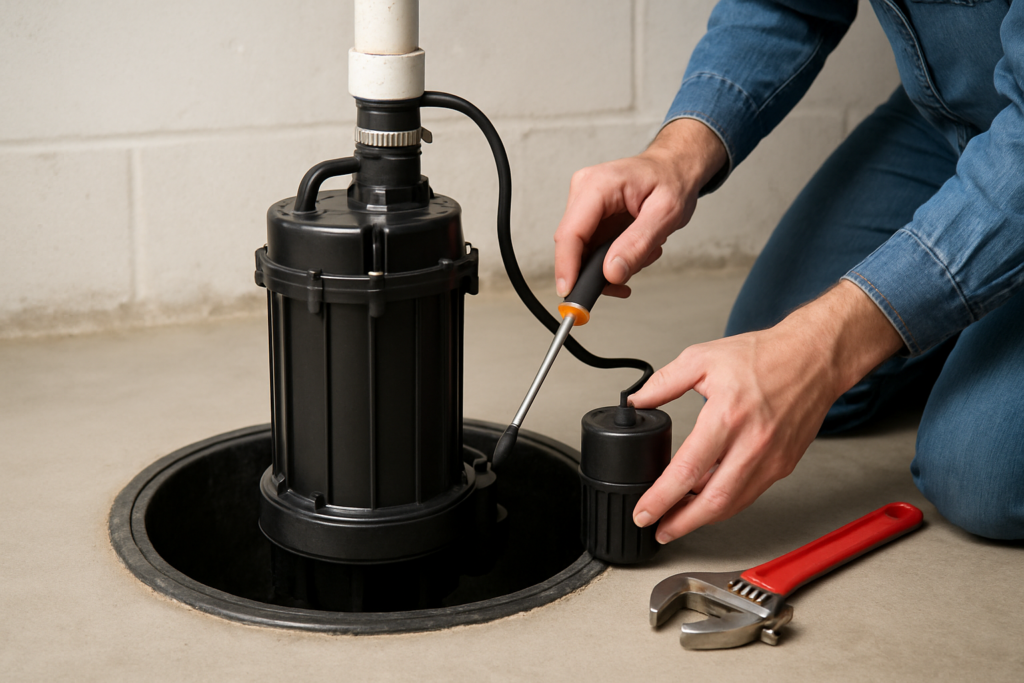
Before cleaning, always disconnect the power to your sump pump. Remove the pump from the pit and use a plastic scraper to remove built-up grime from the walls. A wet-dry vacuum works perfectly for removing debris and standing water from the bottom.
While the pit dries, inspect it for cracks or damage. Small cracks can let in dirt and debris, while larger ones might indicate foundation issues that need professional attention. Clean the pump’s intake screen with a stiff brush to remove any clogs, and check the power cord for damage or fraying.
Step 3: Inspect and Adjust the Float Switch
The float switch controls when your pump turns on and off, making it one of the most critical components. A malfunctioning float can cause your pump to run continuously or, worse, not turn on at all when water levels rise.
Check that the float moves freely without getting stuck on the pump housing, discharge pipe, or pit walls. Sometimes the float gets tangled in its own cord or catches on debris. Gently lift and lower the float by hand to ensure it triggers the pump correctly at the right water level.
The float should activate the pump when water reaches about 6-8 inches in the pit, depending on your setup. If it triggers too early, your pump will cycle frequently and wear out faster. If it triggers too late, you risk overflow during heavy rains. Most floats have adjustment mechanisms that let you fine-tune the activation level.
Step 4: Maintain Your Battery Backup System
Power outages and severe weather often go hand in hand, which is exactly when you need your sump pump most. A battery backup system keeps your pump running when the power goes out, but these systems need regular maintenance to work properly.
Test your battery backup monthly by unplugging the primary pump and letting the backup system take over. The backup should start immediately and run smoothly. If it struggles to start or runs slowly, your battery might need replacement.
Check the battery terminals for corrosion and clean them with a wire brush if needed. Most backup batteries last 3-5 years, but frequent power outages or extreme temperatures can shorten their lifespan. Keep a maintenance log noting when you test the system and when you last replaced the battery.
Sump Pump Battery Backup
Provides crucial protection during power outages when flooding risk is highest
Consider upgrading to a marine-grade deep cycle battery if you experience frequent outages. These batteries handle repeated discharge cycles better than standard car batteries and typically last longer in backup applications.
Step 5: Set Up Proper Alarm Systems
Even the best-maintained sump pump can fail, and you want to know about it immediately. Water alarms provide early warning when water levels get too high, giving you time to take action before flooding occurs.
Install a water alarm at the pump level and another one slightly higher as a backup warning. Modern alarms can send alerts to your smartphone, which is invaluable if you’re away from home during a storm. Some advanced systems integrate with home automation platforms and can even shut off water supply lines automatically.
Place additional sensors in areas prone to flooding, like near water heaters, washing machines, or floor drains. The small investment in multiple alarms pays for itself by preventing even a single flood incident.
Seasonal Preparation Tips
Spring preparation focuses on ensuring your system is ready for heavy rains and snowmelt. Clean the discharge line outside and make sure it directs water at least 6 feet away from your foundation. Check that the line hasn’t been damaged by frost or settling.
Fall maintenance prepares your pump for winter storms and potential freezing. Insulate exposed pipes and consider installing a freeze protection valve if your discharge line runs through unheated areas.
During winter, check that your discharge point hasn’t frozen over, which can cause dangerous backups. Some homeowners install heating cables along the discharge line in areas prone to freezing.
When to Call a Professional
Several warning signs indicate your pump needs professional attention or replacement. If your pump runs constantly, even during dry weather, it might have a stuck float or a leak in the discharge line. Unusual noises like grinding, rattling, or loud vibrations often signal worn bearings or impeller damage.
Pumps older than 7-10 years should be evaluated by a professional, especially if they’ve been working hard due to frequent flooding. Reduced pumping capacity, frequent cycling, or visible rust and corrosion are all signs that replacement might be more cost-effective than repairs.
If your basement has flooded despite having a working sump pump, you might need a larger capacity pump or a secondary backup system. A professional can evaluate your specific situation and recommend appropriate upgrades.
Digital Multimeter
Useful for testing electrical connections and troubleshooting pump issues
Frequently Asked Questions
How often should I replace my sump pump?
Most sump pumps last 7-10 years with proper maintenance. However, pumps in areas with frequent flooding or those that run frequently may need replacement sooner. Replace your pump if it’s showing signs of reduced capacity, making unusual noises, or requiring frequent repairs.
Can I install a sump pump myself?
While replacing an existing sump pump is often a DIY project, installing a new system typically requires professional help. You’ll need proper electrical connections, appropriate drainage, and compliance with local building codes. Most homeowners can handle basic maintenance and pump replacement, but initial installation should be left to professionals.
What size sump pump do I need for my basement?
Sump pump sizing depends on your pit size, typical water inflow, and basement square footage. Most residential applications work well with pumps rated between 1/4 HP and 1/2 HP. However, larger basements or areas with heavy water intrusion might need 3/4 HP or larger pumps. Consider factors like vertical lift height and horizontal distance to the discharge point when choosing pump capacity.
This article contains affiliate links. We may earn a small commission at no extra cost to you.