Your garbage disposal was humming along perfectly until suddenly it wasn’t. Maybe it’s making grinding sounds that could wake the dead, or perhaps it’s completely silent no matter how many times you flip the switch. Kitchen sink disasters have a way of happening at the worst possible moments, but most garbage disposal problems are surprisingly fixable with a few simple techniques.
Before you call a plumber and spend hundreds of dollars, let’s walk through the most common garbage disposal issues and how to tackle them safely. With the right approach, you’ll have your disposal back to its food-chomping glory in no time.
Safety First: Essential Precautions
Never stick your hand down a garbage disposal, even when it’s turned off. Always disconnect the power at the circuit breaker or unplug the unit before attempting any repairs. Keep a flashlight handy to see what you’re doing without getting too close to the blades.
Have a pair of long-nose pliers and a disposal wrench ready. Most units come with a hex wrench, but if you’ve lost yours, you can find replacements or use a standard 1/4-inch hex key.
Problem 1: Garbage Disposal Won’t Turn On
When your disposal is completely dead, the reset button is your first stop. Look for a small red or black button on the bottom of the unit under your sink. Press it firmly until you hear or feel it click back into place.
If the reset button doesn’t solve it, check your circuit breaker. Disposals can trip breakers, especially if they’ve been overloaded. Flip the breaker off and back on, then try the reset button again.
Still nothing? Test the wall switch with a multimeter or try plugging another appliance into the same outlet to verify you’re getting power. A faulty switch or GFCI outlet could be the culprit.
Problem 2: Jammed Disposal That Hums But Won’t Grind
That humming sound means your disposal is getting power but can’t turn. Something is jamming the impellers, and forcing it will only burn out the motor.
Turn off the power and grab your hex wrench. Insert it into the hex-shaped hole at the bottom center of the disposal unit. Turn the wrench back and forth until you feel the impellers move freely. This manually rotates the grinding chamber and usually breaks loose whatever is stuck.
Once the wrench turns easily, remove any visible debris from the top using pliers or tongs. Never use your fingers. Restore power, press the reset button, and test the unit by running cold water and turning it on.
Garbage Disposal Wrench
Essential tool that often comes with your disposal but easy to misplace.
Problem 3: Strange Grinding or Rattling Noises
Unusual noises usually mean something that shouldn’t be there has made its way into your disposal. Common culprits include bottle caps, twist ties, small utensils, or bones from meat.
Turn off the power and use a flashlight to peer into the disposal. You’ll often spot the offending object right away. Remove it with pliers or tongs, never your hands.
If you can’t see anything obvious, try the hex wrench technique to manually rotate the impellers. Sometimes small objects get wedged in places that aren’t immediately visible. Listen for any scraping or grinding as you turn the wrench.
Metal objects like silverware can damage the impellers permanently. If you notice chips or deep scratches on the grinding components, you might need professional repair or replacement.
Problem 4: Persistent Bad Odors
Disposal odors come from food buildup and bacteria growing in the grinding chamber. Regular cleaning prevents most smell issues, but existing odors need targeted treatment.
Start with ice cubes and coarse salt. Drop a handful of ice and two tablespoons of salt into the disposal, run cold water, and turn it on for 30 seconds. The ice helps knock off buildup while the salt provides abrasive action.
Follow up with citrus peels from lemons or oranges. The natural oils help eliminate odors and leave a fresh scent. Avoid chemical drain cleaners, which can damage the disposal’s seals and metal components.
For stubborn odors, try the baking soda and vinegar method. Pour half a cup of baking soda down the disposal, followed by a cup of white vinegar. Let it fizz for 10 minutes, then flush with hot water.
Problem 5: Water Leaking from the Disposal
Leaks can occur at several points: the mounting assembly where the disposal connects to the sink, the dishwasher connection, or the drain pipe outlet.
Check the mounting bolts first. These can loosen over time, causing the disposal to sag and create gaps where water escapes. Tighten the mounting screws with a screwdriver, but don’t overtighten.
Dishwasher connection leaks are common if the hose clamp has loosened. Locate where your dishwasher drain hose connects to the disposal and ensure the clamp is tight. Replace the clamp if it’s corroded.
Bottom leaks from the drain pipe connection usually require new gaskets or pipe joint compound. Turn off the water and disposal power before attempting these repairs.
Pipe Joint Compound
Seals threaded connections and prevents leaks better than tape alone.
Problem 6: Slow Draining or Backup
When water backs up in your sink, the problem might be in the disposal, the drain pipe, or both. Start by checking if the disposal itself drains properly.
Run the disposal with plenty of cold water for 30 seconds to clear any loose debris. If water still backs up, you likely have a clog in the drain pipe beyond the disposal.
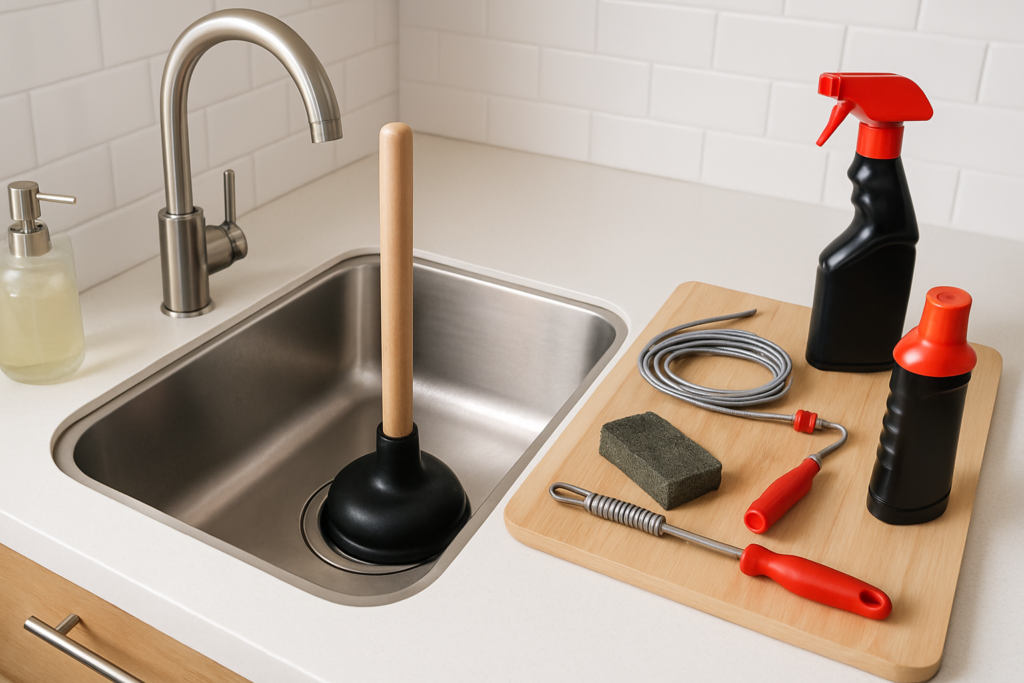
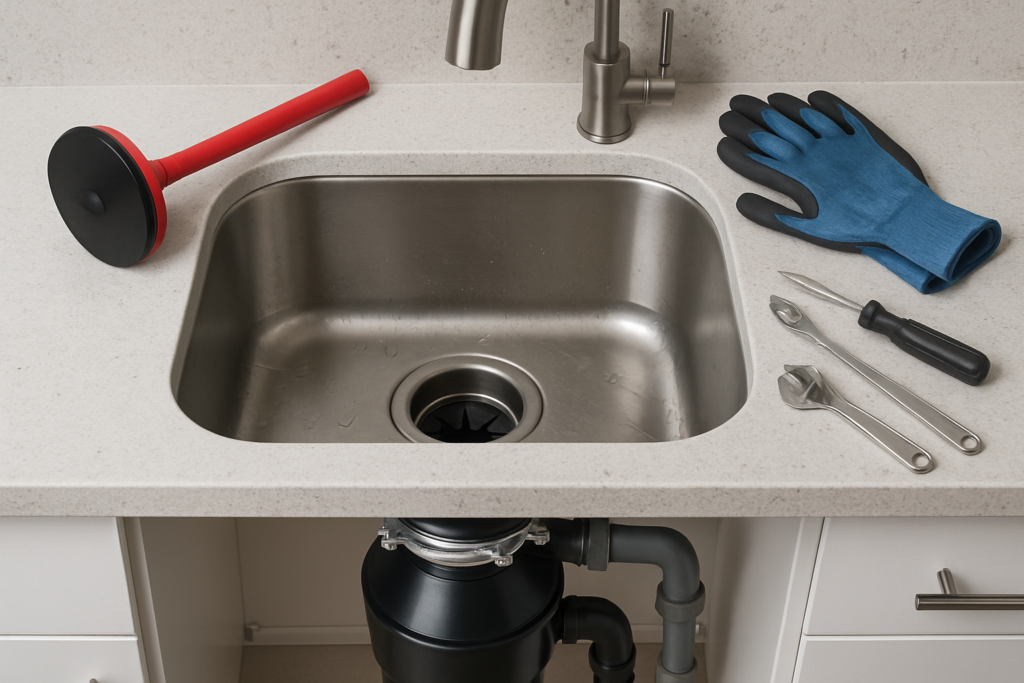
Try a sink plunger designed for flat surfaces. Block any overflow drains and plunge vigorously. The pressure change often breaks loose clogs that form where the disposal drain meets the main pipe.
Avoid chemical drain cleaners, which can damage both your disposal and pipes. Instead, try the hot water flush method: boil a large pot of water and pour it down the drain in three stages, allowing the hot water to work between pours.
Problem 7: Disposal Runs But Won’t Grind Food
If your disposal spins freely but food just sits there, the impellers might be worn down or the motor is losing power. This typically happens in older units that have seen heavy use.
Test with softer foods first. Drop in some cooked rice or small vegetable scraps with plenty of water. If it handles soft foods but struggles with harder items, the motor is weakening.
Sometimes the issue is simpler: insufficient water flow. Disposals need strong water pressure to flush ground food through the system. Check that you’re running enough cold water and that your water pressure is adequate.
Worn impellers can’t be replaced economically. If your disposal is over eight years old and showing these symptoms, replacement makes more sense than repair.
Problem 8: Electrical Issues and Tripping Breakers
Frequent breaker trips indicate your disposal is drawing too much current. This happens when the motor works harder due to jams, worn bearings, or electrical problems within the unit.
Check for obvious causes first: jams, overfeeding, or running without water. Clear any blockages and ensure you’re operating the disposal correctly.
If the disposal trips breakers even when running empty, the motor windings might be failing. This creates internal short circuits that draw excessive current. Professional diagnosis is needed, but replacement is usually more cost-effective than motor repair.
GFCI outlets can also cause issues. These safety devices are sensitive and might trip from disposal motor vibrations or minor electrical fluctuations. Try resetting the GFCI before assuming the disposal has problems.
Preventive Maintenance Tips
Regular maintenance prevents most disposal problems. Run cold water every time you use the disposal and keep it flowing for 30 seconds after turning off the unit. Cold water solidifies grease, making it easier to chop up and flush away.
Clean your disposal weekly with the ice and salt method. Monthly citrus peel treatments keep odors at bay. Avoid fibrous foods like celery stalks, corn husks, and onion skins, which can wrap around the impellers.
Never put grease, coffee grounds, or expandable foods like rice and pasta down the disposal. These create clogs in your drain pipes even if they make it through the grinding chamber.
Disposal Cleaning Tablets
Convenient monthly treatment that breaks down buildup and eliminates odors.
When to Call a Professional
Some disposal problems require professional help. If you’ve tried these fixes and still have issues, or if you’re not comfortable working with electrical appliances, contact a qualified plumber.
Replacement is often the best option for units over 10 years old or those with motor problems. Modern disposals are more efficient and reliable than older models, and installation typically pays for itself through improved performance.
Frequently Asked Questions
Can I Use Hot Water with My Garbage Disposal?
Always use cold water when running your garbage disposal. Hot water melts grease, which then re-solidifies in your drain pipes and causes clogs. Cold water keeps grease solid so it can be chopped up and flushed away properly.
How Long Should a Garbage Disposal Last?
Most garbage disposals last 8-12 years with proper use and maintenance. Heavy use, hard water, or frequent jams can shorten this lifespan. If your disposal needs frequent repairs or is over 10 years old, replacement is usually more economical than continued fixes.
What Should I Never Put in My Garbage Disposal?
Avoid grease, oil, coffee grounds, eggshells, bones, fibrous vegetables, expandable foods like rice or pasta, and non-food items. These materials either damage the disposal mechanism or create clogs in your drain system.
This article contains affiliate links. We may earn a small commission at no extra cost to you.