A clogged kitchen sink can turn meal prep into a nightmare. Standing water mixed with food scraps creates an unsanitary mess that needs immediate attention. The good news is that most kitchen sink clogs can be cleared without calling a plumber or using harsh chemicals that might damage your pipes.
We’ll walk through five proven methods to get your sink draining properly again, starting with the gentlest approaches and working up to more aggressive techniques. Each method builds on the last, so you can stop as soon as your drain starts flowing freely.
Method 1: Hot Water and Dish Soap
Start with the simplest solution first. This method works particularly well for grease clogs, which are common in kitchen sinks.
Heat a large pot of water to just below boiling. Add a generous squirt of grease-cutting dish soap to the standing water in your sink. Pour the hot water slowly down the drain in two or three stages, allowing it to work for a few seconds between pours.
The hot water helps dissolve grease buildup while the dish soap lubricates the pipes and breaks down food particles. This combination often clears minor clogs without any tools or harsh chemicals.
Wait a few minutes, then run hot tap water to see if the drain flows freely. If water still backs up, move on to the next method.
Method 2: Baking Soda and Vinegar
This classic combination creates a fizzing reaction that can break up stubborn clogs naturally. Remove as much standing water as possible with a cup or bowl before starting.
Pour one cup of baking soda directly down the drain, followed by one cup of white vinegar. You’ll hear fizzing as the two ingredients react. Immediately cover the drain with a wet cloth or stopper to contain the reaction and force it deeper into the pipes.
Let this mixture work for 15-30 minutes. The chemical reaction helps break down organic matter and can dislodge clogs that hot water alone couldn’t handle. Follow up with another pot of hot water to flush everything through.
This method is safe for most plumbing systems and won’t damage your pipes like some commercial drain cleaners can.
Method 3: Plunging
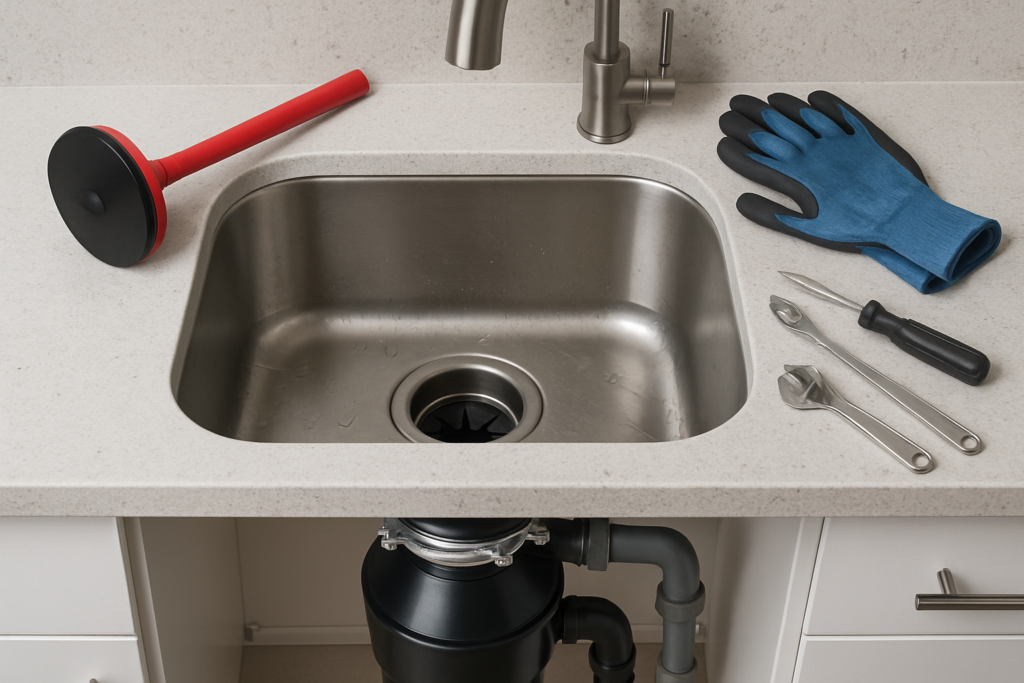
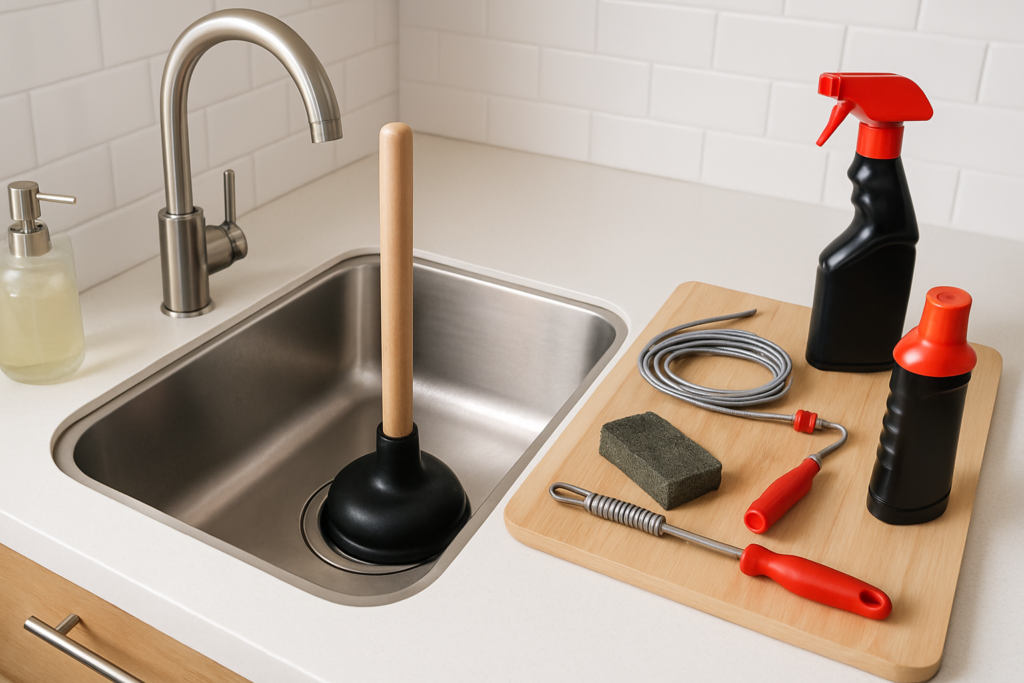
A cup plunger can create enough pressure to dislodge clogs that chemicals can’t dissolve. Make sure you use a cup plunger, not a flange plunger designed for toilets.
Fill the sink with enough water to cover the plunger cup. If you have a double sink, plug the other drain with a wet cloth to prevent air from escaping. Remove any drain strainer or stopper first.
Sink Plunger Cup
Essential tool that creates pressure to dislodge stubborn clogs in kitchen sinks.
Place the plunger over the drain and push down firmly, then pull up quickly. Repeat this motion 10-15 times with quick, forceful movements. The alternating pressure and suction can break up clogs and pull debris back up through the drain.
Remove the plunger and check if water drains properly. You might need to repeat this process several times for tough clogs.
Method 4: Drain Snake
When plunging doesn’t work, it’s time for a drain snake or auger. This tool can reach deeper into your pipes to break up or retrieve clogs that other methods can’t touch.
Feed the snake into the drain slowly, turning the handle clockwise as you push. You’ll feel resistance when you hit the clog. Continue turning and pushing to either break through the blockage or hook onto it so you can pull it back up.
25-Foot Drain Snake
Reaches deep clogs that other methods cannot and works on most kitchen sink blockages.
Once you feel the snake move freely again, slowly pull it back while continuing to turn the handle. Clean off any debris that comes up with the snake, then run hot water to flush remaining particles.
A 25-foot snake handles most kitchen sink clogs, though you likely won’t need the full length for typical blockages near the P-trap.
Method 5: P-Trap Removal
If all else fails, you’ll need to remove the P-trap (the curved pipe section under your sink) to clear the clog manually. This method requires some basic tools but often solves the most stubborn blockages.
Turn off the water supply and place a bucket under the P-trap to catch water and debris. Loosen the slip nuts on both ends of the P-trap using channel lock pliers or a pipe wrench.
Remove the P-trap carefully and inspect it for clogs. Most blockages occur right in this curved section where grease and food particles accumulate. Clean out the trap thoroughly with hot water and a bottle brush.
Check the trap for cracks or wear while it’s removed. Replace it if you notice any damage. Reinstall the P-trap by hand-tightening the slip nuts, then giving them a quarter turn with pliers. Don’t overtighten, as this can crack the fittings.
Safety Tips and Precautions
Never mix different chemical drain cleaners, as they can create dangerous fumes or reactions. Avoid using chemical cleaners before trying mechanical methods like snaking, since the chemicals can splash back and cause burns.
Wear rubber gloves when handling drain components or debris. Keep your face away from the drain when using baking soda and vinegar, as the reaction can cause splashing.
Be gentle with older plumbing. Aggressive plunging or snaking can damage worn pipes or loose fittings.
When to Call a Plumber
Some situations require professional help. Call a plumber if water backs up into other drains when you run the kitchen sink, which indicates a main line blockage. Multiple clogged drains throughout your home also suggest a problem beyond what these methods can fix.
If you’re uncomfortable removing the P-trap or lack the necessary tools, a plumber can handle this quickly. Recurring clogs despite regular maintenance might indicate a deeper problem like root intrusion or pipe damage that needs professional diagnosis.
Strange smells, gurgling sounds from other drains, or sewage backup are all signs of serious plumbing issues that require immediate professional attention.
Preventing Future Clogs
Run hot water after each use to help dissolve grease before it solidifies in your pipes. Scrape plates thoroughly before washing and avoid putting coffee grounds, eggshells, or fibrous vegetables down the disposal.
Use a sink strainer to catch food particles before they enter your drain. Clean the strainer regularly to prevent buildup.
Pour a pot of hot water down your drain weekly as preventive maintenance. This simple habit helps prevent grease accumulation that leads to most kitchen sink clogs.
Frequently Asked Questions
Can I use chemical drain cleaners on kitchen sink clogs?
Avoid chemical drain cleaners in kitchen sinks. They’re harsh on pipes and can be dangerous if they splash back while you’re working. The methods outlined above are safer and often more effective for kitchen sink clogs, which are typically grease and food-based rather than hair clogs that chemicals target.
How do I know if the clog is in my pipes or the garbage disposal?
Run the garbage disposal first to see if that clears the clog. If water still backs up after the disposal runs normally, the blockage is likely in the pipes downstream. You can also disconnect the disposal and check if water drains freely through the sink drain alone.
Why does my kitchen sink keep clogging even after I clear it?
Recurring clogs usually indicate you’re not addressing the root cause. Check your food disposal habits and make sure you’re scraping plates thoroughly. Grease buildup is often the culprit, so increase your hot water flushes and consider the grease disposal methods you’re using. If problems persist, you may have a partial blockage that needs professional attention.
This article contains affiliate links. We may earn a small commission at no extra cost to you.