You open your microwave and get hit with a wave of funky smell. Maybe it’s a mix of last week’s fish dinner and burnt popcorn, or just a musty odor you can’t quite place. Either way, it’s unpleasant and it’s making you avoid reheating leftovers.
A smelly microwave isn’t just annoying. It can transfer odors to your food and might signal underlying issues that need attention. The good news is that most microwave odors are easy to fix with the right approach and a bit of effort.
Common Sources of Microwave Odors
Before you can fix the smell, you need to understand where it’s coming from. Microwaves trap odors more effectively than you might think, and several culprits are usually to blame.
Food splatters are the most obvious source. When you heat soup, pasta sauce, or anything with moisture, tiny particles explode onto the walls and ceiling of your microwave. These dried-on bits of food accumulate over time and create a breeding ground for bacteria and mold.
Burnt food leaves particularly stubborn smells. Overcooking popcorn or accidentally running the microwave empty can create a charred odor that lingers for days. The smoke from burnt items penetrates the plastic interior and even the charcoal filter if your microwave has one.
Grease buildup is another major issue. Fatty foods release oils that coat the interior surfaces. This greasy film traps other odors and develops its own rancid smell over time.
Sometimes the smell isn’t from food at all. A dirty or saturated charcoal filter in over-the-range microwaves can start to smell musty. Moisture trapped in the vents or cavities can lead to mildew growth, especially in humid climates.
The Deep Clean Method
A thorough cleaning solves most microwave odor problems. This isn’t about a quick wipe-down. You need to break down the grime and neutralize the smells at their source.
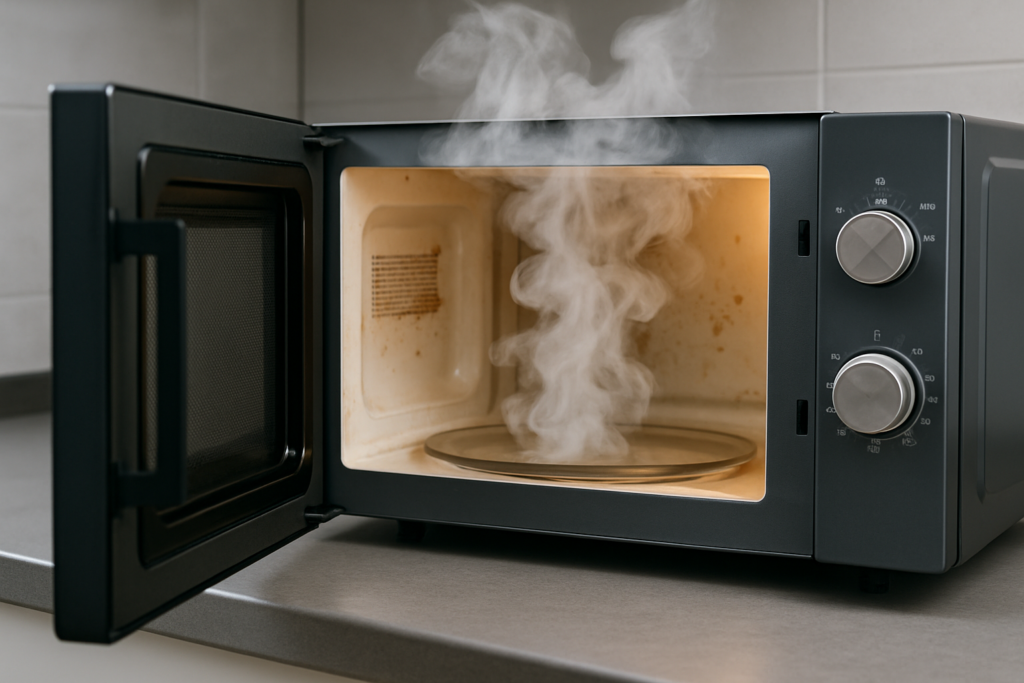
Start with the steam method. Fill a microwave-safe bowl with two cups of water and add either lemon slices, vinegar, or baking soda. Microwave on high for five minutes, then let it sit with the door closed for another three minutes. The steam loosens stuck-on food and the acidic or alkaline solution helps neutralize odors.
Once you open the door, carefully remove the hot bowl. Wipe down all interior surfaces with a damp cloth or sponge. Pay special attention to the ceiling and the area around the door seal where grime accumulates. For stubborn spots, make a paste of baking soda and water and scrub gently.
Don’t forget the turntable and support ring. Remove these parts and wash them in hot soapy water in your sink. Many are dishwasher safe if you want an even easier option.
Clean the exterior and control panel too. Grease and food particles settle on the outside, contributing to overall odor. Use a microfiber cloth with a mild cleaner suitable for your microwave’s finish.

Microwave Steam Cleaner
These angry mama or similar steam cleaners make the whole process easier and more effective
Dealing With Stubborn Odors
Sometimes a basic cleaning isn’t enough. Certain smells, particularly from fish or burnt food, require extra measures to eliminate completely.
Activated charcoal works wonders for persistent odors. Place a bowl of activated charcoal or a few charcoal odor absorber bags inside your microwave overnight with the door closed. The charcoal absorbs odor molecules instead of just masking them.
Coffee grounds offer another natural solution. Put fresh or used coffee grounds in a bowl and microwave them for 30 seconds, then leave them inside for several hours. The coffee smell will replace bad odors, then dissipate on its own.
For really tough smells, try a baking soda soak. Mix half a cup of baking soda with water to create a thick paste. Spread it on the interior surfaces and let it sit for several hours or overnight. Baking soda is alkaline and neutralizes acidic odor compounds. Wipe it away with a damp cloth and repeat if needed.
Vanilla extract provides a pleasant finishing touch. Mix a tablespoon of vanilla with a cup of water and microwave for one minute. This leaves a light, fresh scent without the chemical smell of air fresheners.
Maintaining a Fresh-Smelling Microwave
Prevention is easier than deep cleaning. A few simple habits keep your microwave smelling fresh and reduce the frequency of major cleaning sessions.
Cover your food every time you microwave. Use a microwave-safe lid, plate, or paper towel to prevent splatters. This single habit eliminates most of the food buildup that causes odors. Keep a stack of microwave splatter covers handy if you want a reusable option.
Wipe up spills immediately while they’re still warm and easy to remove. Waiting until they dry and harden makes cleaning much harder. Keep a damp cloth nearby when you’re cooking.
Do a quick steam clean weekly. Even if your microwave looks clean, a five-minute steam session with lemon water keeps odors from building up. Make it part of your regular kitchen routine, like wiping down counters.

Microwave Safe Covers Set
Having multiple sizes means you’ll actually use them consistently
Replace or clean your charcoal filter if you have an over-the-range microwave. Most manufacturers recommend replacing these filters every six months. Check your manual for the specific filter type and replacement instructions.
When to Consider Replacement Parts
Sometimes cleaning isn’t enough because the odor source is built into the microwave itself. Plastic interiors can absorb smells over years of use, especially if they’ve been damaged by heat.
Cracked or warped plastic panels trap odors permanently. You can’t clean what you can’t reach. Many microwaves allow you to replace interior panels, waveguide covers, and other components. Check if replacement parts are available for your model.
The waveguide cover is particularly important. This small mica or plastic panel protects the magnetron (the component that generates microwaves) from food and moisture. When it gets dirty or damaged, it can burn and create terrible smells. Replacing it is usually inexpensive and simple.
Charcoal filters in venting microwaves lose effectiveness over time. Unlike cleaning the interior, you can’t restore these filters. Replacement is the only option. Filters specific to your microwave model work best, though universal options exist.
If your microwave is old and the smell persists despite all cleaning efforts, it might be time for a new unit. Microwaves typically last 7-10 years. A persistent odor in an older model often indicates that oils and food particles have penetrated places you simply can’t reach.
Frequently Asked Questions
Can I use bleach to clean my microwave?
Avoid using bleach inside your microwave. While it’s a powerful disinfectant, bleach can damage the interior surfaces and leave a strong chemical smell that’s hard to remove. It can also create harmful fumes when heated. Stick with vinegar, lemon, or baking soda for safe and effective cleaning.
Why does my microwave smell like burning plastic?
A burning plastic smell usually means something is overheating. This could be a piece of plastic wrap that melted onto the heating element, a damaged waveguide cover, or in rare cases, an electrical problem. Unplug your microwave immediately and inspect for melted materials. If you can’t find an obvious cause, have it serviced by a professional before using it again.
How often should I deep clean my microwave?
Deep clean your microwave monthly if you use it daily, or every two to three months if you use it less frequently. Weekly quick cleans with the steam method prevent buildup and reduce how much scrubbing you’ll need during deep cleans. Adjust the schedule based on what you cook. Fish, popcorn, and tomato-based foods require more frequent cleaning.
This article contains affiliate links. We may earn a small commission at no extra cost to you.