A clogged drain can turn your day upside down faster than you can say “plumber.” Before you reach for your phone to call a professional and face that service call fee, there are several tried-and-true methods you can attempt on your own. These solutions range from gentle, everyday household remedies to more aggressive approaches that tackle stubborn blockages.
The key is starting with the least invasive method and working your way up. Most drain clogs respond well to these DIY approaches, and you might be surprised at what a little hot water or baking soda can accomplish.
Start Simple: Hot Water Flush
Your first line of defense should be the simplest approach possible. Boil a large pot of water and slowly pour it down the drain in two to three stages, allowing the hot water to work between each pour. This method works particularly well for grease buildup and soap scum that has accumulated over time.
Hot water alone can dissolve many organic materials and minor blockages. It’s completely safe for your pipes and won’t introduce any chemicals into your plumbing system. Give this method about 15 minutes to work before moving on to other solutions.
The Classic Baking Soda and Vinegar Method
This combination creates a fizzing reaction that can break down organic matter and push debris through your pipes. Pour one cup of baking soda down the drain, followed by one cup of white vinegar. Cover the drain with a plug or wet cloth to contain the reaction and let it sit for 30 minutes.
After the waiting period, flush the drain with hot water. This method is environmentally friendly and won’t damage your pipes like harsh chemicals might. The reaction helps dissolve hair, soap buildup, and food particles that commonly cause blockages.
Physical Removal: Plunging and Drain Snakes
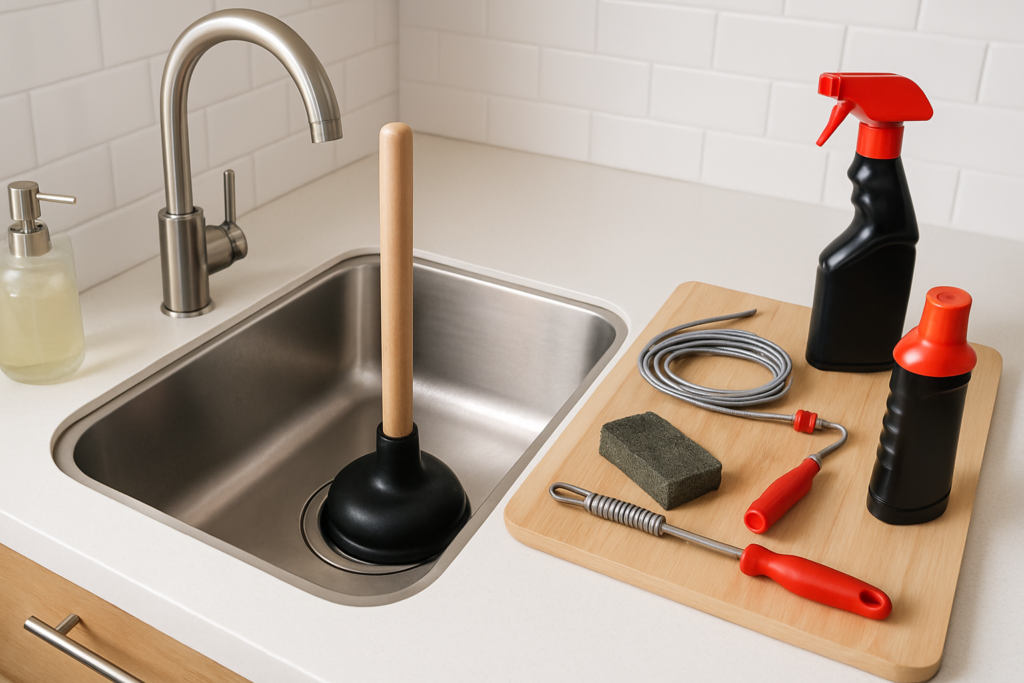
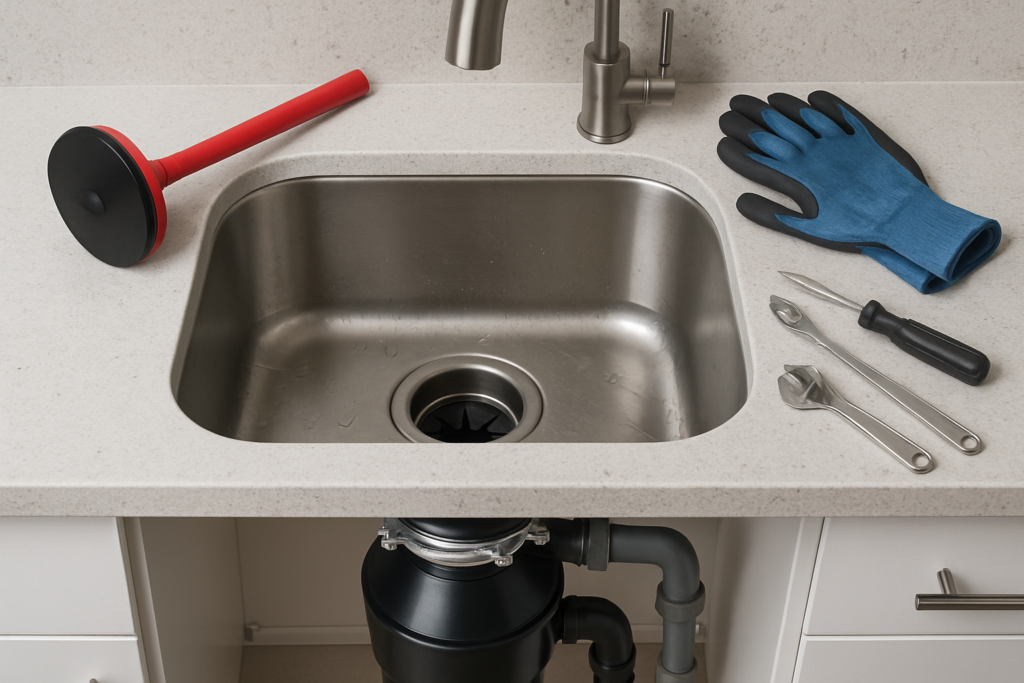
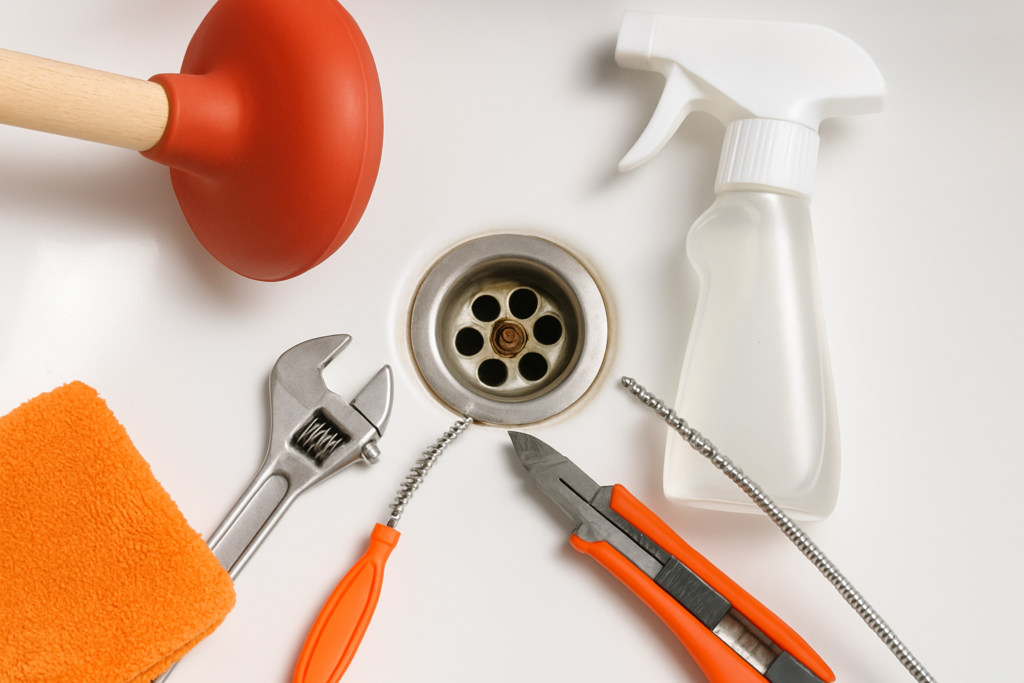
When chemical reactions aren’t enough, it’s time to get physical with your blockage. A standard cup plunger can work wonders on sink drains. Create a tight seal around the drain opening and use quick, forceful plunges to dislodge the clog.
For more stubborn blockages, a drain snake or auger can reach deeper into your pipes. Feed the snake down the drain until you feel resistance, then twist and push to break through or hook the obstruction. Pull the snake back out slowly to remove debris.
Drain Snake Auger
A quality drain snake can handle most household clogs and pays for itself after just one use.
Biological and Chemical Solutions
Enzyme cleaners offer a middle ground between gentle home remedies and harsh chemicals. These products use natural bacteria and enzymes to break down organic matter in your pipes. They’re slower acting than chemical cleaners but much safer for your plumbing and the environment.
Apply enzyme cleaners according to package directions and let them work overnight for best results. They’re particularly effective on hair and grease clogs but won’t help with mineral buildup or foreign objects.
Enzyme Drain Cleaner
Enzyme cleaners are gentler on pipes than chemical alternatives while still being highly effective on organic clogs.
Chemical drain cleaners should be your last resort before calling a professional. Products containing sodium hydroxide or sulfuric acid can dissolve most organic blockages but come with significant risks. Always follow safety instructions, ensure proper ventilation, and never mix different chemical products.
Prevention: Your Best Defense
Regular maintenance prevents most drain problems before they start. Run hot water down your drains weekly, use drain screens to catch hair and food particles, and avoid pouring grease down kitchen sinks. Monthly treatments with baking soda and vinegar can keep your drains flowing freely.
Watch for warning signs like slow drainage, gurgling sounds, or unpleasant odors. Address these issues early with gentle methods rather than waiting for a complete blockage to form.
Frequently Asked Questions
How do I know when to call a professional plumber?
Call a plumber if you’ve tried multiple methods without success, if water backs up into other fixtures when you run water, or if you notice sewage odors coming from your drains. Multiple slow drains throughout your home often indicate a main line problem that requires professional equipment.
Can chemical drain cleaners damage my pipes?
Yes, frequent use of chemical drain cleaners can corrode pipes, especially older metal ones. These products can also damage garbage disposals and septic systems. Stick to gentler methods for regular maintenance and save chemical cleaners for emergency situations only.
This article contains affiliate links. We may earn a small commission at no extra cost to you.