There’s nothing quite as frustrating as standing in your kitchen, hungry and ready to heat up your meal, only to find your microwave running but producing zero heat. The turntable spins, the light is on, you hear the familiar hum, but your food stays cold. This common problem affects thousands of microwaves every year, and while it might seem like time to buy a new appliance, the fix is often simpler than you think.
Before you haul your microwave to the curb or spend hundreds on a replacement, you should understand what’s actually happening inside that box. Most microwave heating failures come down to just a few key components, and many of them can be diagnosed and fixed without calling a repair technician.
How Your Microwave Actually Generates Heat
Your microwave doesn’t actually generate heat directly. Instead, it produces electromagnetic radiation at a specific frequency (2.45 GHz, if you’re curious) that causes water molecules in your food to vibrate rapidly. This molecular friction creates heat from within the food itself.
The component responsible for this magic is called a magnetron. It’s a vacuum tube that converts electrical energy into microwave radiation. When this part fails, your microwave becomes little more than an expensive box with a spinning plate and a light bulb.
The magnetron doesn’t work alone, though. It relies on several supporting components including a high-voltage capacitor, a diode, and a transformer. When any of these parts malfunction, the entire heating system can shut down even if the magnetron itself is fine.
The Magnetron: Your Microwave’s Heart
The magnetron is the most common culprit when your microwave stops heating. These components typically last 2,000 to 8,000 hours of use, which translates to about 5-10 years for most households. When they fail, they usually fail completely rather than gradually losing power.
You can often tell if your magnetron has died by listening carefully when the microwave runs. A healthy magnetron produces a steady, consistent hum. If you hear unusual buzzing, popping sounds, or notice a burning smell, the magnetron is likely on its way out or already dead.
Replacing a magnetron yourself is possible but not recommended unless you have electrical experience. Microwaves store dangerous high voltage even when unplugged, and the capacitor can deliver a lethal shock. If you determine the magnetron is the problem, weigh the replacement cost against buying a new microwave. For basic models, replacement often doesn’t make financial sense.
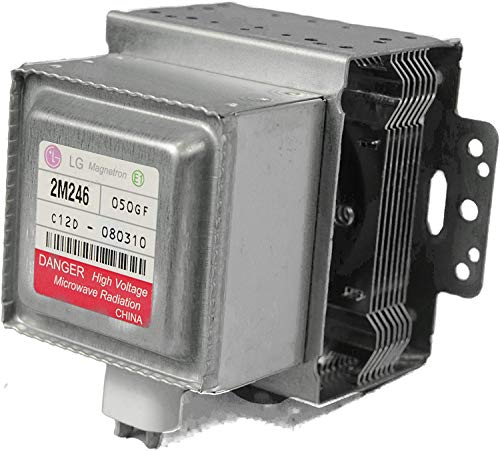
Microwave Magnetron Replacement
Essential replacement part if you’re comfortable with electrical repairs and want to restore your microwave’s heating function
High-Voltage Components That Kill Heat Output
Three other electrical components work together to power the magnetron: the high-voltage capacitor, the high-voltage diode, and the transformer. When any of these fails, your magnetron won’t receive the power it needs to generate microwaves.
The high-voltage capacitor stores electrical energy and releases it in bursts to the magnetron. These can fail due to age, power surges, or manufacturing defects. A failed capacitor often shows visible signs like bulging, leaking, or burn marks on its casing.
The diode works with the capacitor to double the voltage supplied to the magnetron. When it burns out, the magnetron doesn’t get enough juice to operate. Testing a diode requires a multimeter and some electrical knowledge, but a bad diode will show infinite resistance in both directions or zero resistance in both directions.
The transformer steps up your household voltage (120V in North America) to the much higher voltage the magnetron needs (around 4,000V). These rarely fail compared to other components, but when they do, you’ll often smell burning or see visible damage to the windings.
Door Switches and Safety Interlocks
Your microwave has multiple door switches that serve as safety interlocks. These prevent the magnetron from operating when the door is open, protecting you from exposure to microwave radiation. Most models have three switches: two that close when the door closes and one that opens.
Over time, these switches can wear out from thousands of open-close cycles. The mechanical contacts inside can become dirty, corroded, or simply break. When a door switch fails, the microwave’s control board receives the wrong signal and won’t allow the magnetron to turn on.
Testing door switches is relatively simple with a multimeter. You can access them by removing the outer cabinet (after unplugging the unit and discharging the capacitor). Replace any switch that doesn’t show continuity when activated or that sticks in one position.
Door switch replacement is one of the safer DIY microwave repairs since you’re working with low-voltage components. Replacement door switches are model-specific, so you’ll need your microwave’s exact model number when ordering parts.
Thermal Fuses and Thermostats That Stop Heating
Microwaves include several thermal protection devices that shut down heating if temperatures get too high. The thermal fuse is a one-time safety device that permanently breaks the circuit if the microwave overheats. Once blown, it must be replaced before your microwave will heat again.
Common causes of thermal fuse failure include blocked vents, running the microwave empty, or extended operation without proper ventilation. These fuses protect against fire hazards, so they’re an important safety feature even though they can be frustrating when they blow.
Thermostats work similarly but are designed to reset once temperatures drop back to safe levels. Some microwaves use both types of thermal protection. A failed thermostat can prevent heating even when nothing else is wrong with the unit.
Both components can be tested with a multimeter for continuity. A working fuse or thermostat will show near-zero resistance, while a blown one will show infinite resistance. Before replacing a thermal fuse, you need to identify and fix whatever caused it to blow in the first place, or the new fuse will fail just as quickly.

Microwave Thermal Fuse Kit
Inexpensive fix for microwaves that won’t heat due to overheating protection activation
Ventilation and Airflow Issues
Proper airflow keeps your microwave’s internal components cool during operation. When vents become blocked with grease, dust, or food debris, the magnetron and other components can overheat and either shut down temporarily or suffer permanent damage.
Check all exterior vents on your microwave for obstructions. Over-the-range models are particularly prone to grease buildup from cooking. Built-in microwaves can have blocked vents if they weren’t installed with proper clearances around the cabinet opening.
Internal cooling fans can also fail, leading to inadequate airflow. You should hear the fan running when the microwave operates. A silent or unusually noisy fan indicates a problem. Fan motors can seize up from bearing failure or accumulation of debris.
Regular cleaning prevents most ventilation problems. Remove the grease filter monthly if you have an over-the-range model, and vacuum the exterior vents every few months. This simple maintenance can add years to your microwave’s life and prevent heating failures caused by thermal shutdowns.
Control Board and User Interface Problems
Modern microwaves rely on electronic control boards to manage all functions, including sending power to the magnetron. While less common than component failures, control board issues can prevent your microwave from heating even when all the heating components are functional.
Symptoms of control board failure include random shutdowns, displays that flicker or show error codes, buttons that don’t respond, or heating that works intermittently. Power surges and electrical spikes are the usual culprits for board damage.
Control boards are expensive to replace, often costing as much as a new microwave when you factor in labor. Before replacing the board, make sure you’ve ruled out simpler problems like blown fuses or failed door switches. A repair technician can run diagnostics to confirm the board is actually the problem.
In some cases, the membrane touchpad that you press to select settings can fail separately from the control board. These are usually cheaper to replace and easier to diagnose since specific buttons will stop working while others function normally.
Diagnosing Your Specific Problem
Start with the simplest possibilities before diving into complex electrical testing. Verify the microwave is getting power by checking that the light and turntable work. Test with a cup of water for one minute. If the water doesn’t get warm at all, you have a heating component failure rather than just weak output.
Listen carefully during operation. A healthy microwave should produce a consistent hum from the magnetron and cooling fan. Buzzing, clicking, or silence when it should be heating points to specific components. A humming transformer with no magnetron sound suggests a bad magnetron. No sounds at all might indicate door switch or fuse problems.
Check for error codes on the display if your model has a digital readout. Many modern microwaves display specific codes that correspond to particular failures. Your owner’s manual or a quick online search with your model number and the code will tell you what’s wrong.
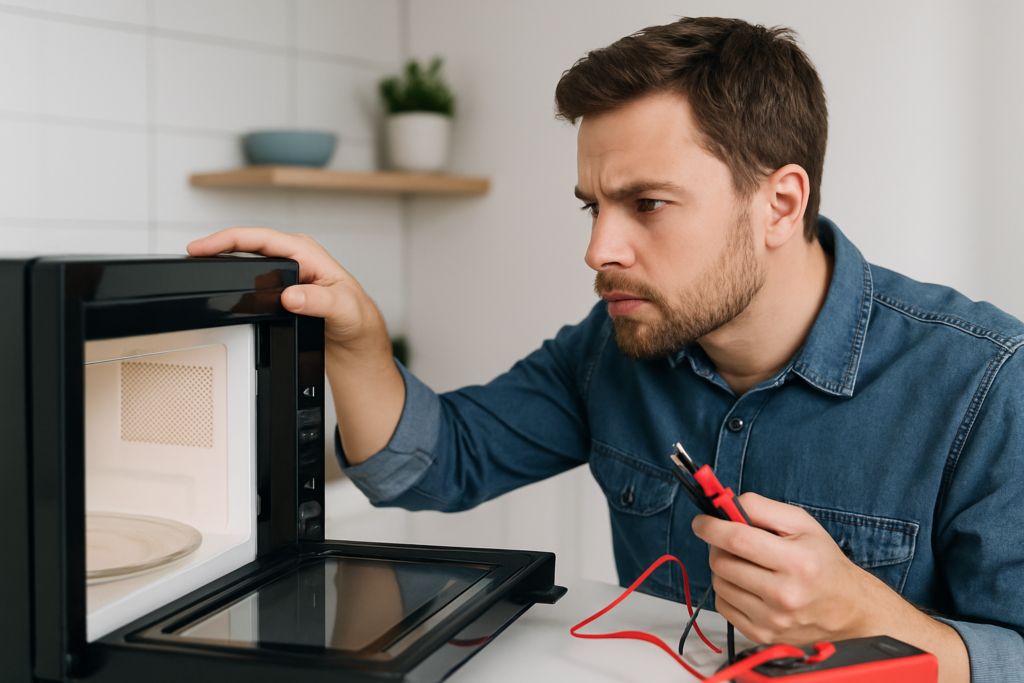
For anything beyond visual inspection and basic testing, you’ll need to open the cabinet. This requires unplugging the microwave and carefully discharging the high-voltage capacitor with an insulated screwdriver. Capacitors can hold lethal voltage for days or even weeks after unplugging. If you’re not comfortable with this process, call a professional or consider replacement.
When to Repair vs. Replace
Basic countertop microwaves under five years old are usually worth repairing if the problem is a simple component like a door switch or thermal fuse. These parts cost less than competitively priced and take minimal time to replace if you’re handy.
Magnetron replacement falls into a gray area. The part itself can competitively priced-competitively priced depending on the model, and professional installation adds another competitively priced-competitively priced to the bill. For a basic 1000-watt countertop unit, that doesn’t make sense. For a high-end over-the-range convection microwave, it might.
Built-in and over-the-range microwaves are generally worth repairing because replacement involves more than just buying a new unit. You’ll need installation, possible cabinet modifications, and ductwork adjustments. A competitively priced repair is cheaper than a competitively priced new microwave plus competitively priced in installation costs.
Age matters too. A 3-year-old microwave with a failed magnetron has years of life left if you replace that part. A 12-year-old microwave is living on borrowed time, and other components will likely fail soon even if you fix the current problem.
Frequently Asked Questions
Can I test my microwave’s heating power at home?
You can run a simple test using water. Fill a microwave-safe measuring cup with exactly one cup (8 oz) of cold tap water and note the starting temperature. Microwave on high for exactly one minute. The temperature should rise by about 18-20°F in a 1000-watt microwave. Lower wattage units will heat less, higher wattage more. If the temperature barely changes or doesn’t change at all, you have a heating problem.
Why does my microwave heat some foods but not others?
This typically indicates a weakening magnetron rather than complete failure. The magnetron is still producing some microwave energy, but not enough for even heating. Foods with high water content (like soups) might heat while drier foods stay cold. This situation will progressively worsen until the magnetron fails completely.
Is it dangerous to use a microwave that’s not heating properly?
A microwave that runs but doesn’t heat isn’t inherently dangerous, but the underlying problem might be. If you smell burning, see sparks, or notice smoke, stop using it immediately. These signs indicate electrical component failure that could lead to fire. A magnetron that’s simply worn out poses no safety risk, just an inconvenience.
How long should a microwave last before heating problems develop?
Quality microwaves typically last 7-10 years with regular use before heating components begin to fail. Commercial-grade units in home kitchens can last 15 years or more. Budget models might show problems in 3-5 years. Heavy use accelerates wear on the magnetron and other components, while infrequent use can lead to component deterioration from disuse.
This article contains affiliate links. We may earn a small commission at no extra cost to you.