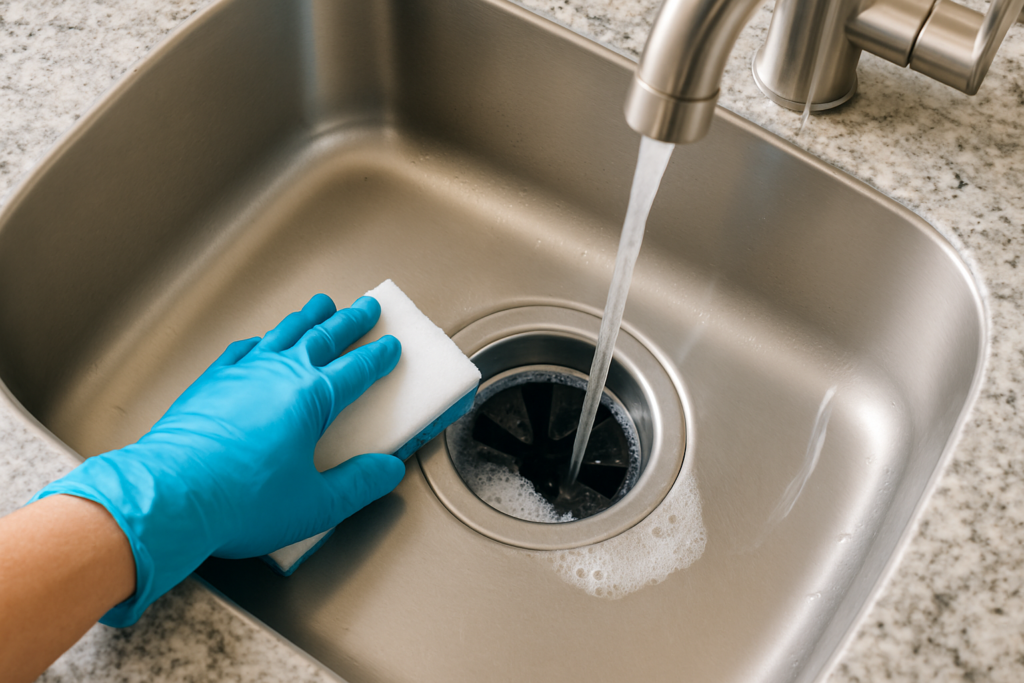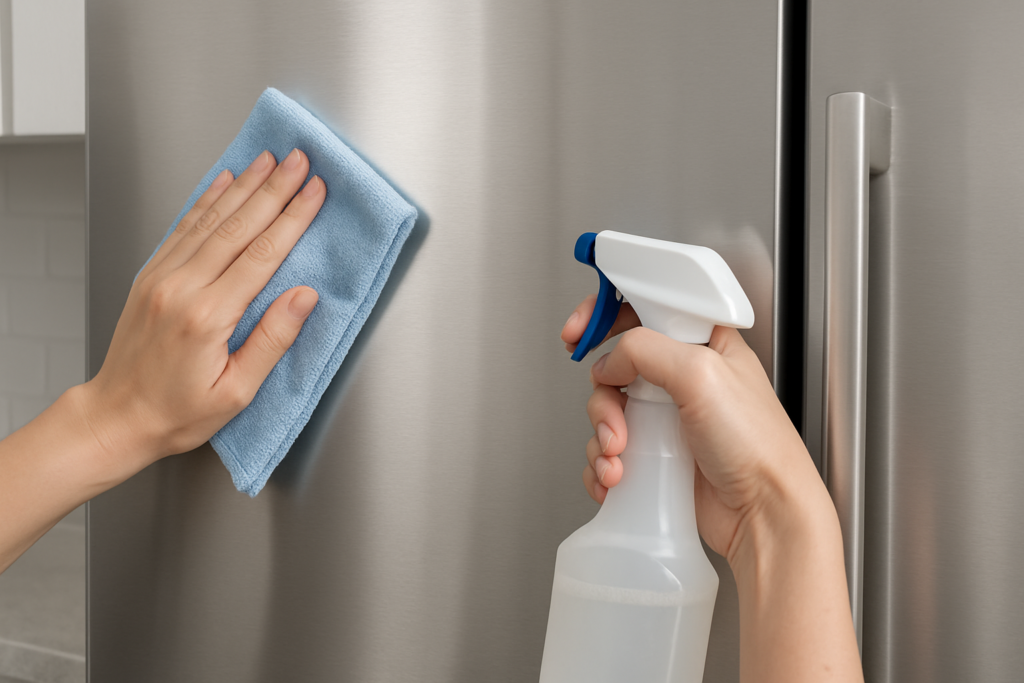
Stainless steel appliances look amazing when they’re streak-free and gleaming. But if you’ve ever wiped down your refrigerator only to see it covered in smears and fingerprints five minutes later, you know how frustrating the cleaning process can be. Most people are cleaning stainless steel all wrong, which is why they end up with those annoying streaks no matter how hard they scrub.
The secret to getting that showroom shine isn’t about using more product or scrubbing harder. It comes down to understanding grain direction, choosing the right materials, and knowing which cleaning solutions actually work versus which ones just waste your time and money.
Understanding the Grain Direction Technique
Every piece of stainless steel has a grain pattern, just like wood. Look closely at your appliances and you’ll see tiny lines running either horizontally or vertically across the surface. This grain direction is the single most important factor in getting streak-free results.
When you wipe against the grain, you’re essentially pushing dirt and oils into those microscopic grooves. When you wipe with the grain, you’re pulling everything out and creating that smooth, uniform finish. It’s that simple, yet most people randomly wipe in circles or use a back-and-forth motion that goes against the grain half the time.
Start by identifying which direction the grain runs on each appliance. On most refrigerators, it’s vertical. On dishwashers, it’s often horizontal. Once you know the direction, always wipe in long, smooth strokes following those lines. Don’t switch directions mid-wipe, and don’t go back over areas you’ve already cleaned until they’re completely dry.
The Microfiber vs Paper Towel Debate
I’ve tested both extensively, and the winner isn’t even close. Microfiber cloths outperform paper towels every single time. Paper towels leave behind tiny fibers, create static that attracts more dust, and often contain additives that leave residue on stainless steel surfaces.
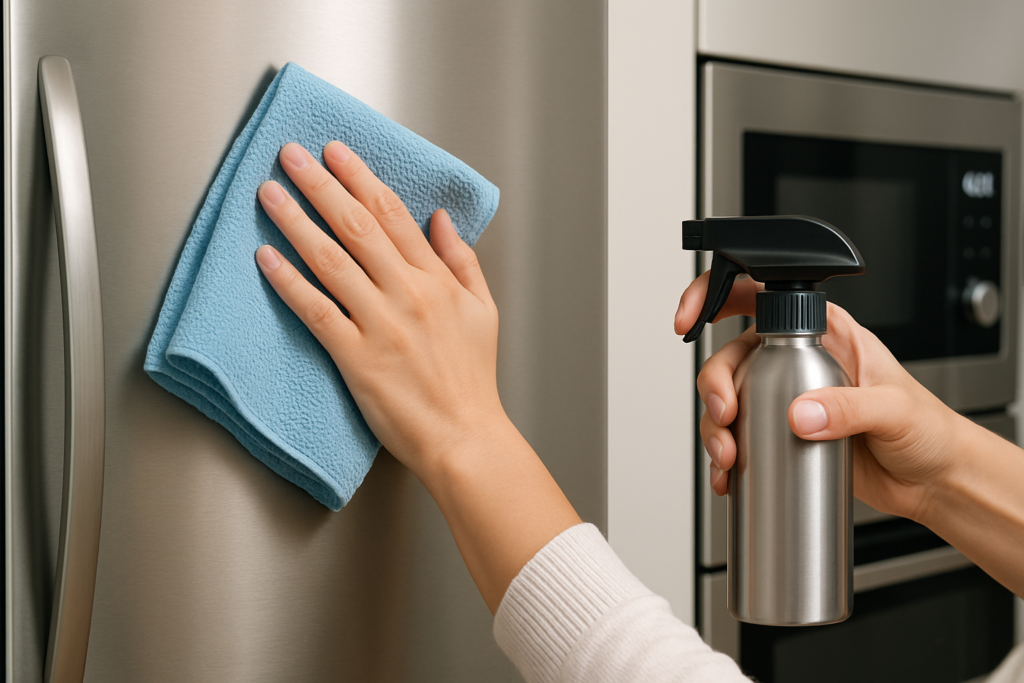
You need two types of microfiber cloths for this job. The first should be slightly damp for cleaning, and the second should be completely dry for buffing and removing any remaining streaks. Don’t use the same cloth for both steps. The damp cloth picks up the dirt and oils, while the dry cloth polishes everything to a shine.

Microfiber Cleaning Cloths
High-quality microfiber cloths are essential for streak-free results and will last hundreds of washes.
Make sure your microfiber cloths are actually clean before you start. Wash them separately from regular laundry, skip the fabric softener (which coats the fibers and reduces absorbency), and air dry them when possible. A dirty microfiber cloth will just redistribute grime across your appliances.
DIY Olive Oil Method vs Commercial Cleaners
The olive oil method has been making the rounds on social media for years, and I’ll admit it works better than most people expect. But it’s not the miracle solution everyone claims it is, and there are some real downsides you should know about.
To use the olive oil method, you’ll mix a few drops of olive oil with white vinegar on a microfiber cloth. The vinegar cuts through grease and grime, while the olive oil leaves a protective coating that resists fingerprints. Wipe with the grain, then immediately follow up with a dry cloth to remove excess oil. If you skip that second step, you’ll end up with an oily mess that attracts dust like crazy.
The main problem with olive oil is that it’s food-grade oil in your kitchen. Over time, it can turn rancid, especially in warm environments. You’ll start noticing a slightly off smell near your appliances after a few weeks. It also tends to build up in the grain if you’re not careful, creating a sticky residue that’s harder to remove than the original dirt.
Commercial stainless steel cleaners are formulated specifically to avoid these issues. They contain oils that won’t go rancid, along with cleaning agents that remove tougher grime than vinegar alone can handle. A quality stainless steel cleaner will also leave a protective barrier without the buildup problem.

Weiman Stainless Steel Cleaner
Professional-grade formula that cleans and protects without buildup or rancid oil smell.
My recommendation depends on your situation. For light maintenance cleaning once or twice a week, the olive oil method works fine and saves money. For deep cleaning or if you have kids constantly touching everything, invest in a commercial cleaner. You can also use a commercial cleaner for weekly deep cleans and maintain with the olive oil method in between.
The Complete Cleaning Process Step by Step
Start with a completely clean microfiber cloth dampened with warm water. No cleaning solution yet. Wipe down the entire surface with the grain to remove loose dust and light surface dirt. This prevents you from grinding particles into the steel during the actual cleaning process.
Apply your chosen cleaning solution to a fresh microfiber cloth, not directly to the appliance surface. Spraying directly creates pooling and drip marks that are difficult to remove. Work in sections about two feet square, wiping with long strokes in the direction of the grain. Use moderate pressure, but don’t scrub aggressively.
Immediately follow behind with your dry microfiber cloth, buffing in the same grain direction. This step removes excess cleaner and brings out the shine. Don’t wait for the cleaner to dry on its own, which is what causes those stubborn streaks everyone complains about.
For stuck-on grime or grease splatters, let your cleaning solution sit on the spot for 30 seconds before wiping. You can also use a paste of baking soda and water for tough spots, but rinse thoroughly and dry immediately to prevent water spots.
Protective Coatings for High-Traffic Kitchens
If you’re constantly battling fingerprints from kids or a busy household, a protective coating can reduce your cleaning frequency from daily to weekly. These coatings create an invisible barrier that repels oils from skin contact and makes water bead up instead of leaving spots.
The most effective option is a dedicated stainless steel protective coating or polish. These products contain silicone or polymer-based ingredients that bond to the steel surface. Apply them after deep cleaning when the surface is completely clean and dry. Buff with the grain using a clean microfiber cloth until the coating is evenly distributed.
TriNova Stainless Steel Polish
Creates a long-lasting protective barrier that significantly reduces fingerprints and water spots.
One application typically lasts 3-4 weeks with normal use. You’ll know it’s time to reapply when you notice fingerprints starting to show up more easily again. Don’t apply these coatings more frequently than needed, as buildup can actually make the surface look dull.
Some people use car wax for this purpose, which does work but isn’t ideal. Car wax is designed for paint, not stainless steel, and can leave a slightly cloudy appearance under certain lighting conditions. Stick with products made specifically for stainless steel appliances.
Common Mistakes That Guarantee Streaks
Using glass cleaner is probably the most common mistake. Glass cleaners contain ammonia and other chemicals that react with stainless steel, leaving cloudy residue and potentially damaging the protective chromium oxide layer that keeps stainless steel from rusting. Save the Windex for your windows.
Another big mistake is using too much product. More cleaner doesn’t mean better results. It just means more residue to buff away and a higher chance of streaking. A little goes a long way with any stainless steel cleaner. Start with less than you think you need and add more only if necessary.
Letting water or cleaner air dry on the surface is a recipe for water spots and streaks. Always dry immediately with a clean cloth. Even if you’re in a hurry, take the extra 30 seconds to do this step properly. Skipping it means you’ll spend ten times as long trying to remove streaks later.
Using dirty cloths is another streak guarantee. Once a microfiber cloth has dirt or oil on it, you’re just spreading that contamination around. Keep several clean cloths on hand and switch them out frequently during cleaning sessions.
Dealing with Stubborn Water Spots and Mineral Deposits
Hard water stains and mineral deposits require a different approach than regular cleaning. These white, chalky marks are caused by minerals in your water that get left behind when water evaporates. Regular cleaners won’t touch them because they’re not oil-based grime.
White vinegar is your best friend for mineral deposits. Apply undiluted white vinegar to the affected area and let it sit for five minutes. The acetic acid in vinegar dissolves the mineral buildup. Wipe with the grain, rinse with clean water, and dry immediately.
For extremely stubborn deposits, you can use a lime scale remover designed for use on stainless steel. Follow the product directions carefully, as these are stronger acids that need proper handling. Always test in an inconspicuous area first.
Prevention is easier than removal. Wipe down areas around your sink and any places where water regularly contacts your stainless steel appliances. Keep a dry cloth handy specifically for this purpose and make it a habit to dry these spots after each use.
Frequently Asked Questions
How often should I clean my stainless steel appliances?
For general maintenance, wipe down high-touch areas like refrigerator handles daily with just a damp microfiber cloth. Do a full cleaning with product once a week for most households, or twice a week if you have young children. Deep clean with a protective coating application monthly to keep everything looking its best and reduce daily maintenance time.
Can I use regular dish soap to clean stainless steel?
Yes, a few drops of mild dish soap in warm water works well for basic cleaning. It’s particularly effective for greasy buildup around stove areas. Make sure to rinse thoroughly with clean water and dry immediately to prevent soap residue and water spots. This method won’t provide the protective coating that specialized cleaners offer, so you might need to clean more frequently.
Why do my appliances look worse after cleaning?
This usually happens because you’re using too much product, not drying properly, or wiping against the grain. Try using less cleaner, buffing immediately with a dry cloth, and paying careful attention to grain direction. Also check that your microfiber cloths are actually clean. Old, contaminated cloths will make the problem worse instead of better.
Will scratches ever come out of stainless steel?
Minor surface scratches can be minimized using a stainless steel scratch removal kit or very fine sandpaper (2000 grit or higher), always working with the grain. Deep scratches that go through the chromium oxide layer are permanent and attempting to remove them can make the appearance worse. Most minor scratches become less noticeable over time as the surface develops a natural patina from regular use and cleaning.
This article contains affiliate links. We may earn a small commission at no extra cost to you.