You know that sinking feeling when you spill coffee in bed, or wake up to discover your toddler had an accident overnight? Your mattress doesn’t have to suffer for these moments. But here’s what most people get wrong: they grab the first waterproof protector they see, then spend the next year sleeping on what feels like a crinkly plastic bag.
The right mattress protector does more than block spills. It keeps dust mites at bay, extends your mattress life by years, and feels so comfortable you’ll forget it’s there. The wrong one? You’ll rip it off after a week because you’re sweating through your sheets or can’t stand the noise every time you move.
Understanding Material Options: What Actually Works
Let’s break down the three main materials you’ll encounter when shopping for a waterproof mattress protector.
Tencel Protectors: The Premium Choice
Tencel (lyocell) sits at the top of the material hierarchy for good reason. This eucalyptus-based fabric wicks moisture away from your body faster than cotton, which means you stay cooler throughout the night. The waterproof membrane sits underneath the Tencel layer, so you get complete protection without the plastic-sheet feel.
The best Tencel protectors are virtually silent. You won’t hear that telltale rustling sound when you shift positions at 3 a.m. They’re also naturally resistant to bacterial growth, which keeps odors at bay longer between washes.

Tencel Waterproof Mattress Protector
Premium option that stays cool and completely silent during sleep
The main downside? Tencel protectors typically cost more upfront. But if you’re a hot sleeper or someone who values sleep quality above all else, this investment pays off quickly. You’ll actually keep this one on your bed instead of stuffing it in a closet after two nights.
Bamboo Protectors: The Middle Ground
Bamboo rayon protectors offer solid temperature regulation at a lower price point than Tencel. The fabric breathes well and has natural antimicrobial properties that help control dust mites and bacteria. You’ll find plenty of bamboo mattress protectors that balance protection with comfort.
Not all bamboo protectors are created equal. Some manufacturers blend bamboo with polyester to cut costs, which reduces breathability. Check the fiber content before buying. You want at least 70% bamboo rayon for decent cooling properties.
Noise levels vary more with bamboo than Tencel. Quality bamboo protectors stay quiet, but cheaper versions can develop that crinkly sound after a few washes. Read recent reviews specifically mentioning noise before committing.
Vinyl and TPU Protectors: Maximum Protection
Vinyl protectors deliver unbeatable waterproof protection. If you’re dealing with full-on bedwetting, caring for someone with incontinence, or have pets who occasionally have accidents, vinyl creates an impenetrable barrier.
But you’re making a trade-off. Vinyl traps heat and moisture against your body. You’ll likely wake up warmer and potentially sweatier than with other materials. The noise factor is real too. Most vinyl protectors create some sound when you move, though newer models with soft fabric backing minimize this issue.
TPU (thermoplastic polyurethane) offers a modern alternative to traditional vinyl. It provides the same waterproof barrier with slightly better breathability and less noise. Look for TPU mattress protectors if you need maximum protection but want to avoid the worst vinyl drawbacks.

TPU Waterproof Mattress Protector Deep Pocket
Best waterproof barrier for families with kids or pets who need reliable protection
The Deep Pocket Dilemma: Getting the Right Fit
Nothing’s more frustrating than buying a protector that pops off the corners every few nights. Modern mattresses keep getting thicker. A standard mattress might measure 10 inches, but pillow-tops and memory foam models often hit 14 to 18 inches deep.
Measure your mattress height before shopping. Add two inches to account for the fitted sheet that goes on top. If your mattress is 14 inches, you need a protector rated for at least 16 inches.
Most quality protectors now come in deep pocket versions (14 to 18 inches) and extra deep pocket options (up to 22 inches). The elastic band should wrap all the way around the bottom hem, not just at the corners. Full elastic provides a more secure fit that won’t budge.
Split king and California king owners need to pay extra attention. These non-standard sizes sometimes require specific protectors. Don’t assume a regular king protector will fit properly.
Noise Levels: The Deal Breaker Nobody Talks About
You can’t assess noise levels from product photos. This is where reviews become critical. Search specifically for terms like “crinkly,” “rustling,” or “noisy” in the review section.
Material matters most for noise control. Tencel protectors are nearly always silent. High-quality bamboo comes close. Vinyl and cheaper polyester protectors are where you’ll encounter the most noise issues.
The backing material makes a huge difference. Protectors with a soft terry cloth or cotton backing dampen sound better than those with thin polyester backing. Some manufacturers use a special “noiseless” membrane layer between the top fabric and waterproof barrier specifically to address this problem.
One practical test: if you’re buying in-store, crumple the corner of the protector in your hand. This gives you a rough idea of the noise it’ll make when you move around on it. Online shoppers should prioritize brands that specifically advertise “whisper-quiet” or “noiseless” construction.
Washability and Durability: What to Expect Long-Term
You’ll wash your mattress protector more often than you think. Aim for once a month minimum, more frequently if you have allergies or pets on the bed. The protector needs to survive these regular wash cycles without losing its waterproof capabilities.
Most quality protectors handle machine washing in cold or warm water. Skip the hot water, which can break down waterproof membranes over time. The same goes for high heat drying. Tumble dry on low or medium, or line dry to maximize lifespan.
Avoid fabric softener and bleach. Both substances can compromise the waterproof layer. Regular detergent works fine. Some protectors with antimicrobial treatments specifically warn against fabric softener because it coats the fibers and reduces their effectiveness.
A well-made protector should last three to five years with proper care. You’ll know it’s time to replace when water starts beading less effectively on the surface, or when you notice the elastic losing its stretch. Don’t wait until it completely fails and soaks through to your mattress.
Dust Mite and Allergen Protection: More Than Marketing Hype
Dust mites live in your mattress right now. These microscopic creatures feed on dead skin cells and thrive in the warm, humid environment your body creates during sleep. Their waste products trigger allergies and asthma in millions of people.
A good mattress protector creates a physical barrier between you and existing dust mites in your mattress. More importantly, it prevents new mites from colonizing by blocking their food source (your skin cells) from penetrating deep into the mattress.
Look for protectors with pore sizes smaller than 10 microns. This specification blocks dust mites and their allergens effectively. Most quality waterproof protectors meet this standard automatically because the waterproof membrane is tight enough to block mites as well.
Certain materials offer bonus protection. Bamboo and Tencel both have natural antimicrobial properties that inhibit dust mite reproduction. Some manufacturers add antimicrobial treatments like silver ions or Microban, though the natural options work nearly as well.

Hypoallergenic Mattress Protector Dust Mite Proof
Ideal for allergy sufferers who need protection from dust mites and allergens
People with severe allergies should consider encasement-style protectors that zip completely around the mattress. These provide superior protection but don’t breathe as well as fitted-sheet-style protectors. For most people, a quality fitted protector provides sufficient allergen defense.
Spill Protection Levels: Matching Defense to Your Needs
Not everyone needs the same level of waterproofing. A single adult who occasionally has a glass of water on the nightstand needs less protection than a family with young children or someone caring for an elderly parent.
Light protection works for minor spills and body moisture. These protectors typically use a thin waterproof membrane that prioritizes breathability. They’ll handle a knocked-over water glass or slight perspiration but might not hold up to larger liquid volumes.
Full waterproof protection stops everything. These protectors can handle bedwetting, pet accidents, or significant spills without any liquid reaching your mattress. The trade-off is usually less breathability and potentially more noise, though modern materials have improved both factors.
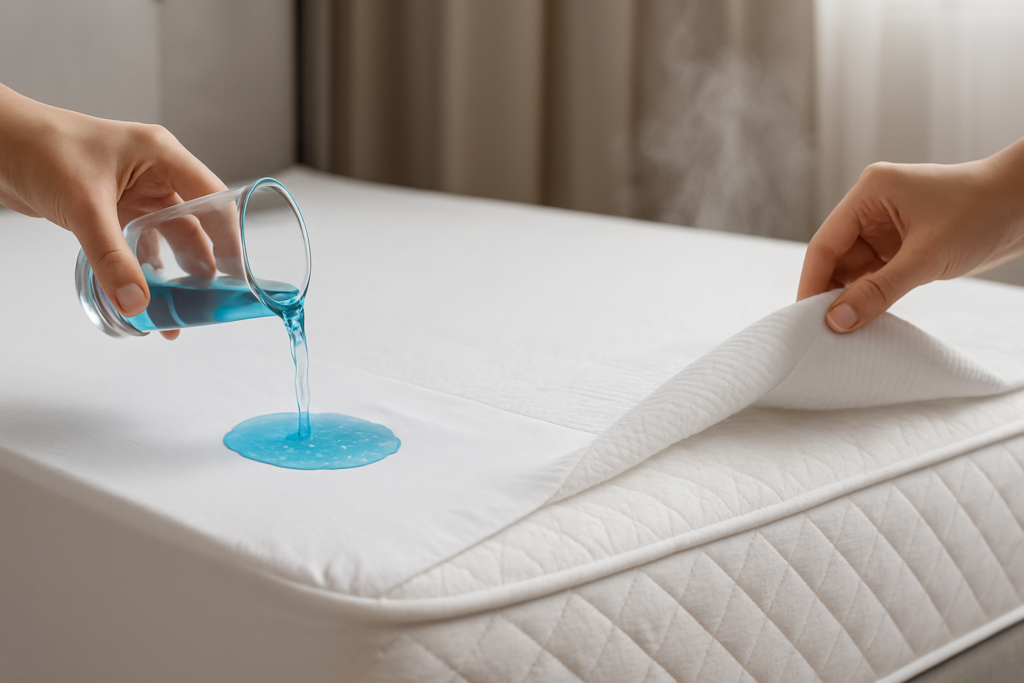
Test your protector’s effectiveness periodically. Pour a cup of water on an empty corner of the bed with the protector on. Check underneath after 10 minutes. Water should bead on top without any dampness below. This test helps you catch a failing protector before it lets a real accident through.
Remember that waterproof doesn’t mean the liquid disappears. You’ll still need to strip the bed and wash everything. The protector just ensures your expensive mattress stays dry and stain-free underneath.
Frequently Asked Questions
How often should I replace my mattress protector?
Replace your protector every three to five years with normal use and proper care. Replace it immediately if you notice water no longer beads on the surface, the elastic becomes loose, or you spot any tears or holes. Families with young children or pets may need to replace protectors more frequently due to heavier use.
Can I use a mattress protector with a memory foam mattress?
Yes, but choose a breathable option like Tencel or bamboo. Memory foam already sleeps warmer than traditional mattresses, so adding a non-breathable vinyl protector can make you uncomfortably hot. The protector won’t damage the memory foam, but it can affect your sleep comfort significantly if you pick the wrong material.
Do mattress protectors actually stay in place on adjustable beds?
Quality protectors with full elastic edges stay secure on adjustable bases. The key is getting the right depth. Your protector should have at least 2-3 inches of extra fabric beyond your mattress thickness to accommodate the elastic. Some manufacturers make specific adjustable-bed protectors with extra-strong elastic at stress points.
Will a mattress protector void my mattress warranty?
Actually, many mattress warranties require proof of protector use for stain-related damage claims. Check your specific warranty terms, but most manufacturers recommend using a protector. Just make sure you choose a breathable option if your warranty specifies that requirement. Some memory foam warranties specifically require protectors that don’t trap heat.
This article contains affiliate links. We may earn a small commission at no extra cost to you.