Your stainless steel appliances look stunning when they’re clean, but those stubborn fingerprints and streaks can make them look messy within hours. You’ve probably experienced the frustration of cleaning your refrigerator or dishwasher only to see smudges reappear the moment someone touches the surface.
The key to maintaining that showroom shine lies in understanding the grain direction of your stainless steel, choosing the right cleaning products, and implementing a few smart prevention strategies. With the proper technique and tools, you can keep your appliances looking pristine while minimizing daily maintenance.
Understanding Stainless Steel Grain Direction
Stainless steel has a natural grain pattern, similar to wood, that runs in one direction across the surface. This grain isn’t always obvious, but once you identify it, cleaning becomes much more effective.
Look closely at your appliance surface under good lighting. You’ll notice very fine lines that run either horizontally or vertically. Always clean and polish in the direction of these lines, never against them. Cleaning against the grain can create micro-scratches that become permanent over time.
Most refrigerators have vertical grain, while dishwashers and ranges often feature horizontal grain. Each appliance panel may have different grain directions, so check each surface individually before cleaning.
DIY vs Commercial Stainless Steel Cleaners
You have two main options for cleaning stainless steel: homemade solutions or commercial products. Both have their place depending on your needs and preferences.
DIY Cleaning Solutions
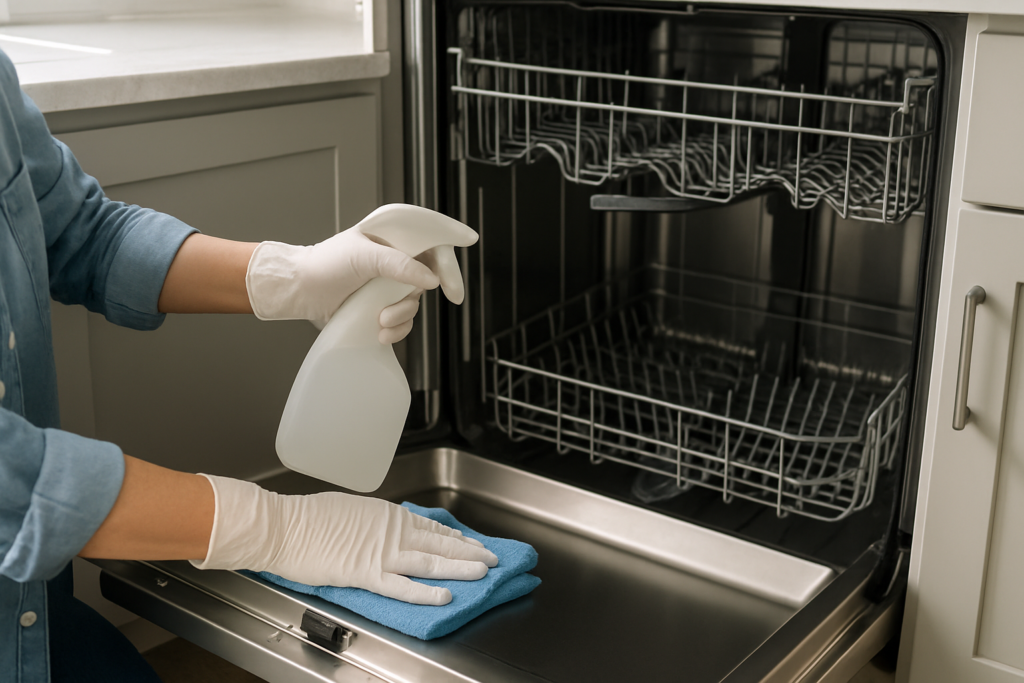
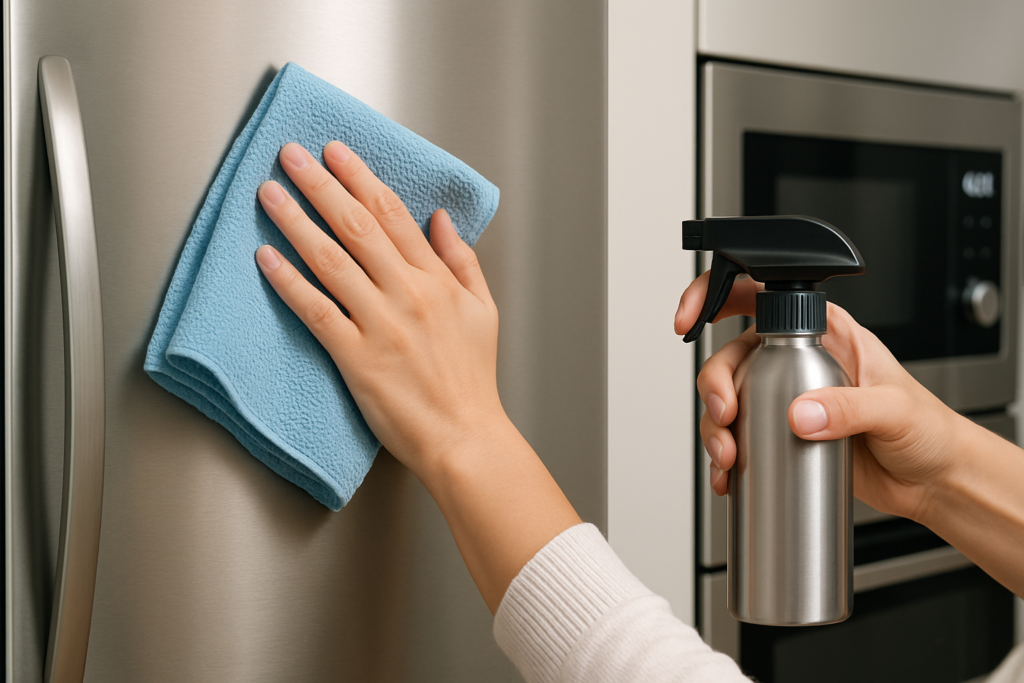
White vinegar mixed with water creates an excellent daily cleaner. Mix equal parts in a spray bottle and apply with a microfiber cloth, always following the grain direction. This solution removes fingerprints and light stains without leaving residue.
For tougher spots, try a paste made from baking soda and water. Apply gently with a soft cloth, rub in circular motions, then wipe clean following the grain. This method works particularly well on water spots and food residue.
Olive oil can serve as a natural polish after cleaning. Use just a few drops on a clean microfiber cloth to add shine and create a temporary barrier against fingerprints.
Commercial Cleaners
Commercial stainless steel cleaners offer convenience and often better results for heavy-duty cleaning. They’re formulated specifically for stainless steel and typically include both cleaning agents and protective coatings.
Weiman Stainless Steel Cleaner
Popular choice that cleans and polishes in one step with anti-fingerprint properties
Many commercial cleaners contain silicone or other compounds that help repel fingerprints and water spots. They’re particularly useful if you have children or frequently use your appliances, as they provide longer-lasting protection than DIY solutions.
Preventing Fingerprints and Smudges
Prevention beats cleaning every time. Several strategies can dramatically reduce the frequency of fingerprint appearance on your stainless steel surfaces.
Apply a thin coat of car wax designed for metal surfaces every few months. This creates an invisible barrier that makes fingerprints less likely to stick and easier to wipe away when they do appear.
Consider installing handles or pulls on appliances that don’t have them, particularly on refrigerator doors and dishwasher fronts. This gives family members something to grab besides the stainless steel surface.
Keep a microfiber cloth handy in your kitchen for quick daily touch-ups. A dry microfiber cloth can remove fresh fingerprints before they set into the surface.
Anti-Fingerprint Coatings and Technologies
Modern appliance manufacturers offer several solutions for reducing fingerprint visibility on stainless steel surfaces.
Many brands now produce “fingerprint-resistant” stainless steel appliances. These feature a special coating applied during manufacturing that makes fingerprints less visible and easier to clean. Samsung’s Black Stainless Steel and LG’s PrintProof finishes are popular examples.
You can also apply aftermarket anti-fingerprint coatings to existing appliances. Nano-ceramic coatings create an invisible protective layer that repels oils and moisture.
ProtectaClear Protective Coating
Professional-grade coating that provides long-term fingerprint resistance
These coatings typically last 6-12 months with normal use and can significantly reduce your daily cleaning routine. They’re particularly valuable in busy kitchens or homes with young children.
Dealing with Scratches and Damage
Minor scratches on stainless steel can often be repaired at home, while deeper gouges may require professional attention.
For light surface scratches, try buffing them out with a specialized stainless steel scratch remover compound. Apply the compound with a soft cloth, working in the direction of the grain, then polish with a clean microfiber cloth.
Deeper scratches that catch your fingernail may require professional refinishing. Contact your appliance manufacturer or a local appliance repair service for advice on whether repair is cost-effective compared to panel replacement.
Prevention remains your best strategy. Use only soft cloths and appropriate cleaning products, avoid abrasive scrubbers, and never use bleach or ammonia-based cleaners on stainless steel surfaces.
Daily Maintenance Routine
Establishing a simple daily routine keeps your stainless steel appliances looking their best with minimal effort.
Each evening, do a quick wipe-down of high-touch areas like refrigerator handles and dishwasher fronts using a damp microfiber cloth. This prevents oils from building up and becoming harder to remove.
Once weekly, clean all stainless steel surfaces with your chosen cleaner, following the grain direction. Apply any protective coating or polish at this time as well.
Monthly deep cleaning should include checking for any developing scratches or damage and addressing them promptly before they worsen.
Frequently Asked Questions
Can I use glass cleaner on stainless steel appliances?
Avoid glass cleaners on stainless steel, as they often contain ammonia which can damage the surface and leave streaks. Stick to cleaners specifically designed for stainless steel or use simple white vinegar and water solutions.
Why do some stainless steel surfaces seem to attract more fingerprints than others?
The finish quality and any existing protective coatings affect fingerprint visibility. Brushed finishes typically show fewer fingerprints than mirror finishes, and newer appliances with anti-fingerprint coatings will naturally resist smudges better than older models.
Is it safe to use steel wool on scratched stainless steel?
Never use regular steel wool on stainless steel appliances, as it will create more scratches. If you must use an abrasive material, choose ultra-fine #0000 steel wool and work very gently in the direction of the grain, but specialized scratch removal compounds are usually safer and more effective.
This article contains affiliate links. We may earn a small commission at no extra cost to you.