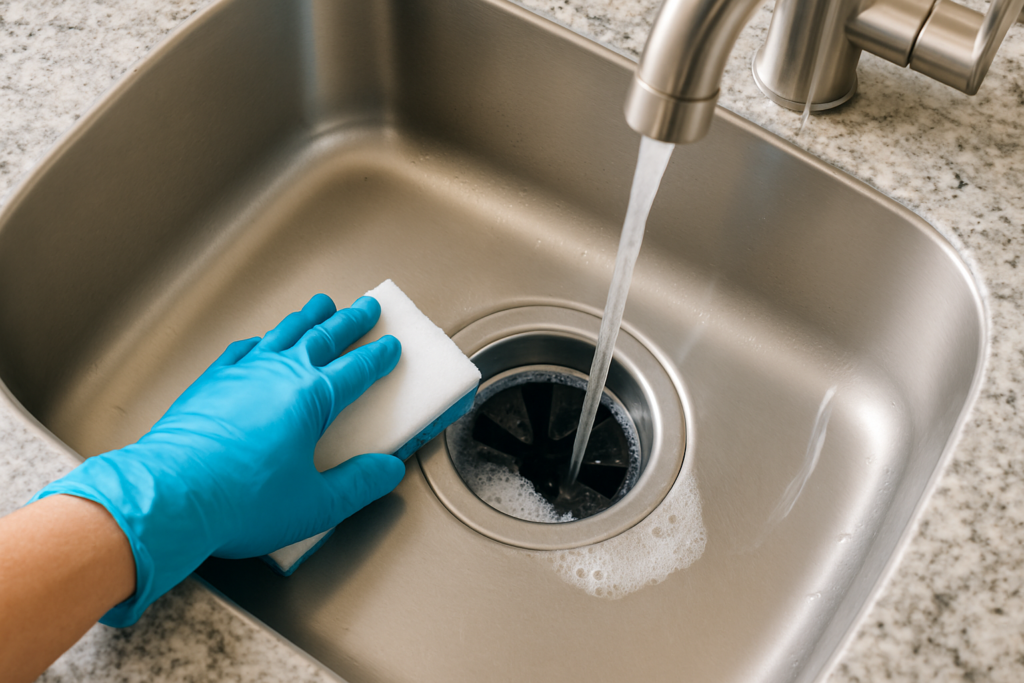
Few kitchen smells are as stubborn and offensive as a stinky garbage disposal. You know the one: that mysterious funk that wafts up from your sink and makes you wonder what died down there. The good news is that most disposal odors come from simple buildup of food residue and grease, not some mysterious plumbing disaster.
With the right cleaning techniques and maintenance habits, you can eliminate those odors for good and keep your disposal running smoothly for years. Most homeowners only think about their disposal when it starts smelling or making weird noises, but regular maintenance prevents both problems and saves you from expensive repairs down the road.
The Ice and Salt Deep Clean Method
This old-school trick works because it combines abrasive action with the hardness of ice to scrub away buildup from the disposal blades and walls. Start by turning off your disposal and running cold water. Drop about two cups of ice cubes into the disposal, followed by a cup of coarse salt or rock salt.
Turn on the disposal and let it run until all the ice is gone. The grinding action creates an abrasive slush that scours the interior surfaces, removing stuck-on grease and food particles that cause odors. You’ll hear the grinding get quieter as the ice breaks down.
Follow up immediately with cold water for another 30 seconds to flush away the debris. The cold water helps solidify any remaining grease so it gets chopped up and flushed away instead of coating the disposal walls.
Use this method once a month for regular maintenance, or weekly if you use your disposal heavily. It’s particularly effective after you’ve put anything greasy down the disposal.
Citrus Peels for Natural Freshening
Citrus peels are perfect for garbage disposals because they serve double duty. The oils in orange, lemon, and lime peels naturally deodorize while the fibrous texture helps clean the blades as they’re ground up.
Drop a few pieces of peel into the disposal with cold water running. The citrus oils coat the disposal components and create a fresh scent that lasts for days. Orange peels work particularly well because they’re thick enough to provide good scrubbing action.
Avoid using whole citrus fruits or large pieces of peel that might jam the disposal. Cut peels into strips about an inch wide for best results. You can also freeze citrus peels in ice cube trays with water to combine this method with the ice cleaning technique.
Grapefruit peels work well too, but avoid lemon peels if your disposal struggles with harder materials since lemon peels tend to be tougher than orange or lime.
Enzyme Cleaners for Stubborn Odors
When natural methods aren’t cutting through persistent smells, enzyme cleaners break down organic matter at the molecular level. These biological cleaners contain live bacteria that literally eat the food particles and grease causing odors.
Look for enzyme cleaners specifically designed for garbage disposals and drains. Pour the recommended amount into the disposal, let it sit for the specified time (usually 15-30 minutes), then flush with cold water. The enzymes continue working even after you rinse, breaking down buildup over several hours.
Bio-Clean Drain Septic Bacteria
This natural enzyme cleaner breaks down organic waste without harsh chemicals.
Enzyme cleaners work slowly but thoroughly. You might not notice results immediately, but they’re excellent for long-term odor control. Use them monthly as preventive maintenance or weekly if you’re dealing with ongoing smell issues.
Avoid using enzyme cleaners right after bleach or other chemical cleaners, as these can kill the beneficial bacteria. Wait at least 24 hours between chemical and enzyme treatments.
What Never Goes Down Your Disposal
Prevention beats cleaning every time. Certain foods will create clogs, damage your disposal, or cause persistent odors no matter how well you maintain the unit.
Grease, oil, and fat top the forbidden list. These seem harmless when they’re liquid, but they solidify in your pipes and create clogs. Even small amounts build up over time. Wipe greasy pans with paper towels before washing them.
Fibrous vegetables like celery, asparagus, and corn husks wrap around the disposal blades and cause jams. Potato peels create a starchy paste that clogs pipes. Coffee grounds seem innocent but they clump together and create stubborn blockages.
Bones, fruit pits, and shells are too hard for most home disposals. Even if your unit can grind them up, the particles can damage your plumbing. Rice and pasta expand when wet and can cause clogs downstream from your disposal.
Egg shells are controversial. Some people swear they help sharpen disposal blades, but the membrane inside shells can wrap around the blades and cause problems. Skip them to be safe.
Deep Cleaning the Splash Guard
The rubber splash guard sits right at the top of your disposal where it catches splashes but also traps food particles and bacteria. This overlooked component often causes odors even when the disposal itself is clean.
Lift up the rubber flaps and scrub underneath with an old toothbrush and dish soap. You’ll probably find slimy buildup and food particles stuck to the underside. This area stays moist and warm, creating perfect conditions for bacteria growth.
For really stubborn buildup, remove the splash guard completely if your model allows it. Most lift out easily once you know how they’re installed. Soak it in warm soapy water and scrub thoroughly before reinstalling.
OXO Good Grips Deep Clean Brush Set
These detail brushes are perfect for scrubbing splash guards and other tight spaces.
Some splash guards develop permanent odors or damage over time. Replacement guards are inexpensive and easy to install. If cleaning doesn’t eliminate smells from your splash guard, replacing it often solves the problem.
Maintenance Schedule That Actually Works
Consistent maintenance prevents most garbage disposal problems. Create a simple schedule you’ll actually follow rather than an elaborate routine you’ll skip.
Weekly: Run citrus peels through the disposal after your biggest cooking day. Most families should do this on Sunday after weekend meal prep.
Monthly: Use the ice and salt method to deep clean the disposal components. Schedule this for the first weekend of each month so you don’t forget.
Quarterly: Clean the splash guard thoroughly and consider an enzyme cleaner treatment if you’ve noticed any odors developing.
After heavy use: If you’ve been cooking more than usual or had guests over, run extra citrus peels and cold water to prevent buildup from turning into odors.
Frequently Asked Questions
Can I use baking soda and vinegar to clean my garbage disposal?
While this combination creates impressive fizzing, it’s not particularly effective for garbage disposals. The reaction neutralizes both ingredients quickly, leaving you with basically salt water. The ice and salt method or enzyme cleaners work much better for actually removing odor-causing buildup. Save the baking soda and vinegar for other cleaning tasks where they’re more effective.
How do I know if my garbage disposal needs professional repair?
Call a professional if your disposal makes grinding noises without anything in it, frequently jams even with appropriate food waste, or produces odors that don’t respond to thorough cleaning. Leaks from the bottom of the unit or electrical issues like frequent tripping of the reset button also require professional attention. Most odor problems resolve with proper cleaning, so persistent smells after deep cleaning might indicate a mechanical problem.
Is it safe to put my hand in the garbage disposal to retrieve something?
Never put your hand in a garbage disposal, even when it’s turned off. Use tongs, pliers, or a wooden spoon to retrieve items. Always disconnect the power at the electrical panel or unplug the unit before attempting to remove anything stuck in the disposal. Most units have a reset button on the bottom that you should try first if something jams the blades.
This article contains affiliate links. We may earn a small commission at no extra cost to you.