Small bathrooms and closets turn into moisture traps faster than you’d expect. That damp towel smell, condensation on mirrors, and musty clothes aren’t just annoying. They’re signs that excess humidity is creating the perfect environment for mold and mildew. A compact dehumidifier designed for these tight spaces can solve the problem without taking up precious floor space or running up your electric bill.
The trick is finding a unit that actually fits where you need it while still pulling enough moisture from the air to make a difference. Most small bathrooms and closets need something under 30 pints capacity, but don’t assume all compact models perform equally. Some barely outperform a box of baking soda, while others can handle serious moisture issues in spaces up to 300 square feet.
What Makes a Dehumidifier Work for Small Spaces
Capacity matters, but it’s not everything. A 20-pint dehumidifier sounds small compared to those 50-pint basement monsters, but it’s plenty for most bathrooms and walk-in closets. What you really need to watch is the coverage area rating and how efficiently it operates in cooler temperatures.
Most bathrooms hover between 40-100 square feet, while closets run even smaller. A good compact dehumidifier rated for 150-300 square feet gives you enough headroom to handle those post-shower humidity spikes without running constantly.
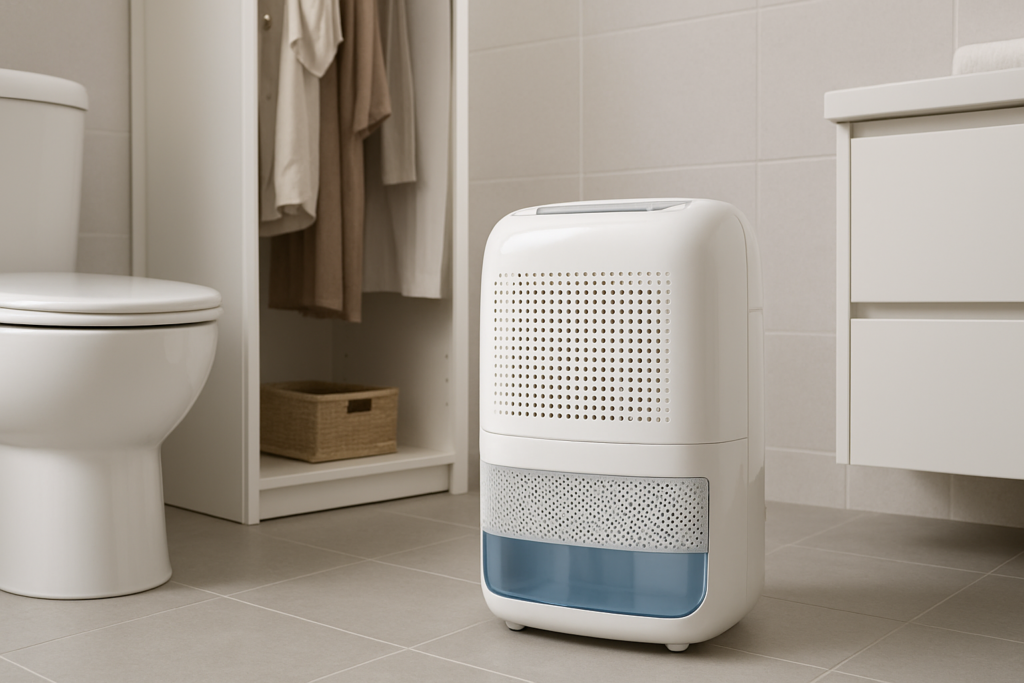
Physical dimensions count too. You need something that fits on a shelf, counter, or floor without blocking the door or creating a tripping hazard. Units measuring roughly 15 inches tall and 10 inches wide work well for most applications. Check the water tank access, too. If you can’t easily remove and empty the reservoir in your space, you’ll hate the unit within a week.
Top Picks for Bathroom and Closet Humidity Control
The hOmeLabs 22-Pint model hits the sweet spot for most small bathroom applications. It pulls moisture effectively in spaces up to 300 square feet, features both auto-shutoff when the tank fills and a continuous drain option via hose connection. The unit runs relatively quiet at around 45 decibels, which matters if your bathroom shares a wall with a bedroom.

hOmeLabs 22 Pint Dehumidifier
Best all-around performer for bathrooms with excellent drainage options and reliable auto-shutoff
Energy consumption runs about 240 watts during active dehumidification. That’s reasonable for continuous use, translating to roughly the same draw as running three standard light bulbs. You’ll notice the difference in your bathroom within 24 hours. Those foggy mirrors clear faster, and towels dry completely instead of staying perpetually damp.
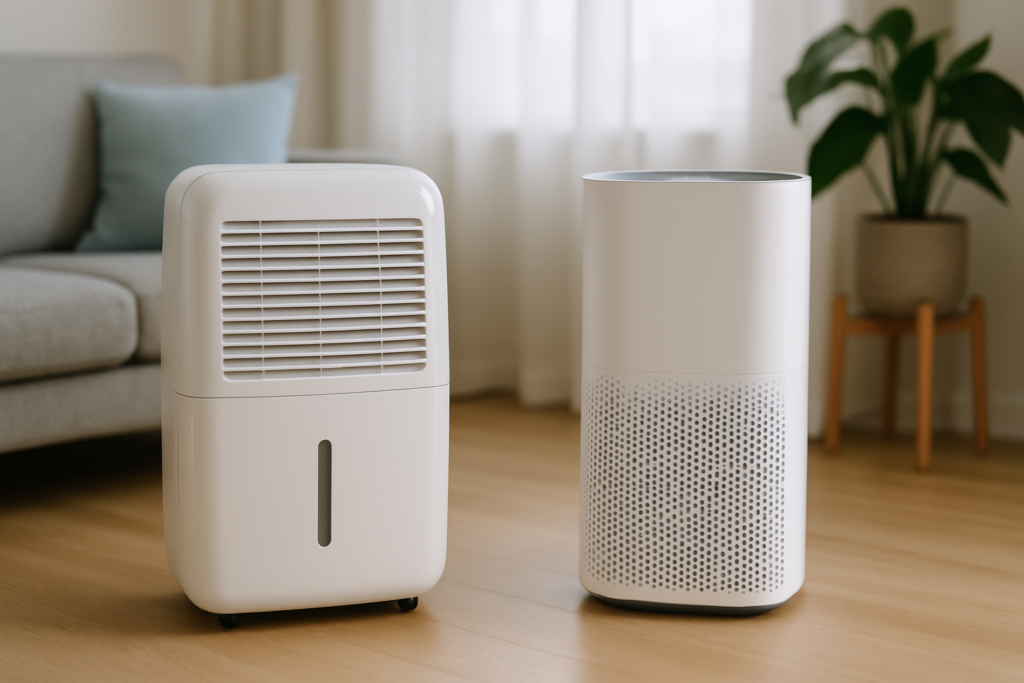
For tighter spaces like closets or powder rooms, the Frigidaire 20-Pint model works better. It’s slightly smaller in footprint but still packs enough power to prevent that musty smell from taking over your clothes. The unit includes a built-in pump on some versions, which helps if you can’t easily route a gravity drain.

Frigidaire 20 Pint Dehumidifier
Ideal for closets and small spaces where you need effective moisture control in a compact footprint
Pro tip: measure your space before buying. A unit that’s technically small enough but blocks your closet’s clothing rod or bathroom cabinet isn’t actually going to work for you.
Drain Hose vs. Auto-Shutoff: Which Matters More
Auto-shutoff keeps your floor from flooding when the collection tank fills up. Every decent small dehumidifier includes this feature, but implementation varies. Better units use a float switch that actually works reliably. Cheaper models sometimes fail, or worse, trigger shutoff before the tank is actually full.
The drain hose option becomes critical if you’re running the dehumidifier continuously or can’t check it daily. Most units accept a standard garden hose diameter (usually 5/8 inch). You’ll need somewhere for that water to go, though. A floor drain, sink, or exterior wall penetration works. Without gravity on your side, the water won’t flow.
For bathroom installations, routing a drain hose into the toilet or shower drain makes sense. Just secure it properly so it doesn’t create a tripping hazard or come loose. In closets, you’re usually stuck with the auto-shutoff option unless you want to get creative with your plumbing.
Some people run both systems. Set up the drain hose for normal operation, but keep the auto-shutoff as backup in case the hose gets kinked or clogged. That redundancy prevents the “I came home to a flooded closet” scenario.
Energy Use and Noise Levels: The Hidden Factors
A dehumidifier running 12-16 hours daily in your bathroom adds up on your electric bill. Units drawing 250-300 watts cost roughly competitively priced-5 monthly to run if electricity rates hover around the national average. That’s acceptable for solving a real moisture problem, but significantly higher consumption should make you question the unit’s efficiency.
Look for Energy Star rated models when possible. The certification means the unit meets specific efficiency standards. You’re typically looking at 1.85 liters of water removed per kilowatt-hour or better. That efficiency rating matters more than you’d think when the unit runs daily for months.
Noise becomes a bigger issue in bathrooms attached to bedrooms. A dehumidifier humming at 50 decibels right through the wall gets old fast. Models rated under 45 decibels during normal operation work better for these situations. Some units include a quiet or sleep mode that reduces fan speed and noise at the cost of slightly slower moisture removal.
The Keystone 22-Pint model deserves mention here for running particularly quiet. Users consistently report noise levels around 42 decibels, which is roughly equivalent to a quiet conversation. It also includes a handle and wheels for easy movement between spaces if needed.
How Well Do They Actually Work Against Mildew
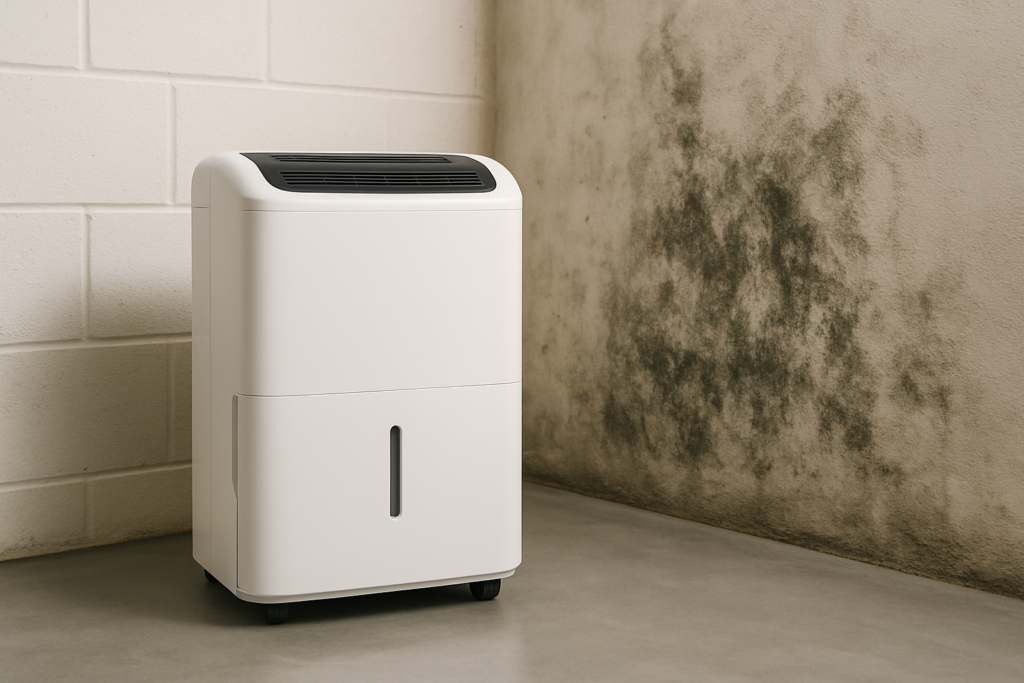
Mildew grows when relative humidity stays above 60% for extended periods. Most bathroom dehumidifiers can drop humidity to 40-50% within a few hours of operation, then maintain that level. You’ll see visible results on towels within three to four days. They’ll dry completely instead of staying damp and developing that sour smell.
Grout lines, shower curtains, and bathroom ceilings also benefit. That black speckling you scrub away every few months appears less frequently when you keep humidity controlled. The dehumidifier won’t eliminate existing mildew, but it prevents new growth by removing the moisture mildew needs to thrive.
In closets, the impact shows up differently. Clothes smell fresher, leather items don’t develop that white fuzzy mold, and shoes dry out properly between wears. You’ll particularly notice the difference with seasonal items stored for months at a time. Pull out your winter coat in November and it actually smells clean instead of musty.
For best results, run your dehumidifier continuously for the first week to knock down existing moisture, then switch to as-needed operation. Most modern units include a humidistat that lets you set your target humidity level. The unit cycles on and off automatically to maintain that setting.
Frequently Asked Questions
Can I run a dehumidifier in a bathroom without ventilation?
Yes, and you probably should. Bathrooms without exhaust fans accumulate moisture even faster than those with ventilation. A dehumidifier compensates for the lack of airflow by mechanically removing moisture from the air. Just make sure you have somewhere for the collected water to go, either via regular tank emptying or a drain hose setup. The unit works better if you crack the door slightly to allow some air circulation with the rest of your home.
How often do I need to empty the water tank?
That depends on your bathroom’s humidity levels and how much you use the space. Most small bathroom dehumidifiers collect 1-3 pints daily under normal conditions. With a typical 1.5-2 gallon tank capacity, you’re looking at emptying every 2-4 days. Post-shower humidity spikes increase collection rates significantly. The continuous drain option eliminates this maintenance entirely if you can route the hose appropriately.
Will a dehumidifier make my bathroom cold?
Slightly, but not noticeably in most cases. Dehumidifiers work by cooling air to condense moisture, then reheating it before releasing it back into the room. The net effect is typically a 1-2 degree temperature increase, not a decrease. You might notice the air feels less humid and therefore slightly cooler to your skin, but the actual temperature stays stable or rises marginally. This makes them safe to run year-round without worrying about freezing pipes or uncomfortable cold spots.
This article contains affiliate links. We may earn a small commission at no extra cost to you.