If you’ve ever opened your refrigerator to find wilted lettuce, expired yogurt, or mystery leftovers that have seen better days, you’re not alone. The average American household throws away about 30% of the food they buy, with most of that waste happening right in the fridge. The culprit isn’t just buying too much food, it’s poor organization and cleaning habits that let perfectly good groceries spoil before you remember they’re there.
The good news is that proper refrigerator organization can genuinely cut your food waste in half. When everything has a designated spot and you can actually see what you own, you’ll use ingredients before they expire and stop buying duplicates of items hiding in the back. Here’s how to transform your fridge into an efficient, waste-reducing machine.
Set Up a Zone-Based Organization System
The key to reducing food waste starts with creating specific zones for different types of food. This isn’t just about making your fridge look neat, it’s about knowing exactly where to find everything and ensuring items are stored at their optimal temperatures.
Start with your top shelf, which should be your leftovers and ready-to-eat zone. This prime real estate at eye level needs to house items you need to consume quickly. Place all leftovers, prepared meals, and snacks here where you can’t miss them.
Your middle shelves work best for dairy products like milk, yogurt, and cheese. These shelves maintain the most consistent temperature, which keeps dairy fresh longer. Store eggs in their original carton on a middle shelf rather than in the door, where temperature fluctuations can reduce their shelf life.
Reserve your bottom shelf and crisper drawers for raw ingredients. Raw meat should always go on the bottom shelf to prevent any drips from contaminating other foods. Use one crisper drawer for fruits and another for vegetables, as they require different humidity levels.
Master Temperature Control
Your refrigerator’s temperature zones play a huge role in how long your food stays fresh. Most people don’t realize that different areas of their fridge can vary by 5-10 degrees, which makes a significant difference in food preservation.
Set your main refrigerator temperature between 35-38°F (1.5-3°C). Anything warmer promotes bacterial growth, while colder temperatures can freeze delicate produce. Invest in a refrigerator thermometer to monitor the actual temperature, as your fridge’s built-in gauge isn’t always accurate.
Refrigerator Temperature Monitor
Essential for maintaining optimal food storage temperatures and preventing premature spoilage.
Adjust your crisper drawer settings properly. Most drawers have humidity controls marked with fruit and vegetable symbols. High humidity (closed vents) works best for leafy greens and herbs, while low humidity (open vents) keeps fruits fresh longer.
Don’t overcrowd your fridge. Air needs to circulate to maintain consistent temperatures throughout. If you can’t fit a hand between items, you’ve packed too much in. This also makes it harder to see what you have, leading to forgotten and spoiled food.
Use Clear Bins and Labels Strategically
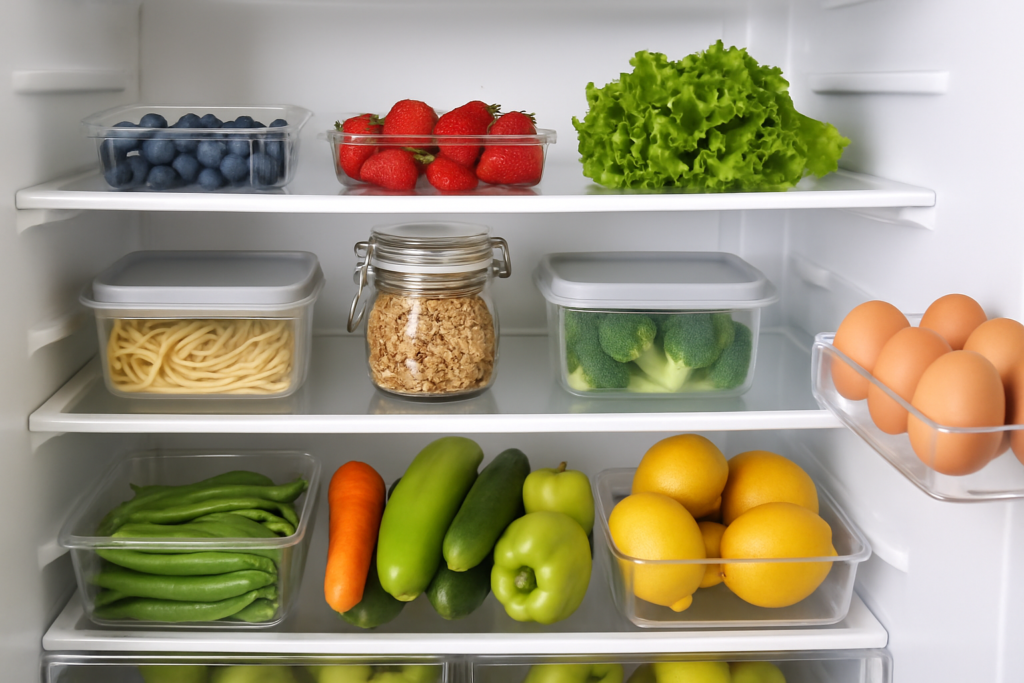
Clear storage bins transform your fridge from a chaotic jumble into an organized system where nothing gets lost. When you can see everything you own at a glance, you’re much more likely to use it before it expires.
Choose rectangular bins that maximize space efficiency. Round containers waste valuable real estate in your rectangular fridge. Look for stackable options with handles for easy removal and cleaning. Clear refrigerator bins come in various sizes to fit different shelf configurations.
Create specific bins for categories like “use first,” “snacks,” “meal prep ingredients,” and “condiments.” The “use first” bin is particularly effective at reducing waste. Every time you shop, move items nearing their expiration dates into this bin and place it at eye level.
Refrigerator Organization Bins Set
These stackable bins help categorize food and make everything visible at a glance.
Label everything with both the contents and date. Use a removable food labeling system that won’t leave sticky residue on containers. This simple step prevents the guessing game of whether that container holds Tuesday’s soup or last week’s mystery leftovers.
Implement a Smart Deep Cleaning Schedule
Regular cleaning isn’t just about hygiene, it’s about maintaining an environment where you can easily track your food inventory. A dirty, cluttered fridge makes it impossible to see what needs to be used up.
Schedule a weekly fridge audit every time before grocery shopping. Remove everything, wipe down shelves with a mixture of warm water and baking soda, and toss anything that’s expired or spoiled. This 15-minute routine prevents buildup and keeps you aware of what you actually need to buy.
Do a monthly deep clean where you remove all bins and drawers for thorough washing. Check the expiration dates on condiments and sauces in the door, as these often get forgotten for months. Clean the drip tray and interior walls to prevent odors that can affect food quality.
Pay special attention to your crisper drawers during cleaning. These humid environments can harbor bacteria and mold that spread to fresh produce. Remove the drawers completely and wash them in hot, soapy water, then dry thoroughly before replacing.
Track and Rotate Your Inventory
The most organized fridge in the world won’t reduce food waste if you don’t actively manage what’s inside. Developing systems to track and rotate your food inventory ensures nothing gets forgotten in the back.
Practice “first in, first out” rotation religiously. When you bring home new groceries, move older items to the front and place new purchases behind them. This restaurant industry standard works just as well in home kitchens.
Keep a running inventory list on your phone or stuck to your fridge. Note when you open perishable items like yogurt or lunch meat, as their shelf life changes once exposed to air. This helps you prioritize what needs to be consumed first.
Plan your meals around what you already have. Before making a shopping list, take photos of your fridge contents so you remember what needs to be used up. Build meals around ingredients that are approaching their expiration dates rather than buying all new items.
FAQ: Common Refrigerator Organization Questions
How long can leftovers safely stay in the refrigerator?
Most cooked leftovers stay safe for 3-4 days in the refrigerator when stored properly in airtight containers. Always label containers with the date and contents, and trust your senses. If something looks, smells, or tastes off, throw it out regardless of how long it’s been stored.
Should I wash fruits and vegetables before storing them?
Don’t wash most produce until you’re ready to use it. Excess moisture promotes spoilage and reduces shelf life. Exceptions include hardy vegetables like carrots and celery, which can be washed, dried, and stored in water for extended freshness. Always wash berries just before eating, not before storage.
What’s the best way to store herbs to make them last longer?
Treat soft herbs like basil and cilantro like flowers. Trim the stems and place them in water, then cover loosely with a plastic bag. Hardy herbs like rosemary and thyme can be wrapped in slightly damp paper towels and stored in plastic bags. Both methods can extend herb life by a week or more.
This article contains affiliate links. We may earn a small commission at no extra cost to you.