Your HVAC filter is quietly protecting your home’s air quality and keeping your system running smoothly. But walk down the filter aisle at any home improvement store and you’ll face dozens of options with confusing numbers and technical terms. Getting the wrong size, type, or replacement schedule can cost you money and compromise your indoor air quality.
Let’s cut through the confusion and get you the right filter for your specific needs. This guide covers everything from decoding MERV ratings to choosing between fiberglass and pleated options.
Understanding MERV Ratings
MERV stands for Minimum Efficiency Reporting Value, and it measures how well your filter captures particles. The scale runs from 1 to 20, with higher numbers catching smaller particles.
For most homes, MERV 8-13 hits the sweet spot. MERV 8 filters handle dust, pollen, and pet dander effectively while allowing good airflow. MERV 11-13 filters add protection against smoke, smog, and smaller allergens but create more resistance to airflow.
Avoid going above MERV 13 unless you have specific health concerns or your HVAC professional recommends it. Higher-rated filters can restrict airflow so much that they strain your system and reduce efficiency.
Filtrete 20x25x1 MERV 13 Filter
Excellent balance of particle capture and airflow for most homes
Filter Types: What Works Best
Fiberglass Filters
These basic filters cost the least but only catch large particles like dust and lint. They typically rate MERV 1-4 and need replacement every 30 days. Fiberglass filters work if you only want to protect your HVAC equipment, not improve air quality.
Pleated Filters
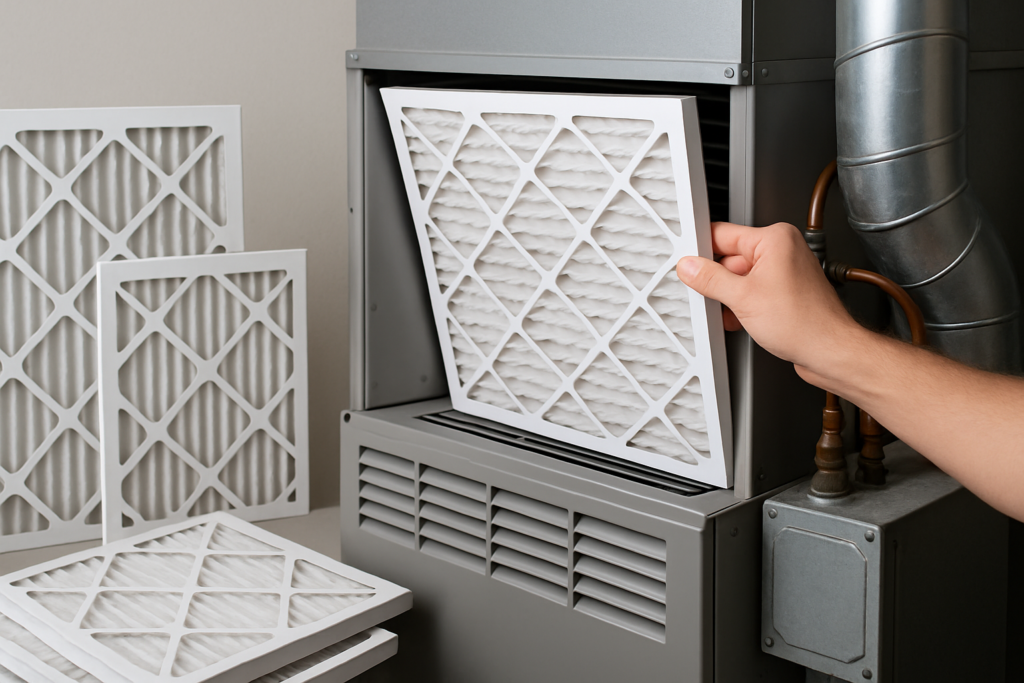
Pleated filters offer the best value for most homeowners. The folded design creates more surface area to trap particles while maintaining decent airflow. They range from MERV 8-13 and last 60-90 days depending on conditions.
Look for pleated filters with MERV 11 ratings for the ideal balance of filtration and system protection. They capture most allergens without overworking your equipment.
Nordic Pure MERV 12 Pleated Filter
High-quality construction with excellent particle capture for allergy sufferers
Electrostatic Filters
These washable filters use static electricity to attract particles. While they can last for years with regular cleaning, they’re inconsistent performers. Their effectiveness drops significantly when dirty, and cleaning them monthly becomes a chore.
Stick with disposable pleated filters unless you’re committed to a strict washing schedule every 4-6 weeks.
How Often to Change Your Filter
Replacement frequency depends more on your specific conditions than the filter type alone. Check your filter monthly and replace it when it looks dirty or according to these guidelines:
- Basic fiberglass filters: Every 30 days
- Pleated MERV 8-10: Every 60-90 days
- Pleated MERV 11-13: Every 45-60 days
- Homes with pets: Reduce timeframes by 25-30%
- Heavy pollen seasons: Check every 2 weeks
Your home’s dust level, pet count, and local air quality affect these timelines significantly. A single cat can cut filter life in half, while homes in dusty areas may need monthly changes regardless of filter type.
Set a phone reminder to check your filter on the first of each month. Hold it up to the light – if you can’t see through it clearly, it’s time for a replacement.
Getting the Right Size
Filter dimensions are printed on the cardboard frame, typically showing length x width x thickness (like 16x25x1). Measure your current filter or check your HVAC manual for the exact size.
Don’t try to force a slightly wrong size to fit. Gaps around the edges let unfiltered air bypass the filter entirely, defeating the purpose. Order the exact dimensions your system requires.
Many homeowners buy multi-packs of filters to save money and ensure they always have replacements on hand.
Frequently Asked Questions
Can I use a higher MERV rating than recommended?
Not without checking with an HVAC professional first. Filters above MERV 13 can restrict airflow enough to damage your system or reduce efficiency. Your equipment’s fan may not be powerful enough to pull air through very dense filters.
Why does my new filter look dirty after just a few weeks?
This usually means the filter is working well, especially during high-pollen seasons or after home projects that stir up dust. However, if it happens consistently, you might have ductwork leaks, an oversized filter opening, or need a lower MERV rating that allows better airflow.
This article contains affiliate links. We may earn a small commission at no extra cost to you.