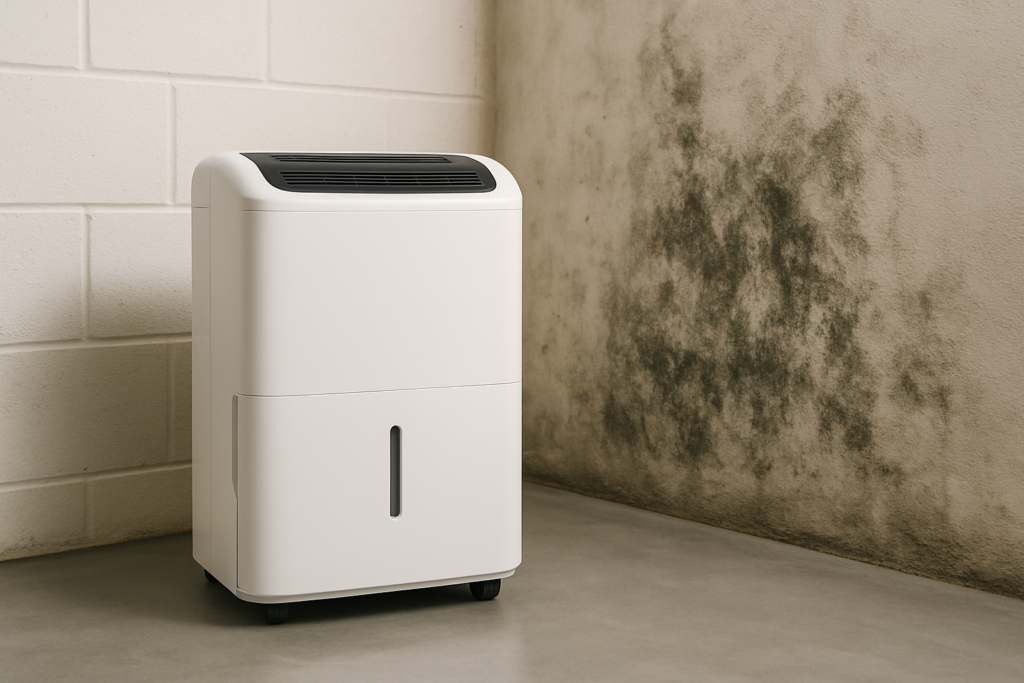
Mold creeping up your basement walls isn’t just unsightly. It’s a health hazard that can trigger allergies, asthma, and respiratory problems. The culprit behind most basement mold issues isn’t a major leak or flood, but something far more subtle: excess humidity that builds up slowly over time.
A quality dehumidifier is your first line of defense against basement moisture problems. But with basements ranging from cramped crawl spaces to sprawling finished rec rooms, choosing the right unit requires understanding capacity, drainage options, and energy efficiency. Here’s everything you need to know about selecting the best dehumidifier for your basement in 2026.
Understanding Basement Dehumidifier Capacity
Dehumidifier capacity is measured in pints per day, but this number alone won’t tell you what size you need. You’ll need to consider your basement’s square footage, ceiling height, and existing humidity levels.
For a typical 500-square-foot basement with standard 8-foot ceilings, a 30-pint unit works well for moderate humidity control. If your basement feels noticeably damp or has a musty smell, step up to a 50-pint model. Large basements over 1,000 square feet often require 70-pint units or multiple smaller dehumidifiers.
Concrete walls and floors, common in basements, naturally release moisture through a process called efflorescence. This means basement dehumidifiers work harder than units in other parts of your home. Consider going one size larger than basic calculations suggest.
Gravity Drain vs Pump Options
Most basement dehumidifiers offer multiple drainage options, and choosing the right one can save you significant maintenance time.
Gravity drain systems use a simple hose connection to direct water to a floor drain or utility sink. This works perfectly if your dehumidifier sits higher than the drain point. The Frigidaire FFAP5033W1 includes a standard gravity drain port that connects to most standard garden hoses.
Frigidaire FFAP5033W1
Excellent gravity drain option with reliable moisture removal for medium-sized basements
Built-in pumps become essential when you need to move water upward or across longer distances. The Aprilaire 1820 features an internal pump that can push water up to 15 feet vertically, making it ideal for basements without convenient floor drains.
External condensate pumps offer another solution. You can add these to almost any dehumidifier, giving you flexibility to position your unit wherever it works best for air circulation rather than being limited by drain locations.
Energy Efficiency and Operating Costs
Basement dehumidifiers often run continuously during humid months, making energy efficiency crucial for keeping utility bills reasonable. Look for models with Energy Star certification, which indicates they use at least 15% less energy than standard units.
Variable-speed compressors adjust their operation based on current humidity levels rather than simply cycling on and off. This technology, found in premium models like the Aprilaire E080, can reduce energy consumption by 20-30% compared to single-speed units.
Automatic humidity controls prevent the unit from over-drying your basement air. Most quality dehumidifiers allow you to set your target humidity level, typically between 30-50% for basements. The unit will cycle automatically to maintain this level.
Top Dehumidifier Picks by Basement Size
Small Basements (Up to 500 sq ft)
The hOmeLabs HME020031N handles small basement spaces efficiently with its 30-pint daily capacity. This unit includes both gravity drain and pump options, plus an easy-to-read digital display for humidity monitoring.
For finished basements where noise matters, consider the Vremi 30-pint model. It operates significantly quieter than most competitors while still providing effective moisture control.
Medium Basements (500-1000 sq ft)
The Keystone KSTAD50B delivers reliable 50-pint capacity with excellent build quality. Its heavy-duty construction handles the demanding basement environment better than many residential-grade units.
Keystone KSTAD50B
Heavy-duty construction perfect for demanding basement conditions with excellent moisture removal capacity
GE’s ADEL50LY offers smart connectivity features, allowing you to monitor and adjust settings remotely through a smartphone app. This proves especially useful for basement units that you might not check daily.
Large Basements (1000+ sq ft)
Large basement spaces require serious moisture removal capacity. The Aprilaire 1870 provides 70-pint daily capacity with professional-grade components designed for continuous operation.
Aprilaire 1870
Professional-grade 70-pint capacity designed for continuous operation in large basement spaces
Multiple smaller units sometimes work better than one large dehumidifier in sprawling basements. Two 35-pint units positioned at opposite ends can provide more even humidity control than a single 70-pint unit in one corner.
Installation and Maintenance Tips
Position your dehumidifier away from walls and furniture to ensure proper airflow. Most units need at least 6-12 inches of clearance on all sides for optimal performance.
Clean the air filter monthly during heavy-use periods. Basement air often contains more dust and particles than other areas of your home, so filters clog faster. A dirty filter forces the unit to work harder and reduces efficiency.
Check and clean the water reservoir weekly, even if you’re using continuous drainage. Standing water can develop bacteria or algae that creates odors and reduces air quality.
Frequently Asked Questions
What humidity level should I maintain in my basement?
Keep basement humidity between 30-50% for optimal mold prevention. Levels below 30% can cause wood to crack and become overly dry, while anything above 60% creates ideal conditions for mold growth.
Can I use a regular dehumidifier in my basement?
Regular room dehumidifiers often struggle in basement conditions. Basements typically have lower temperatures and higher humidity loads than other areas. Purpose-built basement dehumidifiers have more robust components and better low-temperature performance.
How often should I empty the water tank?
Tank-only units in humid basements may need emptying daily or even twice daily during peak seasons. This is why continuous drainage options become so valuable for basement applications. With proper drainage setup, you can go weeks without manual intervention.
This article contains affiliate links. We may earn a small commission at no extra cost to you.