Few things are more frustrating than flipping the switch on your garbage disposal only to find dirty water pooling in your sink. The grinding sounds normal, but nothing’s going down. You’re stuck staring at yesterday’s dinner scraps floating in murky water, wondering what went wrong.
A garbage disposal that won’t drain is one of the most common kitchen plumbing issues, and it’s usually fixable without calling a plumber. The problem typically comes down to a clog, a jammed impeller, or an issue with your drain line. Let’s walk through exactly what’s causing your disposal to back up and how to get it working again.
Understanding How Your Garbage Disposal Drains
Before you start troubleshooting, it helps to know how water actually moves through your disposal. When you run the disposal, the impellers grind food waste into small particles. These particles mix with water and flow through the drain pipe, typically into a P-trap, then into your home’s main drain line.
The disposal itself doesn’t create suction or pump water. It relies entirely on gravity and water flow to move waste through the system. This means any blockage in the drain path will cause water to back up into your sink.
Most drainage problems happen in one of three places: inside the disposal chamber, in the P-trap directly below the unit, or further down the drain line where it connects to your dishwasher or main drain.
Check for Clogs Inside the Disposal
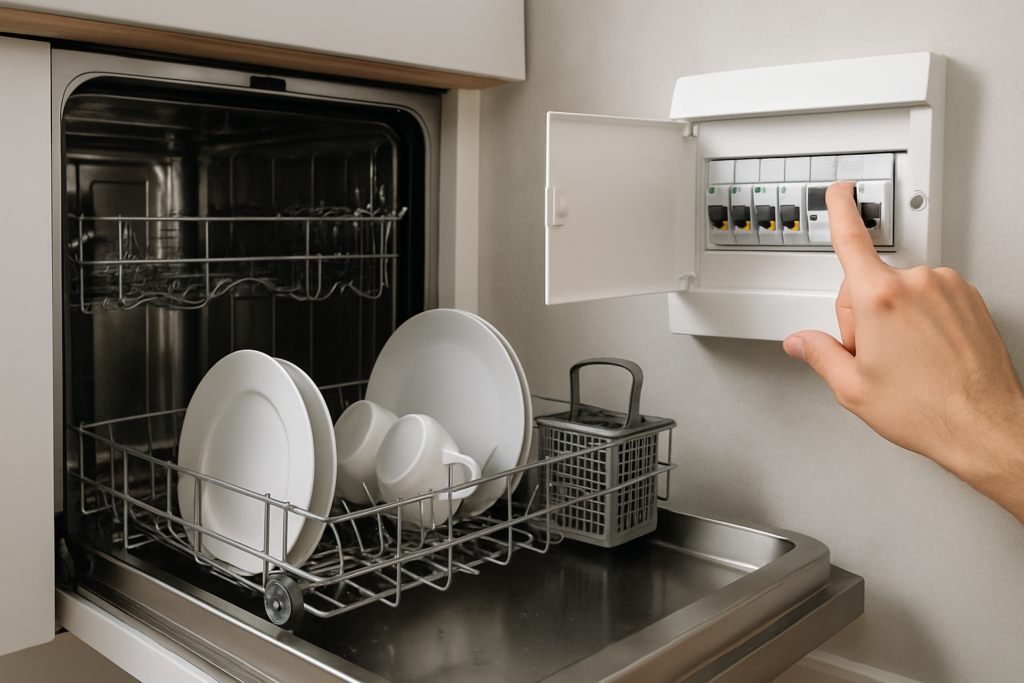
Start by looking inside the disposal itself. Turn off the power at the breaker or unplug the unit from the outlet under your sink. This is critical for safety.
Shine a flashlight down the drain and look for obvious obstructions. Common culprits include bones, fruit pits, bottle caps, utensils, or fibrous vegetables like celery that wrap around the impellers. You might also see a buildup of grease and food particles coating the grinding chamber.
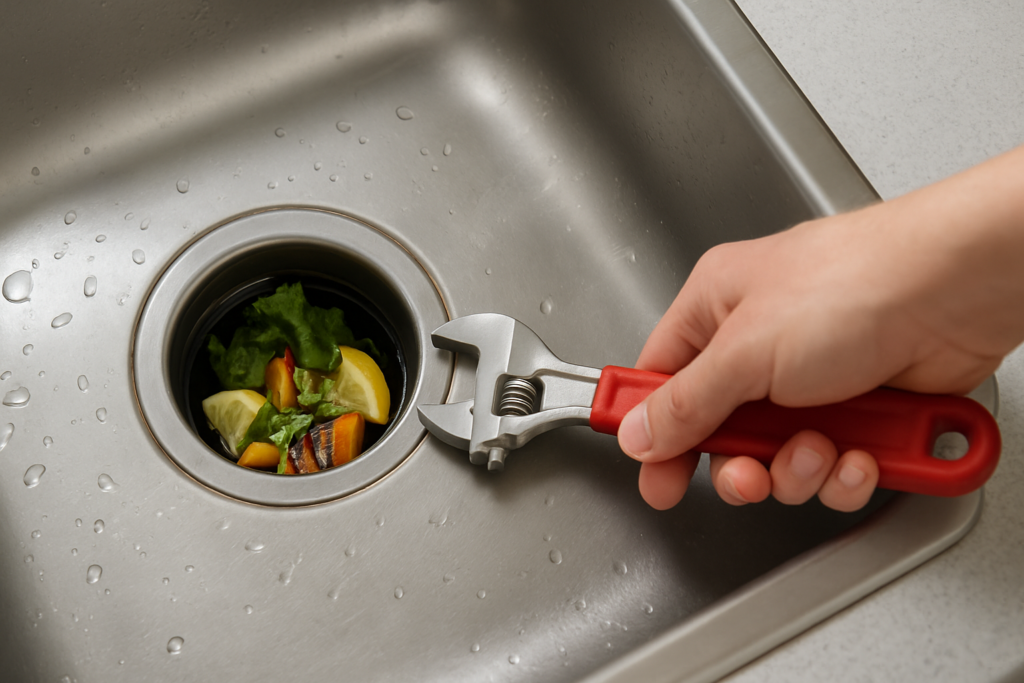
Use tongs or pliers to remove any visible debris. Never stick your hand down the disposal, even when it’s off. Once you’ve cleared what you can see, check if the impellers move freely by inserting an Allen wrench or disposal wrench into the hex socket on the bottom of the unit and rotating it back and forth.

Garbage Disposal Wrench Set
Essential tool for manually rotating jammed disposal impellers and should be in every homeowner’s toolkit
The impellers should turn smoothly. If they’re stuck, work the wrench back and forth until they break free. Sometimes grease hardens around the grinding components, creating resistance that prevents proper drainage even when the motor runs.
Clear the P-Trap and Drain Pipe
If the disposal itself isn’t clogged, the problem is likely in the drainpipe below. The P-trap, that curved pipe under your sink, catches the majority of clogs.
Place a bucket under the P-trap to catch water. Loosen the slip nuts on both ends of the trap using pliers or a pipe wrench. Once removed, you’ll probably find a nasty combination of grease, food particles, and slime inside.
Clean the trap thoroughly with hot water and dish soap. While you have it off, look into the drainpipe that goes into the wall. Stick a flashlight in there and see if you can spot any blockages. A drain snake or auger can reach clogs further down the line that you can’t see.
Feed the snake into the pipe until you hit resistance, then crank the handle to break up or hook the clog. Pull it back out slowly and you’ll usually bring some pretty gross stuff with it. This works for both the main drain line and the dishwasher connection if you have one.
Address Dishwasher Connection Issues
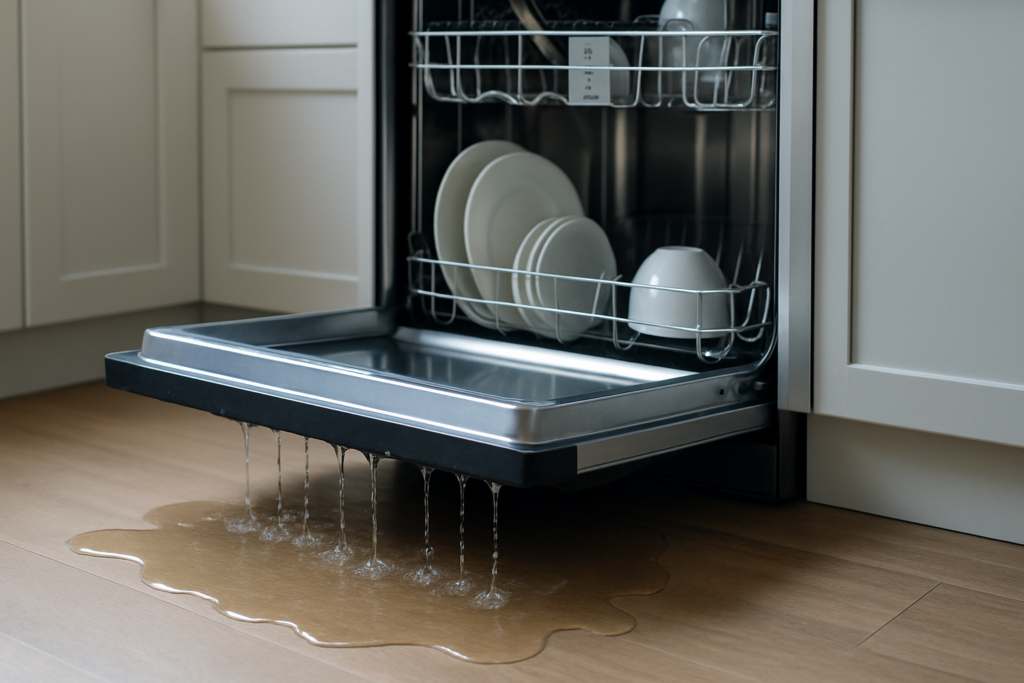
Many garbage disposals connect to your dishwasher’s drain hose. If you recently installed a new disposal, there’s a knockout plug inside the dishwasher inlet that needs to be removed. Forgetting this step is incredibly common and will cause both your disposal and dishwasher to drain poorly.
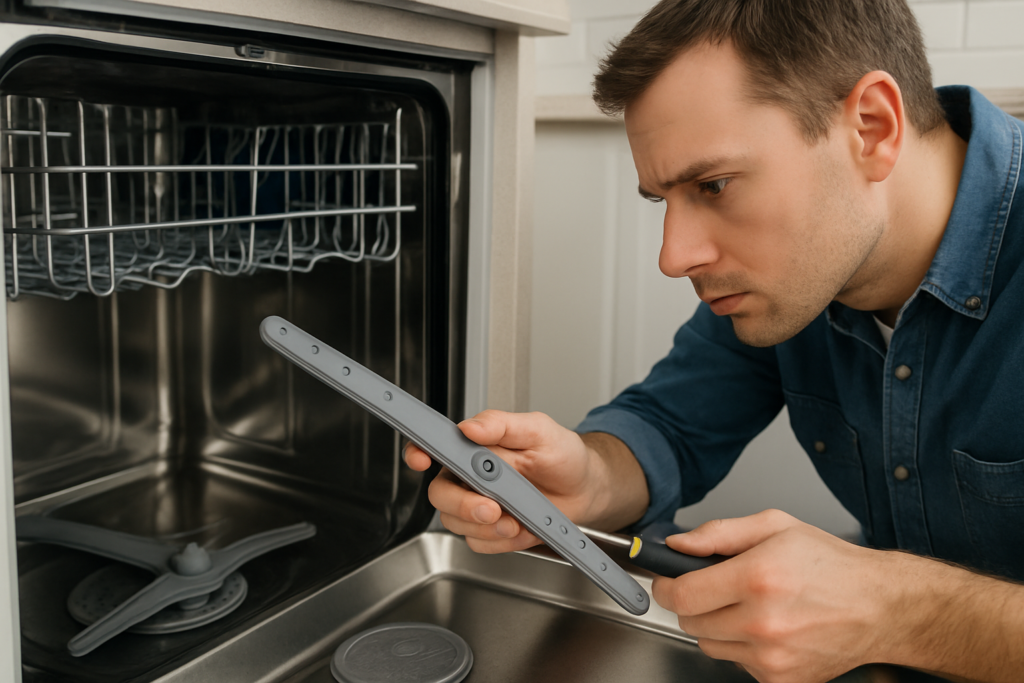
To check, disconnect the dishwasher drain hose from the disposal inlet (the small nipple on the side of the unit). Look inside with a flashlight. If you see a solid plastic plug blocking the opening, you need to knock it out.
Insert a screwdriver into the inlet from the inside of the disposal and tap it with a hammer until the plug breaks free. Make sure to retrieve the plug from inside the grinding chamber so it doesn’t clog your drain. Reattach the dishwasher hose and secure it with a hose clamp.
Even if the knockout plug was removed correctly, the dishwasher connection itself can develop clogs. Disconnect the hose and check for blockages in both the hose and the inlet. Food particles and grease can build up over time, restricting water flow.
Test Your Disposal’s Motor and Reset Button
Sometimes what seems like a drainage problem is actually a motor issue. If your disposal hums but doesn’t spin, the flywheel is jammed. If it doesn’t make any sound at all, you might have a tripped breaker or a blown reset button.
Look under the sink for a small red button on the bottom of the disposal. This is the thermal overload reset. Press it firmly. If it was popped out, you should feel it click back into place. Wait a few minutes for the motor to cool, then try running the disposal again.
If the reset button keeps popping out repeatedly, your disposal is either jammed, overworked, or failing. Try manually rotating the impellers with a wrench again. If they spin freely but the motor still won’t run, you might be looking at a burned-out motor that needs replacement.

InSinkErator Badger 5 Garbage Disposal
Reliable replacement disposal with plenty of power for most households and relatively easy to install
Prevent Future Drainage Problems
Once you’ve got your disposal draining again, keep it that way with some basic maintenance. The biggest mistake people make is treating their disposal like a trash can. It’s designed for small food scraps that rinse off plates, not for major food disposal.
Never put grease, oil, or fat down the disposal. These solidify in your pipes and create stubborn clogs. The same goes for fibrous vegetables like celery, asparagus, and corn husks. Coffee grounds seem harmless but they accumulate in pipes like wet sand.
Run cold water before, during, and for 15 seconds after using the disposal. Cold water keeps grease solid so it can be chopped up and flushed away rather than coating your pipes. Hot water actually makes grease problems worse by liquefying fats that then stick to pipe walls downstream.
Clean your disposal monthly by grinding ice cubes and citrus peels. The ice helps scrub the grinding components while the citrus oils cut through grease and eliminate odors. You can also use commercial disposal cleaning pods that foam up and break down buildup.
When to Call a Professional Plumber
Most disposal drainage issues are DIY-friendly, but some situations require professional help. If you’ve cleared the disposal, cleaned the P-trap, and snaked the drain line but water still won’t flow, you might have a deeper clog in your main drain or vent stack.
Persistent backups that affect multiple fixtures in your home indicate a problem beyond just the disposal. Gurgling sounds from other drains when you run the disposal suggest a venting issue that needs professional diagnosis.
Water leaking from the disposal body itself means failed seals or a cracked housing. While some gasket leaks are fixable, a cracked disposal needs replacement. Same goes for a motor that won’t run even after clearing jams and resetting the breaker.
If you’re not comfortable working with plumbing or electrical components, there’s no shame in calling for help. A flooded kitchen from a botched repair will cost more than a plumber’s service call.
Frequently Asked Questions
Why does my garbage disposal drain slowly but not completely clog?
Slow drainage usually means you have a partial blockage rather than a complete clog. This often happens when grease builds up on the inside of your drainpipes, narrowing the passage. The disposal might also have reduced grinding efficiency from dull impellers, leaving larger particles that don’t flow as easily. Try the ice cube and citrus peel cleaning method, and make sure you’re running enough cold water when using the disposal. If the problem persists, snake your drain line to clear accumulated buildup.
Can I use chemical drain cleaners in my garbage disposal?
Avoid chemical drain cleaners in garbage disposals. These products contain harsh caustic chemicals that can damage rubber gaskets, corrode metal components, and crack plastic parts inside your disposal. They’re also dangerous if they splash back while the disposal is running. Stick with mechanical methods like plunging, snaking, or using the Allen wrench to clear jams. For routine cleaning, ice cubes, citrus peels, or enzyme-based disposal cleaners are much safer options.
How do I know if my garbage disposal needs to be replaced instead of repaired?
Replace your disposal if the motor won’t run after resetting and clearing jams, if you see cracks in the housing or persistent leaks from the body, or if it’s over 10-12 years old and having frequent problems. Strange grinding or rattling sounds that don’t resolve after clearing debris can indicate worn bearings or a failing motor. Rust appearing inside the grinding chamber means the protective coating has worn through and the unit is deteriorating. At that point, replacement makes more sense than repair.
Why does water back up into my other sink when I run the disposal?
In a double sink setup, water backing up into the other basin almost always means a clog in the shared drainpipe below where both sinks connect. The disposal pushes water down, but it hits the blockage and takes the path of least resistance back up through the other drain. Remove and clean the P-trap, then snake the drain line past the point where the two sinks merge. Make sure both sink drains are properly vented to prevent pressure buildup that can also cause this issue.
This article contains affiliate links. We may earn a small commission at no extra cost to you.