Winter’s icy grip can turn your home’s plumbing into a frozen disaster. When pipes freeze, they can burst and cause thousands of dollars in water damage. The worst part? It often happens when you’re asleep or away from home, giving water plenty of time to wreak havoc.
Preventing frozen pipes isn’t complicated, but it requires preparation before temperatures drop. Here are eight proven steps to protect your plumbing during cold snaps, plus what to do if you’re already dealing with frozen pipes.
Essential Prevention Steps
1. Insulate Exposed Pipes
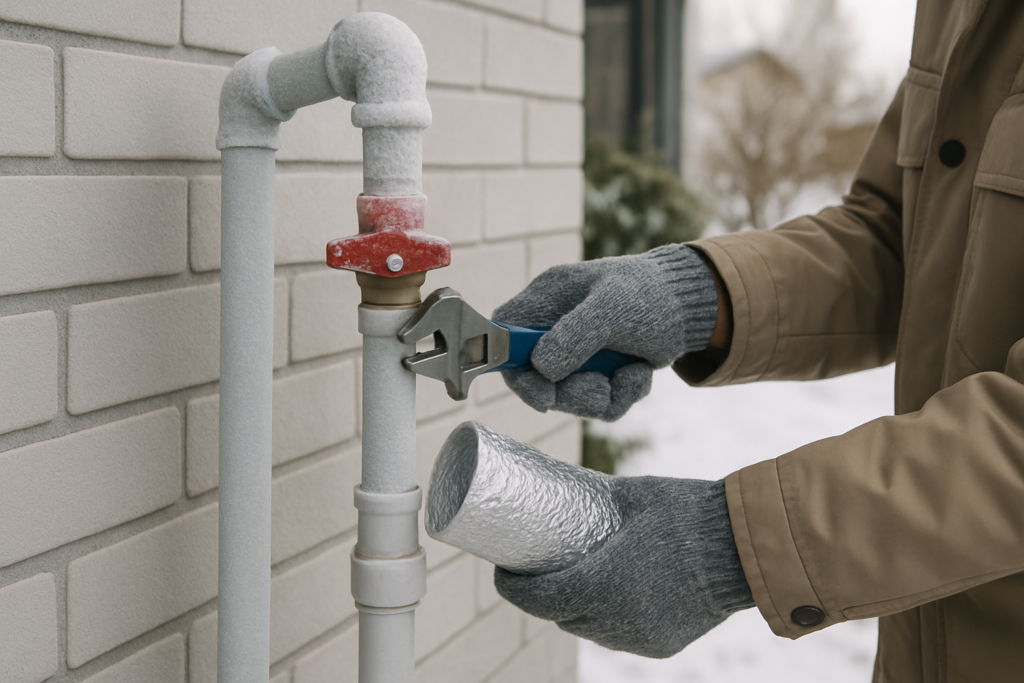
Pipes in unheated areas like basements, crawl spaces, and garages are most vulnerable to freezing. Wrap them with foam pipe insulation or insulation tape. Focus on the first six feet of pipe coming into your home from outside, as these sections get coldest fastest.
Frost King Foam Pipe Insulation
Easy to install and provides excellent protection for standard pipe sizes
2. Seal Air Leaks
Cold air flowing around pipes accelerates freezing. Use caulk or expanding foam to seal gaps where pipes enter your home. Check around dryer vents, electrical lines, and other utility penetrations too.
3. Keep Faucets Dripping
When temperatures drop below 20°F, let faucets connected to vulnerable pipes drip slowly. Moving water is much harder to freeze than standing water. You don’t need a strong flow, just a steady drip from both hot and cold taps.
4. Open Cabinet Doors
Kitchen and bathroom cabinets often contain pipes against exterior walls. During cold spells, open these cabinet doors to let warm indoor air circulate around the pipes. Remove cleaning supplies and other items that could be damaged by potential leaks first.
5. Maintain Consistent Indoor Temperature
Keep your thermostat set to at least 55°F, even when you’re away. The energy cost is minimal compared to dealing with burst pipes. Don’t close off rooms or shut heating vents in areas with plumbing.
6. Install Heating Tape
For pipes that freeze repeatedly, electric heating tape provides targeted warmth. Choose self-regulating tape that adjusts its heat output based on temperature. Follow installation instructions carefully, as improper installation can create fire hazards.
EASYHEAT Electric Heating Tape
Self-regulating design prevents overheating and reduces energy waste
7. Disconnect Outdoor Hoses
Remove garden hoses from outdoor spigots and drain them completely. Water trapped in connected hoses can freeze back into your home’s plumbing. Turn off interior shut-off valves to outdoor faucets if you have them.
8. Know Your Water Shut-Off Location
Locate your main water shut-off valve before you need it. It’s usually near where the water line enters your home. If pipes do burst, you’ll need to shut off water quickly to minimize damage.
What to Do If Pipes Freeze
If you turn on a faucet and only get a trickle or nothing comes out, you likely have a frozen pipe. Don’t panic, but act quickly.
First, shut off water to the affected area if possible. Open the faucet to relieve pressure as the ice melts. Never use open flames, blowtorches, or other high-heat sources to thaw pipes, as this can damage pipes or start fires.
Instead, use a hair dryer, space heater, or warm towels to gradually warm the frozen section. Work from the faucet back toward the frozen area. Portable space heaters work well for warming entire areas with multiple frozen pipes.
If you can’t locate the frozen section or the pipe is inside a wall, call a plumber. Attempting to access pipes in walls often causes more damage than the freeze itself.
Frequently Asked Questions
At what temperature do pipes typically freeze?
Pipes can start freezing when outdoor temperatures hit 20°F or below, especially if they’re exposed to wind. However, pipes in unheated areas like garages or crawl spaces can freeze at higher temperatures. The duration of cold exposure matters as much as the actual temperature.
How much should I let faucets drip to prevent freezing?
A drip rate of about one drop per second is sufficient for most situations. You want just enough flow to keep water moving through the pipes. Focus on faucets connected to pipes that run along exterior walls or through unheated spaces.
This article contains affiliate links. We may earn a small commission at no extra cost to you.