Cast iron skillets can last for generations, but only if you treat them right. I’ve seen too many people either baby their pans unnecessarily or completely ruin them through neglect. The truth is, maintaining cast iron isn’t complicated once you understand the basics, but there are some common myths that lead people astray.
Whether you’ve just bought your first skillet or inherited grandma’s crusty old pan, this guide will walk you through everything you need to know about cleaning, seasoning, and maintaining cast iron cookware.
The Salt Scrub Method for Daily Cleaning
Forget what you’ve heard about never using soap on cast iron. Modern dish soap won’t strip your seasoning like the harsh lye-based soaps of the past. For everyday cleaning after cooking, I actually prefer the salt scrub method because it’s gentle yet effective.
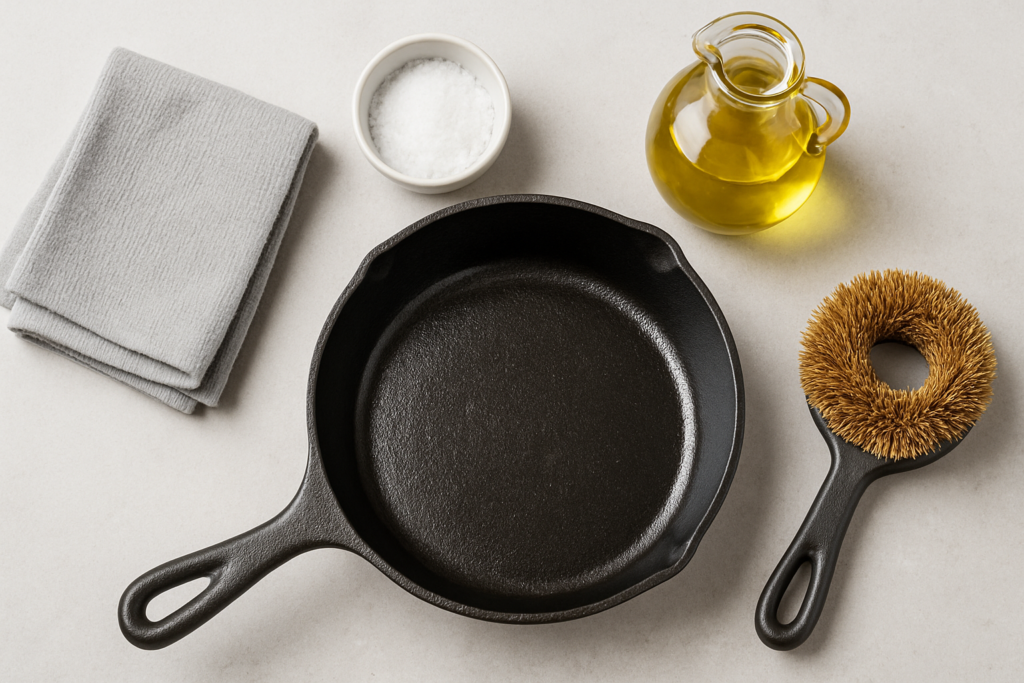
Pour about two tablespoons of coarse salt into your warm (not hot) skillet. Add a small amount of water to create a paste, then scrub with a paper towel or dishcloth. The salt acts as a gentle abrasive that removes stuck-on food without damaging your seasoning. Rinse with warm water, dry thoroughly with a towel, then place the pan on medium heat for a minute or two to evaporate any remaining moisture.
For stubborn bits, you can use a chainmail scrubber without fear. These work wonders on baked-on residue and won’t harm a properly seasoned surface.
The key mistake people make is letting water sit in their pan. Even five minutes can cause rust spots on unseasoned areas. Always dry immediately and heat the pan to ensure complete drying.
How to Season Cast Iron in Your Oven
Seasoning is just polymerized oil, a hard protective coating that forms when fat is heated past its smoke point. You’ll need to season new pans, restore old ones, or touch up your cookware periodically.
Start by washing your skillet with soap and hot water, then dry it completely. Preheat your oven to 450°F. Apply a very thin layer of oil to every surface of the pan, inside and out, including the handle. This is where most people mess up by using too much oil. You want the thinnest possible coat, so after applying oil, wipe the pan down with a clean cloth as if you’re trying to remove all the oil. You can’t see the microscopic layer that remains, but it’s there.

Lodge Cast Iron Seasoning Spray
Convenient spray application makes it easy to get an even, thin coat without overdoing it
Place the skillet upside down on the middle oven rack with aluminum foil on the rack below to catch any drips. Bake for one hour, then turn off the oven and let the pan cool inside. Repeat this process three to five times for a new pan, or once or twice for maintenance.
Between seasoning rounds, you might notice some stickiness or uneven patches. This happens when too much oil pools in certain areas. Just wipe it down and continue with thinner coats.
Flaxseed Oil vs Vegetable Oil: Which Works Best?
This debate gets heated in cast iron communities. Flaxseed oil became popular because it creates an extremely hard seasoning due to its high concentration of omega-3 fatty acids. Some people swear by it, but I’ve found it tends to flake off after several months of use.
I prefer grapeseed oil or regular vegetable oil. They’re inexpensive, readily available, and create durable seasoning that builds up nicely over time. Crisco also works well and was the traditional choice for decades.
Avoid olive oil and butter for oven seasoning. Their smoke points are too low, and they contain proteins and milk solids that don’t polymerize properly. Save those for actual cooking.
The oil you choose matters less than technique. A thin, evenly applied coat of any high-smoke-point oil will outperform a thick, goopy layer of premium flaxseed oil every time.
Removing Rust from Cast Iron
Rust looks scary but it’s completely fixable. For light surface rust, scrub with steel wool and a mixture of equal parts white vinegar and water. This usually takes care of minor spots in just a few minutes of scrubbing.
For heavily rusted pans, you’ll need a more aggressive approach. Soak the entire pan in a 50/50 vinegar and water solution for up to an hour, checking every 15 minutes. Vinegar will remove rust quickly, but it will also eat away at the iron itself if left too long, so don’t walk away and forget about it.
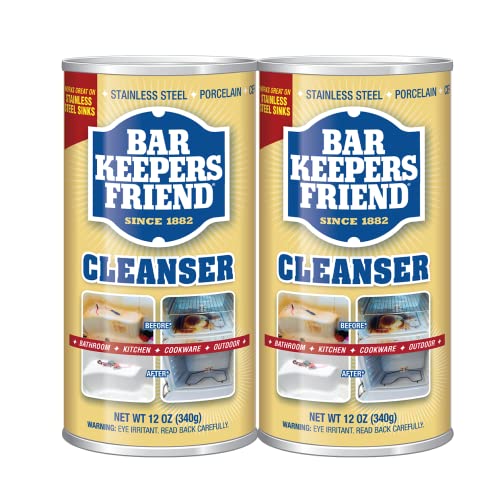
Bar Keepers Friend Powder Cleanser
Works incredibly well on rust and can restore even heavily damaged pans to bare metal
After removing all rust, rinse thoroughly, dry completely, and immediately begin the seasoning process. Bare iron will rust within hours if left unprotected, so don’t delay this step.
You can also use an electrolysis setup or a lye bath for severely damaged pans, but that’s overkill for most situations. I’ve restored dozens of flea market finds with nothing more than vinegar, elbow grease, and proper seasoning.
Storage Tips and Common Mistakes
Store your cast iron in a dry place. Stacking pans is fine, but place a paper towel or cloth between them to prevent chipping the seasoning and allow air circulation. Some people store their pans in the oven, which works great as long as you remember to remove them before preheating.
Never put cast iron in the dishwasher. The combination of harsh detergents, extended water exposure, and high heat will destroy your seasoning and cause rust. I’ve seen people make this mistake exactly once before learning their lesson.
Don’t cook acidic foods like tomato sauce in newly seasoned pans. Wait until you’ve built up several layers of seasoning. Acidic ingredients can break down weak seasoning and give your food a metallic taste. Once your pan is well-seasoned, occasional acidic dishes won’t cause problems.
Stop obsessing over the color. A well-used cast iron skillet won’t be perfectly black and glossy all over. You’ll see variations in color, and that’s normal. Focus on how it performs, not how it looks.
The biggest mistake is not using your cast iron enough. Regular cooking actually improves the seasoning. Each time you cook with fat, you’re adding microscopically thin layers that build up over time. Your skillet should be one of your most-used pans, not a shelf decoration.
Frequently Asked Questions
Can I use metal utensils on cast iron?
Yes, metal utensils are perfectly fine. Cast iron is harder than most metal spatulas and spoons, so you won’t damage the pan. You might scrape off tiny bits of seasoning, but this gets replaced naturally during cooking. I use metal utensils exclusively with my cast iron and have never had issues.
How often should I re-season my cast iron skillet?
You don’t need a schedule. Re-season when you notice food sticking more than usual, when you see dull or dry-looking patches, or after cooking something acidic in a newer pan. For well-maintained skillets used regularly, you might only need a full oven seasoning once or twice a year. Light stovetop seasoning after each use (just rubbing in a tiny bit of oil while the pan is warm) keeps things in good shape between deep seasonings.
My seasoning is sticky and won’t dry. What did I do wrong?
You used too much oil. The excess doesn’t polymerize properly and stays tacky. Fix this by wiping the pan down thoroughly with a dry cloth, then place it in a 450°F oven for an hour. This will often harden the excess oil. If it’s still sticky afterward, you may need to scrub it off with salt and hot water, then start over with a much thinner coat. Remember, less is more when it comes to seasoning oil.
This article contains affiliate links. We may earn a small commission at no extra cost to you.