Few things are more frustrating than preheating your oven for dinner, only to find it’s still cold 20 minutes later. An oven that won’t heat properly can derail your meal plans and leave you wondering whether to call a repair tech or start shopping for a replacement. Before you do either, you should know that many oven heating issues have simple causes you can diagnose and fix yourself.
Most heating problems boil down to three culprits: faulty heating elements, malfunctioning thermostats, or blocked airflow. Understanding how each component works will help you pinpoint the issue and decide whether it’s a DIY fix or time to call in professional help.
The Heating Element Problem
Your oven relies on heating elements to generate the temperatures you need for cooking. Electric ovens typically have two elements: a bake element at the bottom and a broil element at the top. Gas ovens use burners instead, but the principle is the same.
When an electric heating element fails, you’ll usually see obvious signs. Look for blistering, breaking, or visible damage on the element itself. A functioning element should glow bright red when the oven is on. If it stays dark or only partially lights up, you’ve found your problem.
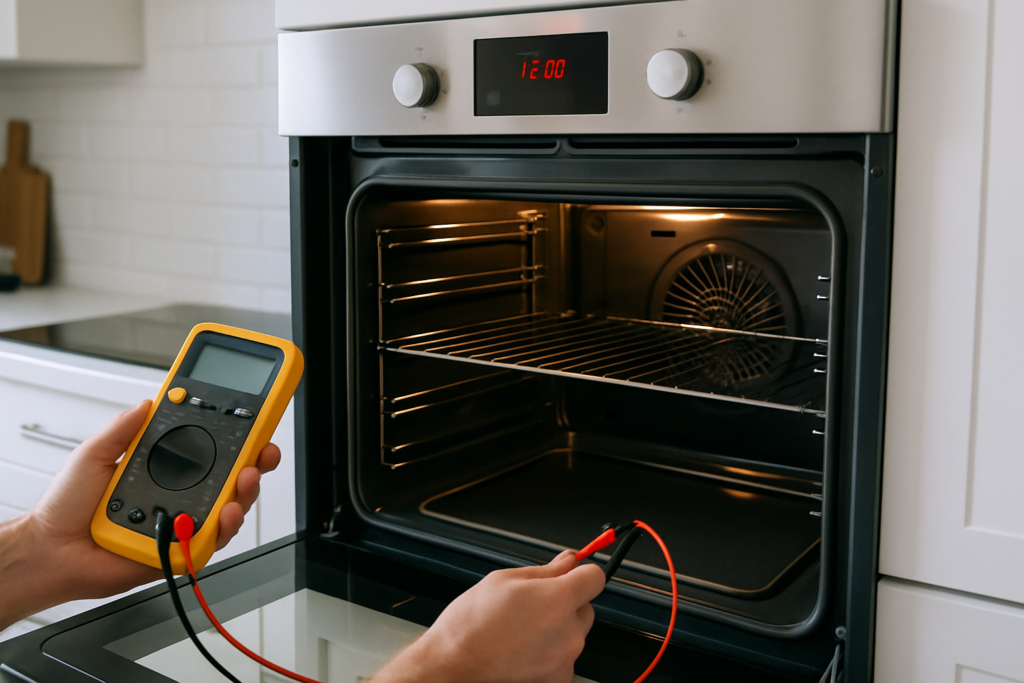
Testing is simple. Turn on your oven and watch both elements during the preheat cycle. If either element doesn’t heat evenly or at all, it needs replacement. You can also use a multimeter to check for continuity when the oven is off and unplugged.

Oven Heating Element
Replacement elements are specific to your oven model, so verify compatibility before purchasing.
Replacing a heating element is actually one of the easier oven repairs. Most elements are held in place by just two screws and a wire connector. Just make sure you unplug the oven first and take a photo of the wire connections before disconnecting anything.
Thermostat and Temperature Sensor Issues
Even if your heating elements work perfectly, a broken thermostat or temperature sensor can prevent your oven from reaching the right temperature. The sensor monitors the internal temperature and signals the control board to turn the heating elements on or off.
A failing sensor typically causes your oven to run too hot, too cold, or cycle on and off erratically. You might set it to 350°F but actually get 250°F or 450°F instead. You can verify this with an oven thermometer placed inside during preheating.
The temperature sensor is usually a thin probe that extends into the oven cavity, often at the back wall. Over time, these sensors can drift out of calibration or fail completely. If your oven temperature is consistently off by more than 25 degrees, the sensor probably needs replacement.
For gas ovens, the thermocouple serves a similar function and can wear out. This safety device monitors the pilot light and shuts off gas flow if the flame goes out. A faulty thermocouple might prevent your gas oven from staying lit.
Airflow and Ventilation Blockages
Your oven needs proper airflow to heat efficiently and maintain consistent temperatures. Blocked vents, dirty fans, or accumulated grease can all interfere with this process.
Check the vents at the back or bottom of your oven for any obstructions. Many people don’t realize that storing baking sheets or pizza stones in the oven can block crucial airflow paths. Even a single large pan covering the bottom element can create uneven heating.
Convection ovens have an additional fan that circulates hot air. If this fan stops working or gets clogged with debris, your oven will heat poorly and unevenly. Listen for the fan noise when you turn on convection mode. If you don’t hear it running, that fan motor might need attention.
Regular cleaning helps prevent airflow problems. Grease buildup inside the oven cavity can actually insulate surfaces and reduce heating efficiency. Give your oven a thorough cleaning with an oven cleaner and make sure all vents are clear.
Frequently Asked Questions
How long should my oven take to preheat?
Most ovens should reach 350°F in about 12 to 15 minutes. If yours takes significantly longer or never reaches the set temperature, you likely have a heating element or thermostat problem. Keep in mind that larger ovens and those with thicker insulation may take a bit longer, but anything over 20 minutes suggests an issue.
Can I still use my oven if only one heating element works?
You can technically use an oven with one working element, but your results will be poor. The bake element does most of the work for regular cooking, while the broil element provides top heat. If only the broil element works, your food will burn on top and stay raw underneath. Replace the broken element before your next cooking session for best results.
This article contains affiliate links. We may earn a small commission at no extra cost to you.