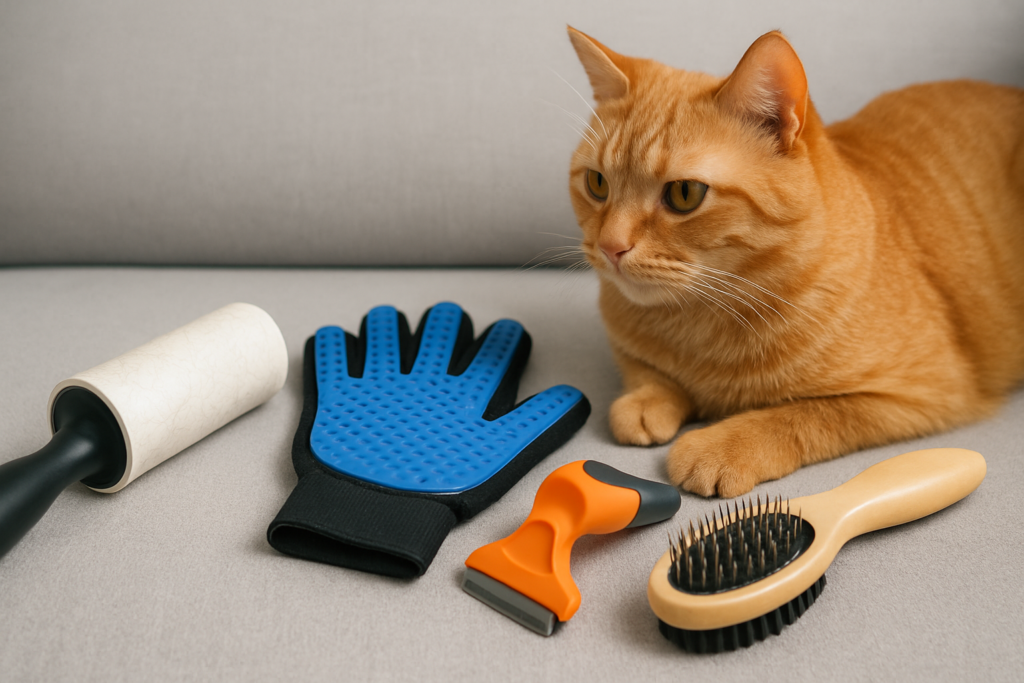
Living with pets means accepting a constant layer of fur on everything you own. Your couch, your car, your favorite black pants. Standard vacuum cleaners and lint rollers barely make a dent, and you’re left picking hair off surfaces strand by strand like some sort of medieval torture.
After testing dozens of pet hair removal tools across different surfaces, I’ve found that the right tool depends entirely on what you’re cleaning. The roller that works brilliantly on your couch might be useless on your car seats. Let’s break down which tools actually work and which ones are just marketing hype.
The ChomChom Roller: Why Everyone Swears By It
The ChomChom Roller has become the default recommendation in every pet owner group, and for good reason. This reusable lint roller uses a simple back-and-forth motion to trap pet hair in an internal compartment. No batteries, no sticky sheets, just pure mechanical efficiency.
I’ve used mine for over two years on a microfiber couch that my golden retriever treats like his personal bed. The roller picks up about 90% of the hair in two passes. You empty the compartment by pressing a release button, and all the hair dumps into your trash can. It takes maybe 30 seconds to clean the entire three-seat couch.
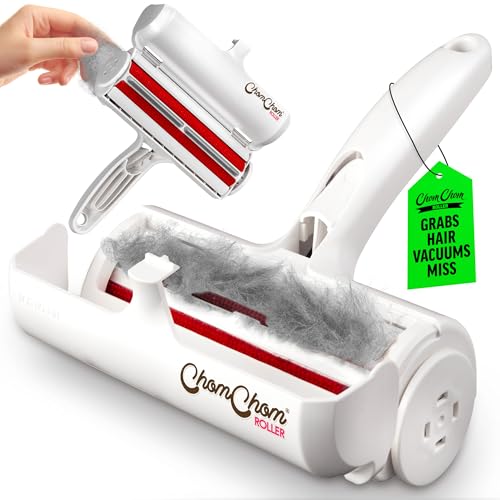
ChomChom Roller Pet Hair Remover
Perfect for upholstery and works without any replacement parts or batteries
The durability is impressive. After two years of weekly use, the internal brush mechanism still works like new. The only maintenance required is occasionally rinsing out the compartment when finer debris builds up. Compare this to disposable lint rollers where you’re constantly buying refill sheets.
Where the ChomChom struggles is on stairs and tight corners. The roller head is about 8 inches wide, which makes it awkward to maneuver on stair treads. It also doesn’t work well on hard floors or very short carpet pile. The mechanism needs some texture to grab onto.
Rubber Gloves: The Multi-Surface Solution
Specialized pet hair removal gloves look gimmicky until you actually use them. These rubber gloves with textured surfaces let you wipe down furniture, pet beds, and even your actual pet in one motion.
I keep a pair in my car specifically for the cloth seats. After a trip to the dog park, I can wipe down the back seat in about five minutes. The hair clumps together as you work, making it easy to grab and toss. The same gloves work on my stairs where the ChomChom roller is too bulky.
The real advantage is versatility. You can use these gloves wet or dry, on fabric or smooth surfaces, and even to deshed your pet during grooming sessions. My cat actually enjoys being petted with the textured glove, which removes loose fur before it ends up on my furniture.
The downside is speed. Gloves require more physical effort than rolling tools, and you’re limited by how much hair you can ball up in your hand before disposing of it. For large furniture pieces, this gets tedious fast. They’re best for spot cleaning and smaller jobs.
Washability Matters
Most rubber pet hair gloves are fully washable, which is critical if you’re using them for actual pet grooming. I throw mine in the washing machine every few weeks with no degradation. Just avoid high heat in the dryer, which can warp the rubber texture.
Look for gloves with adjustable wrist straps. The cheap versions slip off constantly, which defeats the purpose. You want a snug fit that lets you apply real pressure without the glove sliding around.
Electric Pet Hair Tools: When to Invest
Electric pet hair removers come in two main categories: fabric shavers and dedicated pet hair vacuums. The fabric shavers work like tiny lawnmowers, cutting hair close to the surface and sucking it into a collection chamber.
I tested a Conair Fabric Defuzzer on my bedroom carpet, which collects an absurd amount of pet hair in the fibers. The results were impressive, but this tool is slow. You’re essentially vacuuming your carpet one square foot at a time. It took 20 minutes to do a 10×12 room.

Electric Fabric Shaver Pet Hair Remover
Best for carpets and rugs where manual tools struggle to pull embedded hair
The advantage of electric shavers is getting hair that’s deeply embedded in fabric. Manual rollers just slide over the top of stubborn hair, while shavers actually cut it loose. This makes them ideal for berber carpet, thick blankets, and any surface where hair is really stuck.
Battery life varies wildly between models. Cheaper versions die after 15 minutes, while better models run for an hour or more. Corded versions eliminate battery anxiety but limit your range. For car detailing, battery-powered is the only practical option.
Surface-Specific Recommendations
Different surfaces need different approaches. Here’s what actually works based on real-world testing across multiple pet households.
Upholstery and Couches
The ChomChom roller wins here by a wide margin. It’s fast, effective, and requires zero consumables. For microfiber, velvet, and standard fabric couches, two quick passes remove nearly all visible hair. Leather and faux leather work better with a slightly damp rubber glove since rollers don’t grip smooth surfaces well.
Stairs and Tight Spaces
Rubber gloves are your best option for stairs. The ChomChom is too wide for most stair treads, and electric tools are too slow. Put on a rubber glove, work in downward strokes, and collect the hair as you go. A set of stairs takes about 10 minutes total.
For stair edges and corners where even gloves can’t reach, a small detail brush with stiff bristles works well. You’re basically sweeping the hair out where a larger tool can grab it.
Car Interiors
Car seats and floor mats present unique challenges because you’re working in cramped quarters with varied surfaces. I keep both rubber gloves and a small ChomChom-style roller in my trunk. The gloves handle door panels and tight spaces, while the roller tackles the main seat surfaces.
For car carpets and floor mats, a stiff-bristled brush worked better than any roller or glove in my testing. Brush the hair loose first, then vacuum or pick it up. The rubber broom technique also works surprisingly well on car carpets.

Rubber Pet Hair Removal Brush
Ideal for car carpets and floor mats where hair gets deeply embedded
Carpets and Rugs
Carpets require more aggressive tools. Standard rollers just slide across the surface without grabbing hair that’s worked into the fibers. A rubber broom with squeegee-like bristles pulls hair up through friction. You sweep in one direction, and the hair forms into clumps you can pick up by hand.
For wall-to-wall carpeting, this is tedious but effective. For area rugs, take them outside and beat them first, then use the rubber broom technique. An electric fabric shaver works as a backup for hair that’s really ground in, but it shouldn’t be your first approach.
Long-Term Cost Analysis
Let’s talk actual numbers over a three-year period, assuming you have one dog or two cats worth of shedding to manage.
Disposable lint rollers seem cheap upfront, but you’ll burn through sheets fast. At roughly one refill per month for moderate use, you’re looking at 36 refills over three years. Even budget refills add up when you’re replacing them constantly.
A quality ChomChom roller costs more initially but requires zero ongoing costs. Mine is still working perfectly after two years with no replacement parts needed. The break-even point versus disposable rollers comes around month six, and it’s all savings after that.
Rubber gloves fall somewhere in between. A good pair lasts about a year with regular washing before the texture wears down. You’ll replace them twice in three years, but they’re relatively inexpensive and still beat disposable options.
Electric tools have the highest upfront cost and potential maintenance issues. Battery replacement, blade cleaning, and eventual motor failure all add to the long-term cost. However, they handle jobs that manual tools simply can’t, so the comparison isn’t quite apples-to-apples.
What About Furniture Covers?
Prevention deserves a mention here. Washable furniture covers reduce how often you need to remove pet hair from upholstery itself. You’re trading one cleaning task for another, but washing a cover is easier than deep-cleaning a couch.
I use covers on my primary couch and skip them on less-used furniture. This concentrates the hair problem in one manageable area. The covers get washed every two weeks, and the couch underneath stays mostly hair-free.
My Actual Recommendation Set
After all this testing, here’s what I keep in regular rotation. This combination handles every pet hair situation I encounter without overlap or wasted tools.
Primary tool: ChomChom roller for all upholstered furniture and car seats. This gets used 2-3 times per week and handles 80% of my pet hair removal needs. Keep it in your main living area where you’ll actually use it regularly.
Secondary tool: One pair of quality rubber gloves for stairs, tight spaces, and quick spot cleaning. These live in my cleaning supply caddy and come out whenever the roller won’t fit or work properly.
Specialty tool: Electric fabric shaver for carpets and deeply embedded hair. This gets used monthly for problem areas that manual tools can’t handle. It’s not worth buying until you’ve tried manual methods and found them insufficient.
Skip the gadgets that promise to do everything. Multi-surface tools usually excel at nothing. The combination above costs less than many single “miracle” products and actually works across all situations.
Maintenance and Care Tips
Taking care of your tools extends their lifespan and keeps them working effectively. The ChomChom roller needs its collection chamber dumped after every use, and a monthly rinse keeps the mechanism smooth. Don’t let hair build up inside the chamber, or the trap door stops sealing properly.
Rubber gloves should be washed after every few uses, especially if you’re grooming pets with them. Hair oils build up on the rubber surface and reduce effectiveness. A simple hand-wash with dish soap works fine, or throw them in with your regular laundry.
Electric shavers need blade cleaning after every use. Hair wraps around the cutting mechanism and reduces suction. Most models include a small brush for this purpose. Empty the collection chamber before it gets completely full, or the motor struggles and battery drains faster.
Frequently Asked Questions
Do silicone brooms work better than rubber gloves for pet hair?
Silicone brooms and rubber gloves use the same basic principle but excel in different areas. Brooms cover large floor areas faster, while gloves give you better control on furniture and vertical surfaces. For carpeted stairs, gloves win. For entire rooms of hard flooring, brooms are more efficient. I’d pick based on what surfaces you clean most often.
How often should I replace a ChomChom-style roller?
A quality reusable roller should last several years with normal use. The internal brush mechanism is simple and durable. Replace it when you notice the brush bristles are worn down or the collection chamber no longer seals properly. Most people get 3-5 years from a single roller with regular cleaning and maintenance.
Can I use regular rubber gloves instead of specialized pet hair gloves?
Standard dishwashing gloves work in a pinch but aren’t as effective. The textured nubs on specialized pet hair gloves create more friction and grab hair better. Regular rubber gloves are smooth, so they mostly just push hair around. For occasional emergency cleaning, sure, but dedicated gloves are worth the small investment if you clean pet hair regularly.
Why doesn’t my vacuum cleaner pick up all the pet hair?
Pet hair wraps around carpet fibers and creates a static bond that suction alone can’t overcome. You need physical agitation to loosen the hair first. This is why manual tools often outperform vacuums on furniture and carpets. Use a rubber broom or brush to loosen hair before vacuuming, or get a vacuum specifically designed with rubber agitators for pet hair. Standard beater bars just push fine hair deeper into carpet pile.
This article contains affiliate links. We may earn a small commission at no extra cost to you.