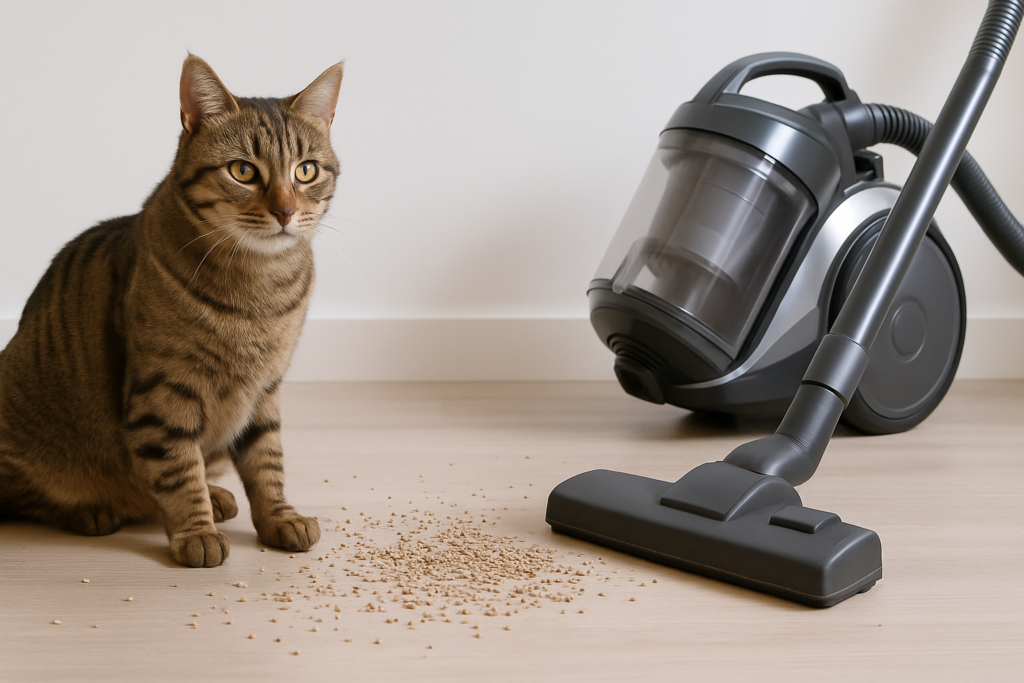
If you’ve ever owned a cat, you know the daily frustration of finding litter scattered across your floors like tiny pebbles of defeat. Those granules stick to paws, get flung during enthusiastic digging sessions, and somehow travel to rooms that are nowhere near the litter box. The constant sweeping and mopping gets old fast.
Finding the right vacuum specifically designed to tackle cat litter tracking can transform your cleaning routine from a daily chore into a quick, efficient task. Not all vacuums handle litter equally well, and choosing the wrong type can leave you more frustrated than when you started.
Why Regular Vacuums Struggle with Cat Litter
Cat litter presents unique challenges that standard household vacuums weren’t designed to handle. Clay-based litters are dense and heavy, which can clog filters and strain motors. Crystal litters create fine dust that infiltrates vacuum systems. Clumping litters turn into concrete-like masses when they encounter any moisture in your vacuum’s collection chamber.
Most traditional upright vacuums also have brushes that scatter litter rather than collect it. The spinning brush roll kicks lightweight granules in every direction, making your cleaning job twice as hard. You need suction power without the brush interference.
Handheld Vacuums: Quick and Targeted Cleaning
Handheld vacuums excel at spot cleaning around litter boxes and catching tracking before it spreads throughout your home. Their portability makes them perfect for daily touch-ups, and you can store them near the litter area for immediate access.
The Shark WandVac stands out for litter cleanup because of its lightweight design and strong suction. The crevice tool attachment works particularly well for getting litter out of corners and along baseboards where it tends to accumulate.
Black+Decker Dustbuster AdvancedClean+
Features a motorized brush specifically designed for picking up pet hair and debris from carpets and upholstery
Battery life is crucial for handheld models since you’ll likely use them daily. Look for models that offer at least 15-20 minutes of runtime and charge quickly. The cyclonic action in better handhelds prevents the filter from clogging as quickly when dealing with fine litter dust.
The main limitation of handhelds is their small dustbin capacity. You’ll need to empty them frequently if you have multiple cats or a particularly messy feline. They’re also not ideal for deep cleaning larger carpeted areas where litter has been ground in over time.
Robot Vacuums: Automated Litter Management
Robot vacuums can be brilliant for maintaining litter-free floors, but they require the right model and proper setup. Many standard robot vacuums struggle with litter because their brushes scatter it or their suction isn’t strong enough to pick up heavier granules.
The key is finding a robot with strong suction and the ability to handle debris without spreading it around. Models with rubber brush rolls instead of bristle brushes work better because they don’t fling litter particles. You also want a large dustbin since litter takes up significant space.
iRobot Roomba j7+
Advanced obstacle avoidance prevents it from spreading litter accidents and the auto-empty feature handles the dusty cleanup
Scheduling is where robot vacuums really shine for litter management. Program yours to run daily in the morning after your cats have finished their business, and you’ll come home to consistently clean floors. The continuous maintenance prevents litter from getting ground into carpets or spreading to other rooms.
However, robot vacuums can’t navigate around wet messes or clumped litter that hasn’t been cleaned up yet. You’ll still need to maintain the litter box properly and handle any accidents before the robot runs its cycle.
Stick Vacuums: The Versatile Middle Ground
Cordless stick vacuums offer the best combination of power, maneuverability, and convenience for most cat owners. They’re light enough for daily use but powerful enough for thorough cleaning sessions. The ability to quickly convert to a handheld configuration makes them incredibly versatile.
Look for stick vacuums with multiple power settings so you can adjust suction based on the surface and amount of litter. High power for ground-in litter on carpets, lower power for quick pickups on hard floors to avoid scattering.
The Tineco Pure One S12 features LED lights that illuminate litter particles you might miss otherwise, plus smart sensors that automatically adjust suction based on debris density. This prevents the vacuum from working harder than necessary and extends battery life.
Dyson V8 Animal
Specifically designed for pet owners with powerful suction and specialized attachments for cleaning around litter areas
Battery runtime varies significantly between models, typically ranging from 20 to 60 minutes depending on power settings. For most single-level homes with moderate litter tracking, 30-40 minutes is plenty for a thorough cleaning session.
Strategic Litter Box Placement and Accessories
Your vacuum choice should work alongside smart litter management strategies. Place litter boxes in areas with hard flooring when possible, as litter is much easier to vacuum from tile or laminate than from carpet fibers where it gets embedded.
Invest in quality litter tracking mats that actually trap granules instead of just providing a decorative border. Look for mats with deep grooves or raised patterns that catch litter from paws. Double-layer mats that separate and allow litter to fall through work particularly well.
Create a “litter zone” by placing mats both inside and outside the litter area. This gives cats multiple opportunities to clean their paws before venturing into the rest of your home. Position your vacuum storage in or near this zone so you can quickly address any tracking.
Consider the height and entry style of your litter boxes. Top-entry boxes naturally reduce tracking since cats must climb out, giving their paws time to drop litter back into the box. High-sided boxes prevent enthusiastic diggers from flinging litter over the edges.
Maintenance Tips for Litter-Fighting Vacuums
Cat litter is tough on vacuum components, so regular maintenance becomes even more important. Empty dustbins after every use when dealing with litter to prevent clumping and odor buildup. Clay and clumping litters can form hard masses that are difficult to remove if left sitting.
Clean or replace filters more frequently than the manufacturer suggests. Litter dust clogs filters faster than regular household debris, reducing suction power. Keep spare filters on hand so you can swap them out during deep cleaning sessions.
Check for clogs in the hose and brush attachments regularly. Small pieces of litter can accumulate in narrow passages and gradually reduce airflow. A straightened coat hanger or cleaning tool can help remove stubborn blockages.
Frequently Asked Questions
Can I vacuum wet or clumped cat litter?
Never vacuum wet or clumped litter with any type of vacuum. The moisture will cause clumping litter to harden inside your vacuum’s components, potentially causing permanent damage. Always scoop wet messes manually first, then vacuum only the dry tracking litter around the area.
Which vacuum type works best for multiple cats?
For multiple cats, a powerful cordless stick vacuum offers the best balance of cleaning capacity and convenience for frequent use. You’ll need something you can grab quickly for multiple daily cleanings, but with enough suction power to handle larger amounts of tracked litter. Consider pairing it with a robot vacuum for daily maintenance between deeper cleaning sessions.
How often should I vacuum around the litter box?
Daily light vacuuming prevents litter from spreading throughout your home and makes the job much easier. Plan for a quick 2-3 minute session each day focusing on the immediate litter area, plus a more thorough weekly cleaning that covers adjacent rooms where litter might travel. Adjust frequency based on your cats’ habits and the type of litter you use.
This article contains affiliate links. We may earn a small commission at no extra cost to you.