Standing in ankle-deep water while trying to rinse off your shampoo is one of the most annoying bathroom problems you’ll face. A slow-draining shower might seem like a minor issue, but it gets worse fast. Before you know it, you’re dealing with stagnant water, funky smells, and the creeping worry that you’ll need to call a plumber.
The good news is that most shower drain clogs are easy to fix yourself without dumping harsh chemicals down the pipe. Hair is usually the culprit, and you can remove it with a few simple tools and techniques. Let’s walk through the most effective DIY methods, from the easiest quick fix to the more involved solutions.
The Zip-It Tool: Your First Line of Defense
This cheap plastic tool looks almost too simple to work, but it’s incredibly effective for hair clogs. The Zip-It drain tool is a long, flexible plastic strip with barbed edges that grab onto hair as you pull it back up.
Remove your drain cover (most just lift out or unscrew easily). Insert the Zip-It straight down into the drain as far as it will go, then slowly pull it back up. The barbs will catch hair and soap scum, and what comes up is usually pretty disgusting. You might need to do this a few times to get everything.

Zip-It Drain Cleaning Tool
The simplest solution for hair clogs that works surprisingly well for how inexpensive it is
This method works best for recent clogs that haven’t been building up for months. If you’ve been ignoring a slow drain for a while, you’ll need something with more reach.
Cleaning the P-Trap (If Accessible)
Not all shower drains have an easily accessible P-trap, but if yours does, cleaning it out gives you the most thorough results. The P-trap is the curved pipe section under your drain that holds water to prevent sewer gases from coming up.
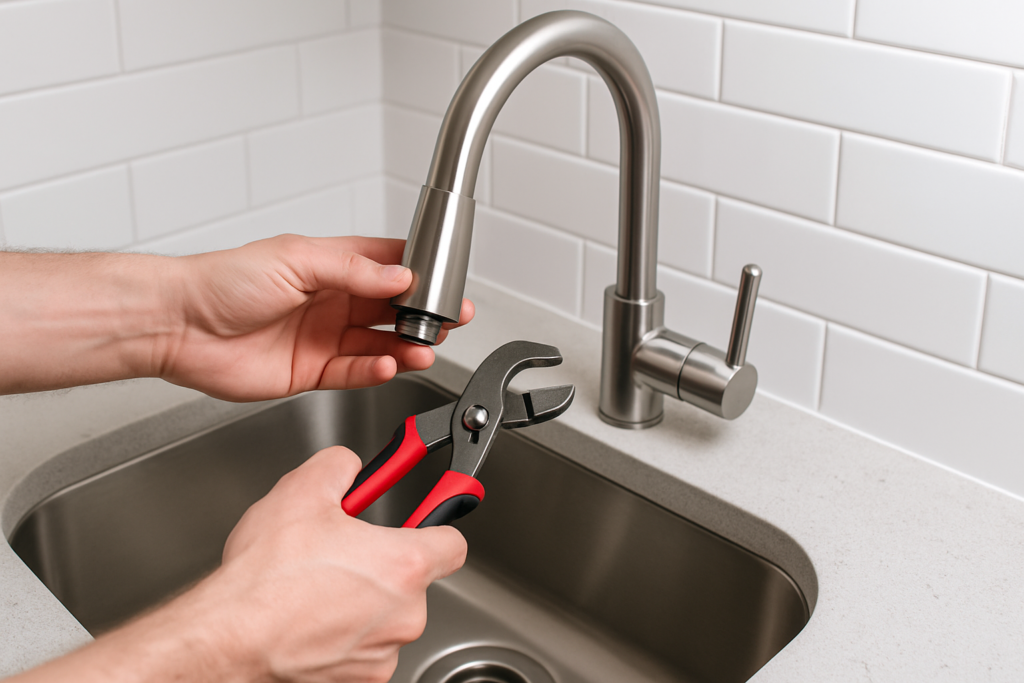
You’ll need a bucket and some towels. Place the bucket under the trap to catch water, then unscrew the coupling nuts by hand or with pliers. Once removed, you can physically clean out all the gunk inside. Hair, soap buildup, and other debris love to accumulate right in that curve.
Rinse the trap thoroughly before reattaching it. Make sure the coupling nuts are hand-tight plus about a quarter turn with pliers. Run water and check for leaks. This method is particularly effective because you’re actually removing the clog rather than trying to break it up or push it through.
The Baking Soda and Vinegar Method
This classic combination won’t dissolve hair like chemical drain cleaners claim to, but it can help break up soap scum and minor organic buildup. It’s worth trying if you don’t have a complete blockage yet.
Start by pouring a pot of boiling water down the drain to soften any greasy buildup. Pour about half a cup of baking soda into the drain, followed by half a cup of white vinegar. You’ll hear fizzing as the chemical reaction happens. Cover the drain with a wet cloth to keep the reaction focused downward.
Wait 30 minutes, then flush with another pot of boiling water. This method works better as maintenance than as a cure for serious clogs. If you’ve got a significant hair ball down there, you’ll still need a physical removal method.
Using a Drain Snake for Stubborn Clogs
When the Zip-It isn’t long enough and you can’t access the P-trap, a drain snake (also called a drain auger) is your next option. These come in manual hand-crank versions and motorized models. For most home shower drains, a 25-foot manual snake will do the job.
Feed the snake into the drain slowly while turning the handle clockwise. You’ll feel resistance when you hit the clog. Keep turning and pushing gently to break through or hook onto the blockage. Once you’ve snagged it, pull the snake back out slowly.

Drain Snake Auger 25 Foot
A manual snake handles deeper clogs that shorter tools can’t reach without the expense of powered models
A quality drain snake will last you years and works on sink drains too. The technique takes a little practice, but once you get the feel for it, you can clear most clogs in under 10 minutes.
Preventing Future Clogs
Installing a hair catcher over your drain is the single best preventive measure. These mesh or silicone screens sit over or just inside your drain and trap hair before it goes down the pipe. You’ll need to clean them weekly, but that’s much easier than dealing with a clog.
Brush your hair before showering to remove loose strands. This simple habit can cut the amount of hair going down your drain by half. Also, avoid letting conditioner buildup accumulate by running hot water for 30 seconds after each shower.
Every month or two, use the baking soda and vinegar treatment as maintenance. It won’t fix existing clogs, but it helps prevent soap scum from building up and trapping hair.
When to Call a Professional Plumber
You’ve tried everything and the drain is still slow or completely blocked. This might indicate a problem deeper in your plumbing system that DIY tools can’t reach. Tree roots, pipe damage, or a main line issue all require professional equipment.
If water backs up into other drains when you run the shower, you’re dealing with a venting problem or main line clog. Don’t mess with this yourself. If you see water pooling around the base of your shower or notice soft spots in the floor, you might have a leak that needs immediate attention.
Strange gurgling sounds from multiple drains, sewage smells that don’t go away after cleaning, or water that drains extremely slowly in all your fixtures point to bigger issues. A plumber can run a camera down your pipes to diagnose the exact problem and fix it properly.
Frequently Asked Questions
Will chemical drain cleaners damage my pipes?
Most chemical drain cleaners use sodium hydroxide or sulfuric acid, which can corrode older pipes over time, especially with repeated use. They’re also dangerous to handle and create toxic fumes. Stick with physical removal methods or enzymatic cleaners designed specifically for hair and organic matter. Your pipes will last longer and you won’t risk chemical burns.
How often should I clean my shower drain?
Run a Zip-It tool through your drain every three to four weeks if you have long hair or multiple people using the shower. Monthly preventive maintenance with baking soda and vinegar keeps soap buildup from getting serious. If you have a hair catcher installed, empty it weekly and do a deep clean monthly.
Can I use a plunger on a shower drain?
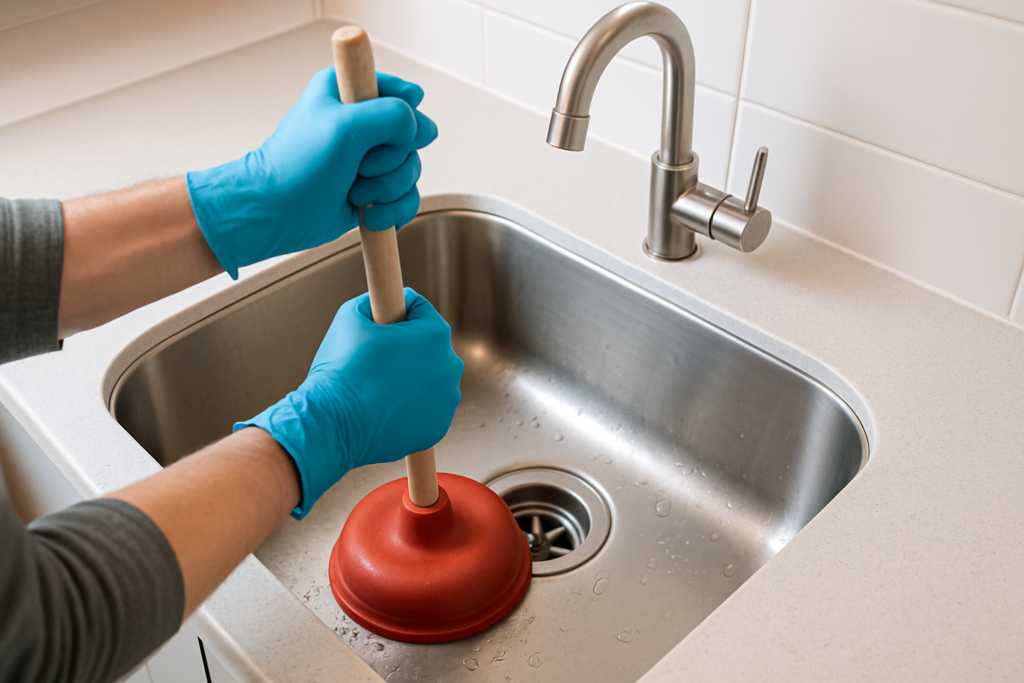
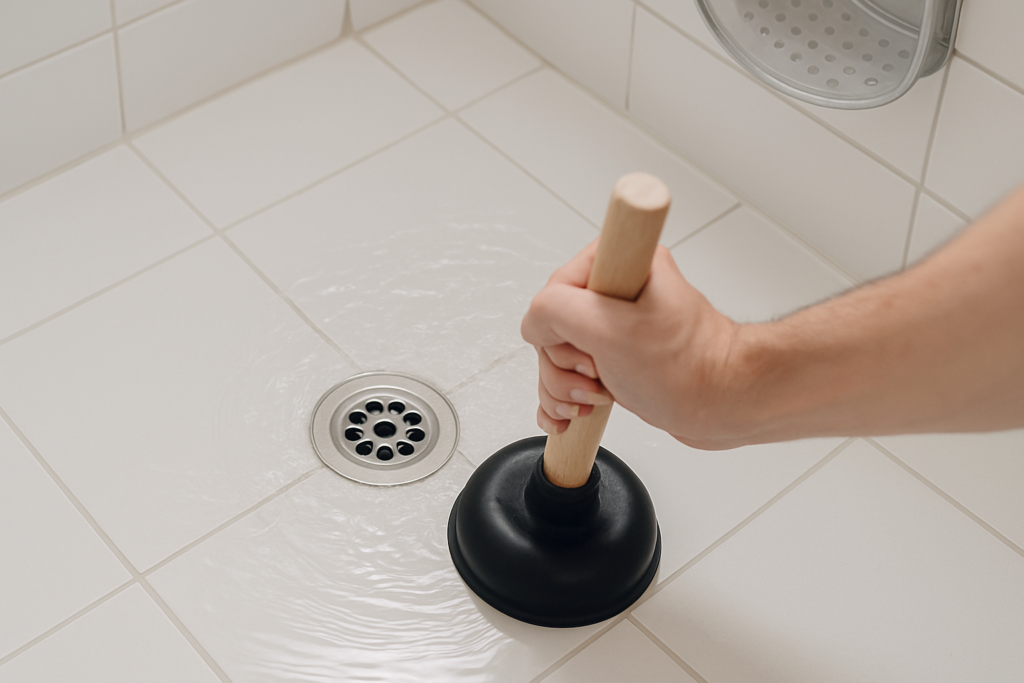
Yes, but you need to cover the overflow drain first (usually located near the top of the tub) with duct tape or a wet cloth. This creates the seal you need for effective plunging. Use a cup plunger, not a flange plunger. Fill the shower floor with a few inches of water and plunge vigorously 15 to 20 times. This works well for soft clogs but won’t break up compacted hair.
This article contains affiliate links. We may earn a small commission at no extra cost to you.