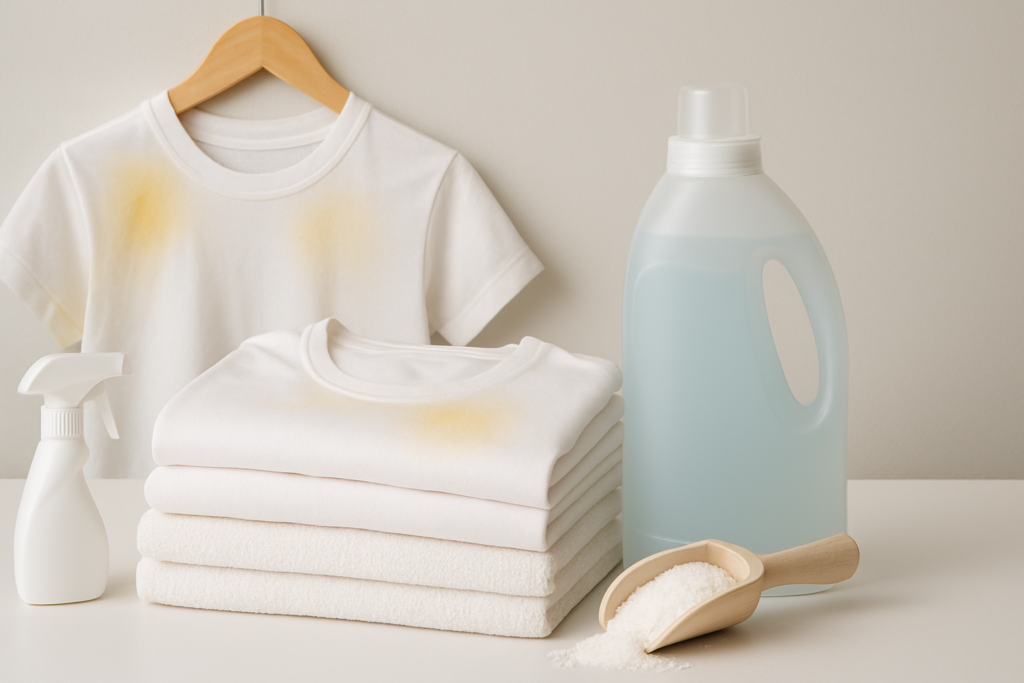
There’s nothing quite as frustrating as pulling your favorite white shirt from the laundry only to find it’s developed mysterious yellow stains. Whether it’s sweat marks around the collar, age-related yellowing on vintage linens, or those stubborn pillow stains that seem to appear overnight, yellow discoloration can make your whites look dingy and old.
The good news is that most yellow stains aren’t permanent. With the right techniques and products, you can restore your white clothes and linens to their original brightness. From simple household remedies to powerful commercial cleaners, there are proven methods to tackle even the most stubborn yellowing.
Understanding Why White Fabrics Turn Yellow
Before diving into solutions, it helps to understand what causes yellowing in the first place. The most common culprits include body oils, sweat, deodorant residue, and natural aging of the fabric fibers. Over time, these substances build up and oxidize, creating those unsightly yellow patches.
Sweat stains are particularly tricky because they contain proteins and salts that bond with fabric fibers. When you add heat from washing machines or dryers, these compounds can actually set deeper into the material. Aluminum-based deodorants create another layer of complexity, as they react with sweat to form yellow deposits that regular detergent can’t easily remove.
Age-related yellowing happens differently. Cotton and linen fibers naturally break down over time, and exposure to light, air, and moisture accelerates this process. Even items stored in closets for years can develop a general yellow tint that makes them look aged and worn.
The OxiClean Method for Stubborn Stains
OxiClean remains one of the most effective commercial solutions for yellow stains on white fabrics. This oxygen-based bleach works by breaking down the molecular bonds in stains, lifting them from fabric fibers without the harsh effects of chlorine bleach.
To use OxiClean effectively, create a soaking solution by dissolving the powder in warm water according to package directions. Submerge your yellowed items and let them soak for at least six hours, though overnight soaking often produces better results. The oxygen bubbles will work to break down embedded stains during this time.
OxiClean White Revive Laundry Whitener
Specifically formulated for whitening yellowed fabrics with optical brighteners and stain-fighting enzymes.
For extra-stubborn areas like underarm stains, make a paste with OxiClean powder and a small amount of water. Rub this directly onto the stained area and let it sit for 30 minutes before adding the item to your soaking solution. This concentrated treatment helps break down built-up residue that regular washing hasn’t removed.
After soaking, wash the items in your regular cycle with your usual detergent. You can also add a scoop of OxiClean to the wash for extra whitening power. Check the results before drying, as heat can set any remaining stains permanently.
Hydrogen Peroxide: A Powerful Natural Alternative
Hydrogen peroxide offers a gentler alternative to harsh bleaches while still providing excellent whitening results. This common household product works by releasing oxygen molecules that break apart stain compounds, making it particularly effective on protein-based yellowing from sweat.
Create a whitening solution using equal parts 3% hydrogen peroxide and water. Soak your yellowed items for 30 minutes to an hour, depending on the severity of the staining. For spot treatment, you can apply undiluted peroxide directly to stained areas using a spray bottle or by dabbing it on with a cloth.
One major advantage of hydrogen peroxide is its safety on most white fabrics. Unlike chlorine bleach, which can weaken fibers over time, peroxide breaks down into water and oxygen, leaving no harmful residue. However, always test on an inconspicuous area first, especially with delicate fabrics or items with mixed materials.
For pillow cases and sheets with extensive yellowing, try adding a cup of hydrogen peroxide directly to your washing machine’s bleach dispenser. This method works well for regular maintenance and prevention of future yellowing. The peroxide will activate during the wash cycle, providing gentle whitening action throughout the entire load.
Bluing Agents for Optical Whitening
Traditional bluing agents work differently than stain removers by adding a tiny amount of blue tint to fabrics, which counteracts yellow tones and makes whites appear brighter. This technique has been used for over a century and remains highly effective for maintaining white linens and clothing.
Modern bluing products like Mrs. Stewart’s Bluing require careful measurement. Too much will leave your items with a blue tint, while too little won’t provide noticeable results. Start with just a few drops in a full washing machine load, as a little goes a very long way.
Mrs Stewart’s Concentrated Liquid Bluing
Time-tested formula that safely brightens whites without harsh chemicals or fabric damage.
Bluing works best as a maintenance treatment rather than a solution for heavily yellowed items. Use it regularly on white loads to prevent gradual yellowing and keep fabrics looking crisp and bright. It’s particularly effective on cotton sheets, pillowcases, and dress shirts that you want to maintain in pristine condition.
Always dilute bluing in water before adding it to your wash. Adding it directly to fabric or concentrating it in one area will create permanent blue spots. Mix it thoroughly in a cup of water first, then add this solution to your machine’s rinse cycle for even distribution.
DIY Solutions Using Common Household Items
Several items you likely have in your kitchen can effectively tackle yellow stains. White vinegar, baking soda, and lemon juice all have natural whitening properties that work well alone or in combination.
Create a powerful whitening paste by mixing baking soda with just enough hydrogen peroxide to form a spreadable consistency. Apply this mixture to stained areas and let it sit for an hour before washing. The combination of alkaline baking soda and oxidizing peroxide creates a one-two punch against stubborn yellowing.
For a gentler approach, try soaking items in a solution of white vinegar and water. Use one cup of vinegar per gallon of water and soak for several hours. Vinegar’s acidity helps break down mineral deposits and soap residue that can contribute to yellowing over time. This method works particularly well on items that have become yellowed from hard water or detergent buildup.
Lemon juice provides natural bleaching action thanks to its citric acid content. Apply fresh lemon juice directly to stains and place the item in sunlight for 30 minutes before washing. The combination of acid and UV light creates a natural bleaching effect that’s especially effective on organic stains.
The Sunlight Advantage
Don’t underestimate the power of natural sunlight for whitening fabrics. UV rays break down many of the compounds that cause yellowing, and sun-drying can enhance the effects of other treatments you’ve applied.
After treating stains with any of the methods above, hang items outside to dry whenever possible. The natural bleaching action of sunlight will continue working on any remaining discoloration. This technique works particularly well on cotton and linen items that can handle direct sun exposure.
Special Considerations for Different Fabric Types
Not all white fabrics respond the same way to whitening treatments. Cotton and linen can generally handle more aggressive treatments, while synthetic blends and delicate fabrics require gentler approaches.
For wool and silk items, avoid hydrogen peroxide and stick to enzyme-based cleaners or gentle oxygen bleaches. These natural fibers can be damaged by strong oxidizing agents. Instead, try a solution of cold water and enzyme-based detergent with an extended soaking time.
Synthetic fabrics like polyester can be tricky because they tend to hold onto oils and odors more than natural fibers. For these materials, pre-treating with a degreasing dish soap before applying your chosen whitening method can improve results significantly.
Always check care labels before attempting any whitening treatment. Some fabrics are labeled as dry clean only for good reason, and home treatments could cause permanent damage or void warranties on expensive items.
Prevention Strategies to Avoid Future Yellowing
Preventing yellow stains is often easier than removing them after they’ve set. Simple changes to your laundry routine can keep whites looking bright for years longer.
Wash white items in hot water when the care label allows it. Hot water helps break down oils and residues before they have a chance to oxidize and turn yellow. Cold water washing, while energy-efficient, doesn’t always remove all the compounds that lead to yellowing over time.
Don’t let sweaty clothes sit in hampers for days before washing. The longer these compounds remain in contact with fabric, the deeper they penetrate and the harder they become to remove. Rinse heavily soiled items in cold water immediately after wear, then wash them properly when you have a full load.
Tide Free and Gentle Liquid Laundry Detergent
Hypoallergenic formula without dyes or perfumes that won’t contribute to fabric yellowing over time.
Consider switching to an aluminum-free deodorant if you notice consistent yellowing in shirt underarms. While this might require an adjustment period, it can dramatically reduce the chemical reactions that cause stubborn yellow stains in that area.
Store white linens and clothing properly to prevent age-related yellowing. Avoid plastic bags, which can trap moisture and accelerate fiber breakdown. Instead, use breathable cotton storage bags or acid-free tissue paper for long-term storage of valuable white items.
When to Call It Quits
Sometimes, despite your best efforts, yellowing is too extensive or set too deeply to remove completely. Very old stains that have been heat-set through multiple dryer cycles may be permanent. Similarly, items that have been stored improperly for years might have fiber damage that goes beyond surface staining.
Before giving up entirely, try one final intensive treatment. Combine multiple methods by soaking in OxiClean overnight, then pre-treating with hydrogen peroxide paste, followed by washing with hot water and additional oxygen bleach. This aggressive approach sometimes works on stains that resist single-method treatments.
If this doesn’t work, consider whether the item is worth professional restoration. Some dry cleaners specialize in whitening services and have access to commercial-grade products not available to consumers. For valuable vintage linens or special occasion clothing, professional treatment might be worth the investment.
Frequently Asked Questions
Can I use chlorine bleach on yellowed white clothes?
Chlorine bleach can actually make yellow stains worse, especially those caused by sweat and deodorant. The chemicals react with proteins and aluminum compounds to create even more stubborn discoloration. Stick with oxygen-based bleaches like OxiClean or hydrogen peroxide for better results.
How long should I soak yellowed items before washing?
Soaking times depend on the severity of yellowing and the method you’re using. For OxiClean treatments, overnight soaking (8-12 hours) often produces the best results. Hydrogen peroxide solutions work well with 1-2 hour soaking times. Check progress periodically and extend soaking if needed.
Is it safe to mix different whitening products?
Never mix different chemical products, as this can create dangerous reactions or damage fabrics. Use one method at a time, rinse thoroughly between treatments if trying multiple approaches, and always test on hidden areas first. Combining hydrogen peroxide with baking soda is safe, but avoid mixing commercial products.
Why do my white sheets keep turning yellow even after washing?
Recurring yellowing usually indicates incomplete removal of body oils, lotions, or detergent residue. Try washing in hotter water, using less detergent to prevent buildup, and adding an oxygen bleach to your regular routine. Also check if hard water minerals are contributing to the problem.
This article contains affiliate links. We may earn a small commission at no extra cost to you.