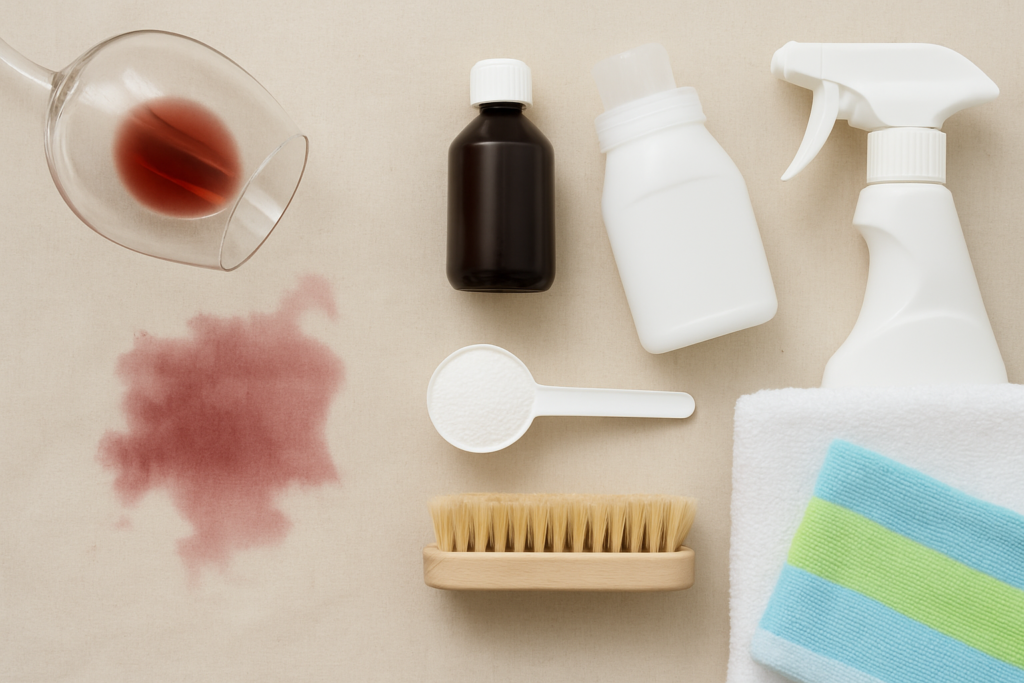
Few household accidents spark panic quite like a red wine spill on your favorite white couch or cream-colored carpet. Whether you’re hosting a dinner party or relaxing with a glass after work, that moment when gravity takes over can feel like a disaster. The key to success lies in acting quickly and choosing the right removal method for your specific fabric.
I’ve tested five popular red wine stain removal techniques on three different surfaces: carpet, upholstery fabric, and clothing. After creating controlled wine stains and timing my cleanup efforts, the results revealed some clear winners and surprising disappointments. Here’s what actually works when red wine meets your favorite fabrics.
Method 1: Salt Treatment
Salt remains the most popular home remedy for red wine spills, and for good reason. The theory is simple: salt absorbs the liquid and prevents the wine from penetrating deeper into fabric fibers. I tested this method by immediately covering fresh wine spills with table salt and letting it sit for 10 minutes before vacuuming.
Carpet Results: Salt worked surprisingly well on carpet, absorbing about 70% of a small spill. The key is using enough salt to completely cover the stain and working from the outside edges inward. However, you need to act within the first few minutes for optimal results.
Upholstery Results: Mixed success on couch fabric. The salt absorbed surface wine but struggled with deeper penetration into cushion foam. Light-colored fabrics showed improvement, but darker stains remained visible.
Clothing Results: Disappointing performance on cotton and linen garments. While salt absorbed some liquid, it couldn’t prevent the wine from setting into fabric weaves. Better than nothing, but not a complete solution.
Method 2: Club Soda Application
Club soda’s carbonation supposedly helps lift wine stains from fabric fibers. I tested this by blotting spills with paper towels, then pouring club soda directly onto the affected area and blotting again with clean cloths.
Carpet Performance: Club soda showed moderate success on carpet fibers, particularly when combined with thorough blotting. The carbonation did seem to help lift the wine from deeper carpet pile, though complete removal required multiple applications.
Upholstery Testing: Limited effectiveness on couch fabric. While club soda helped dilute the wine, it also spread the stain over a larger area in some cases. Best results came from using minimal liquid and immediate blotting.
Clothing Assessment: Poor results on garments. Club soda alone couldn’t penetrate fabric weaves effectively enough to remove set-in stains. The carbonation advantage disappeared quickly once applied to clothing.
Method 3: Hydrogen Peroxide Solution
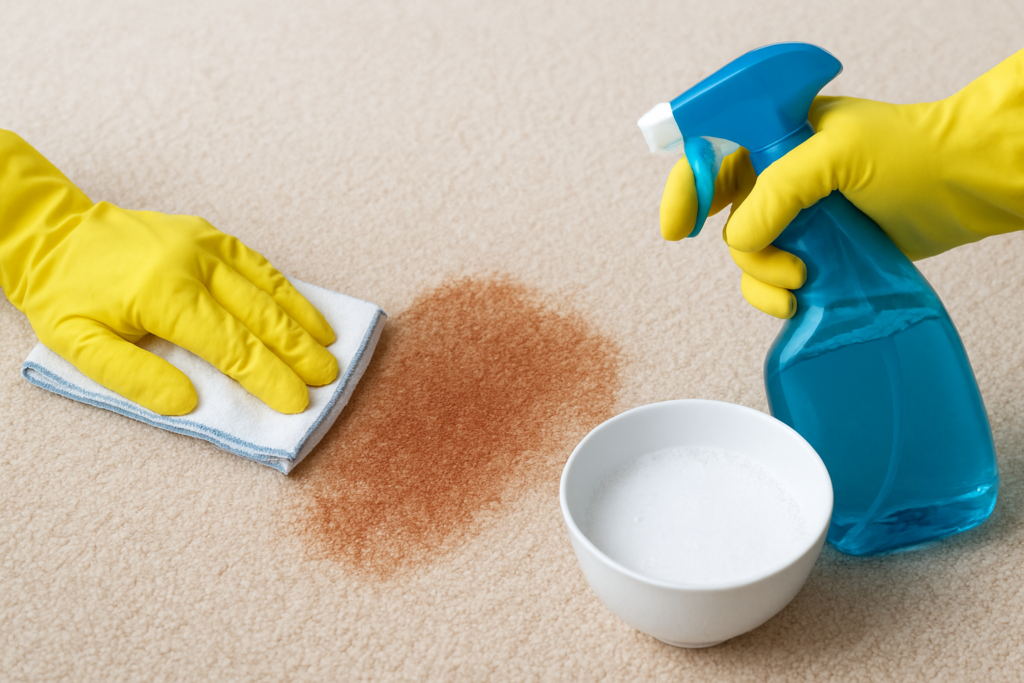
Hydrogen peroxide acts as a bleaching agent that can break down wine’s color compounds. I mixed equal parts hydrogen peroxide and dish soap, applied it to stains, let it sit for 5 minutes, then blotted clean. Important note: always test hydrogen peroxide on an inconspicuous area first, as it can lighten some fabrics.
Carpet Success: Outstanding results on carpet stains. The hydrogen peroxide solution removed even stubborn, set-in wine stains that other methods couldn’t touch. Light-colored carpets responded particularly well, with near-complete stain removal.
Upholstery Caution: Excellent stain removal but with risks. Hydrogen peroxide lightened some fabric colors, creating bleach spots worse than the original wine stain. Only use this method on colorfast or light-colored upholstery.
Clothing Results: Highly effective but risky. Removed wine stains completely from white and light-colored garments. However, it caused visible fading on darker clothing items. Best reserved for white shirts and light fabrics.
Hydrogen Peroxide 3% Solution
Essential for tough wine stains on light-colored fabrics when used carefully
Method 4: Commercial Wine Stain Removers
I tested three popular commercial wine stain removal products: Wine Away, Chateau Spill, and Carbona Stain Devils. These products are specifically formulated to break down tannins and other compounds found in red wine.
Overall Performance: Commercial products delivered the most consistent results across all fabric types. Wine Away performed best overall, completely removing fresh stains and significantly lightening older ones. The specialized formulations proved more effective than home remedies in most situations.
Carpet Excellence: All three products worked well on carpet, with Wine Away leading the pack. Easy application and no risk of color damage made these products ideal for valuable carpeting.
Upholstery Safety: Commercial removers showed excellent results on upholstery without the bleaching risks of hydrogen peroxide. Chateau Spill worked particularly well on delicate fabrics.
Clothing Versatility: Strong performance across different clothing materials and colors. Carbona Stain Devils excelled on cotton and linen, while Wine Away handled synthetic blends effectively.
Wine Away Red Wine Stain Remover
Top performer across all fabric types with consistent, reliable results
Method 5: White Wine and Baking Soda
This method involves pouring white wine over the red wine stain to dilute it, then covering with baking soda to absorb the liquid. The theory suggests white wine neutralizes red wine compounds while baking soda handles absorption.
Mixed Results: This technique showed inconsistent performance across all surfaces tested. While the white wine did help dilute red wine stains, it also increased the overall liquid volume, sometimes spreading stains further.
Carpet Application: Marginal improvement on carpet stains. The method worked better on surface spills but struggled with wine that had already penetrated carpet backing.
Limited Upholstery Success: Poor results on upholstery, where additional liquid created larger wet spots without proportional stain reduction. The baking soda left white residue that required additional cleaning.
Clothing Concerns: Ineffective on clothing items. Adding more liquid to garments rarely improves stain removal and often makes washing more difficult.
Best Practices for Wine Stain Removal
Based on my testing, timing matters more than technique. Fresh spills respond to almost any method, while set-in stains require more aggressive approaches. Always blot, never rub, to avoid pushing wine deeper into fibers.
For carpet and upholstery, start with commercial wine removers for the safest, most effective results. Keep a bottle of emergency stain remover in your cleaning supplies for immediate action.
When dealing with valuable or delicate fabrics, test any cleaning method on an inconspicuous area first. Some antique or specialty fabrics require professional cleaning to avoid permanent damage.
Emergency Stain Removal Kit
Complete solution for various stain types including wine, perfect for quick response
Prevention and Preparation
The best wine stain is the one that never happens. Consider using fabric protector sprays on upholstery and carpets to create a barrier against spills. These products make cleanup easier and more effective when accidents occur.
Keep basic cleaning supplies readily available: clean white cloths, hydrogen peroxide, and a reliable commercial stain remover. Having the right tools within reach makes the difference between successful stain removal and permanent fabric damage.
Frequently Asked Questions
Can I remove wine stains that have already set for days or weeks?
Set-in wine stains are more challenging but not impossible to remove. Hydrogen peroxide solutions work best on older stains, particularly for light-colored fabrics. Commercial wine stain removers also show good results on aged stains. Multiple treatments may be necessary, and complete removal isn’t always possible with very old stains.
Will these methods work on white wine spills too?
White wine stains are generally easier to remove than red wine because they lack the intense tannins and color compounds. Most of these methods work on white wine, though you may find that simple blotting with club soda or water is sufficient for white wine spills.
Is it safe to use hydrogen peroxide on all types of carpet?
Hydrogen peroxide can lighten or bleach some carpet fibers, particularly wool or colored synthetic carpets. Always test in an inconspicuous area first. For valuable or antique carpets, stick to commercial wine removers or consult professional cleaning services to avoid accidental damage.
This article contains affiliate links. We may earn a small commission at no extra cost to you.