Those cloudy white spots on your shower doors, the chalky buildup around your faucets, and the stubborn film on your bathroom tiles all have one thing in common: hard water stains. These mineral deposits form when water with high concentrations of calcium and magnesium evaporates, leaving behind unsightly residue that makes even the cleanest home look neglected.
The frustrating part about hard water stains is how quickly they return. You can scrub your shower doors until they gleam, only to find them covered in spots again after a few showers. But with the right techniques and products, you can tackle these stubborn deposits and keep them from coming back so quickly.
Understanding Hard Water Stains
Hard water stains are essentially mineral deposits left behind when water evaporates. The higher the mineral content in your water, the more pronounced these stains become. They appear as white, chalky spots on glass surfaces, crusty buildup around faucet aerators, and dull films on tiles and fixtures.
These deposits bond strongly to surfaces, which is why regular soap and water won’t remove them. You need something acidic to dissolve the mineral buildup, or an abrasive cleaner designed specifically for this type of residue.
Vinegar vs Commercial Products: What Works Best
White vinegar is the go-to natural solution for hard water stains, and for good reason. Its acetic acid content dissolves calcium and magnesium deposits effectively. For light to moderate stains, vinegar works well and costs pennies compared to commercial cleaners.
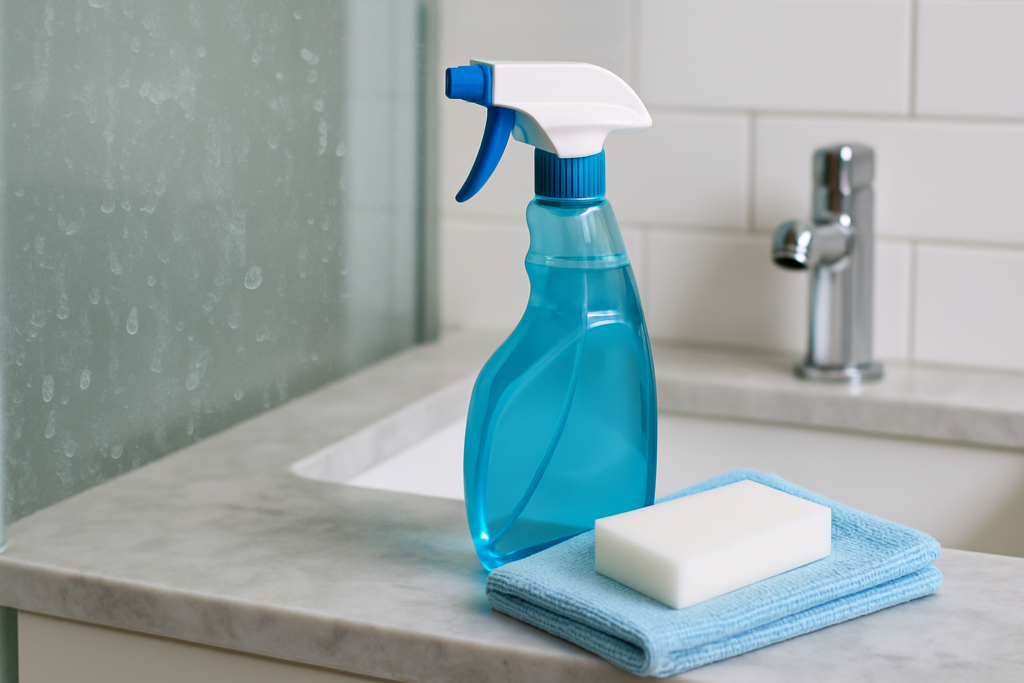
Mix equal parts white vinegar and water in a spray bottle. For tougher stains, use undiluted vinegar. The smell dissipates quickly once surfaces dry, and you’re not introducing harsh chemicals into your home.
Commercial hard water stain removers contain stronger acids like hydrochloric or phosphoric acid, making them more effective on heavy buildup. Products like CLR and Lime-Away can tackle stains that vinegar can’t touch.
CLR Calcium Lime Rust Remover
This powerful cleaner dissolves even the toughest mineral deposits that vinegar can’t handle.
For most homeowners, starting with vinegar makes sense. If it doesn’t work after a thorough application and some scrubbing, then move to commercial products. Save the stronger chemicals for the really stubborn spots.
Shower Door Solutions
Glass shower doors show every water spot, making them the most visible hard water problem in most bathrooms. The key to cleaning them effectively is proper technique and the right tools.
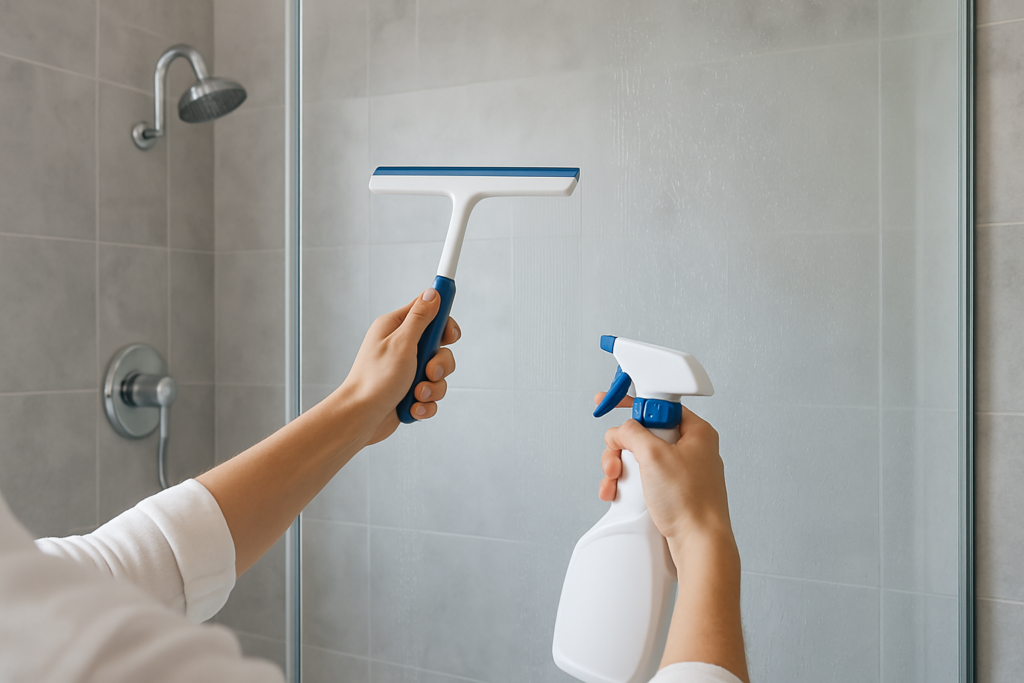
Start by applying your chosen cleaner (vinegar solution or commercial product) generously to the glass. Let it sit for 10-15 minutes to dissolve the mineral deposits. For vertical surfaces like shower doors, the cleaner tends to run off quickly, so you might need to reapply during this waiting period.
Use a plastic scraper to gently remove thick buildup before wiping. Follow up with a microfiber cloth or squeegee to prevent streaking. Many people make the mistake of using paper towels, which can leave lint and don’t absorb as well as microfiber.
For doors with textured glass or severe buildup, try the paste method. Mix baking soda with just enough water to form a thick paste, apply it to the glass, then spray with vinegar. The fizzing action helps break down deposits. Let this sit for 20 minutes before scrubbing with a non-abrasive sponge.
Faucet and Fixture Care
Faucets collect hard water stains in two problem areas: the visible surfaces and inside the aerator where you can’t easily reach. Both need attention for optimal function and appearance.
For external surfaces, wrap paper towels soaked in vinegar around the faucet base and spout. Secure with rubber bands and let sit for several hours or overnight. This extended contact time allows the acid to dissolve even thick mineral crusts.
Aerators require a different approach. Unscrew the aerator from the faucet tip (you might need pliers, but wrap the aerator in a cloth to prevent scratches). Soak it in undiluted vinegar overnight. Use an old toothbrush to scrub away loosened deposits before reattaching.
Weiman Stainless Steel Cleaner
Specifically formulated for stainless steel fixtures, this cleaner removes water spots while leaving a protective finish.
Stainless steel fixtures need special consideration since vinegar can potentially damage the finish with prolonged exposure. Use commercial stainless steel cleaners for these surfaces, or limit vinegar contact time to under 10 minutes.
Tile Cleaning Techniques
Tile surfaces present unique challenges because hard water stains affect both the tile surface and the grout lines. Each requires a slightly different approach for best results.
On ceramic or porcelain tiles, vinegar works well and won’t cause damage. Spray the surface, let it dwell for 10 minutes, then scrub with a soft brush. Pay special attention to areas where water sits regularly, like the bottom rows of shower tiles.
Natural stone tiles like marble, granite, or travertine require acid-free cleaners since vinegar can etch the surface. Use pH-neutral stone cleaners or make a paste with baking soda and water for these surfaces.
Grout lines trap mineral deposits and are harder to clean than smooth tile surfaces. Make a paste with baking soda and water, apply it to grout lines, then spray with vinegar. The reaction helps lift stains from the porous grout material. Use an old toothbrush to scrub the grout after the fizzing stops.
For severely stained grout, consider using a specialized grout brush or even a steam cleaner to penetrate deep into the porous material.
Prevention Strategies That Actually Work
Preventing hard water stains is much easier than removing them, but it requires consistency. The most effective approach combines immediate action with longer-term solutions.
After each shower, squeegee glass doors and wipe down fixtures with a microfiber cloth. This removes water before it can evaporate and leave mineral deposits. Keep a small squeegee hanging in your shower for convenience.
Weekly maintenance makes a huge difference. Spray shower surfaces with a 50/50 vinegar solution once a week, let it sit for a few minutes, then rinse. This prevents heavy buildup that requires aggressive scrubbing later.
Rain-X Glass Water Repellent
Originally designed for car windshields, this treatment makes water bead up and roll off glass shower doors.
Consider treating glass surfaces with water repellent products designed for shower doors. These create an invisible barrier that makes water sheet off instead of forming droplets that leave spots.
For a permanent solution, installing a water softener system removes minerals before they reach your fixtures. While this requires upfront investment, it eliminates hard water stains throughout your home and extends the life of appliances and plumbing fixtures.
Frequently Asked Questions
Can hard water stains permanently damage surfaces?
Most hard water stains are purely cosmetic and won’t permanently damage surfaces if removed promptly. However, long-term buildup can etch glass and natural stone surfaces, creating permanent pitting. Metal fixtures may develop corrosion under thick mineral deposits. Regular cleaning prevents these more serious issues.
How often should I clean hard water stains?
Light weekly cleaning prevents heavy buildup that requires aggressive scrubbing. Wipe surfaces dry after use and apply vinegar solution weekly to high-use areas like shower doors. Monthly deep cleaning with commercial products handles any remaining deposits. Consistency matters more than intensity when managing hard water stains.
Are commercial hard water cleaners safe around children and pets?
Most commercial hard water cleaners contain strong acids that require careful handling. Always read labels completely, ensure adequate ventilation, and keep products away from children and pets. Consider vinegar-based solutions for routine cleaning and reserve stronger products for heavy buildup. Store all cleaning products in locked cabinets regardless of their toxicity level.
This article contains affiliate links. We may earn a small commission at no extra cost to you.