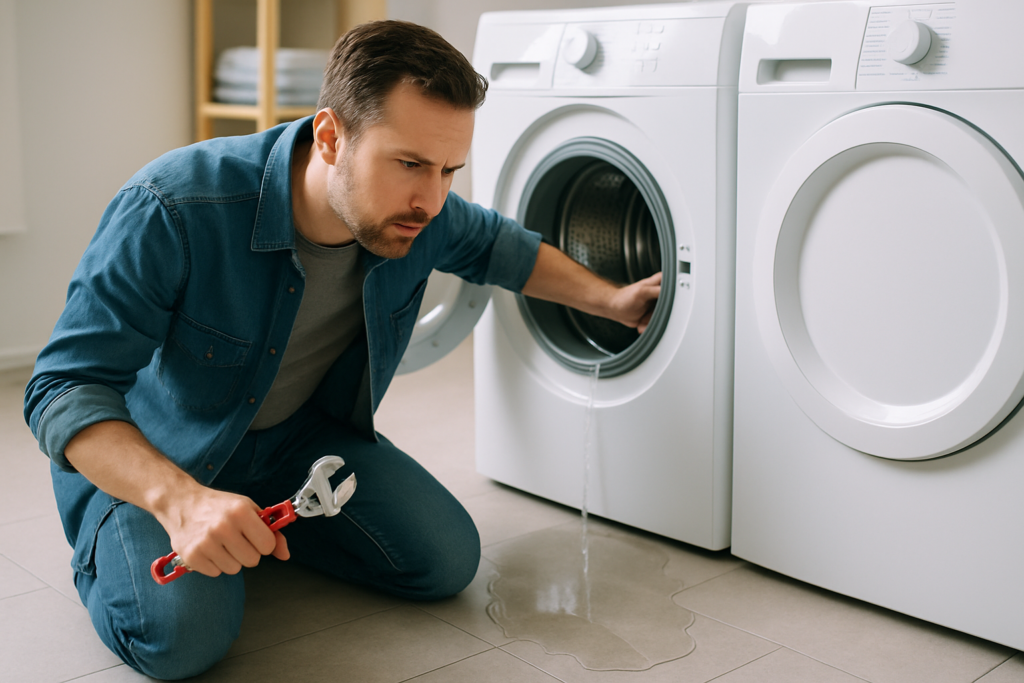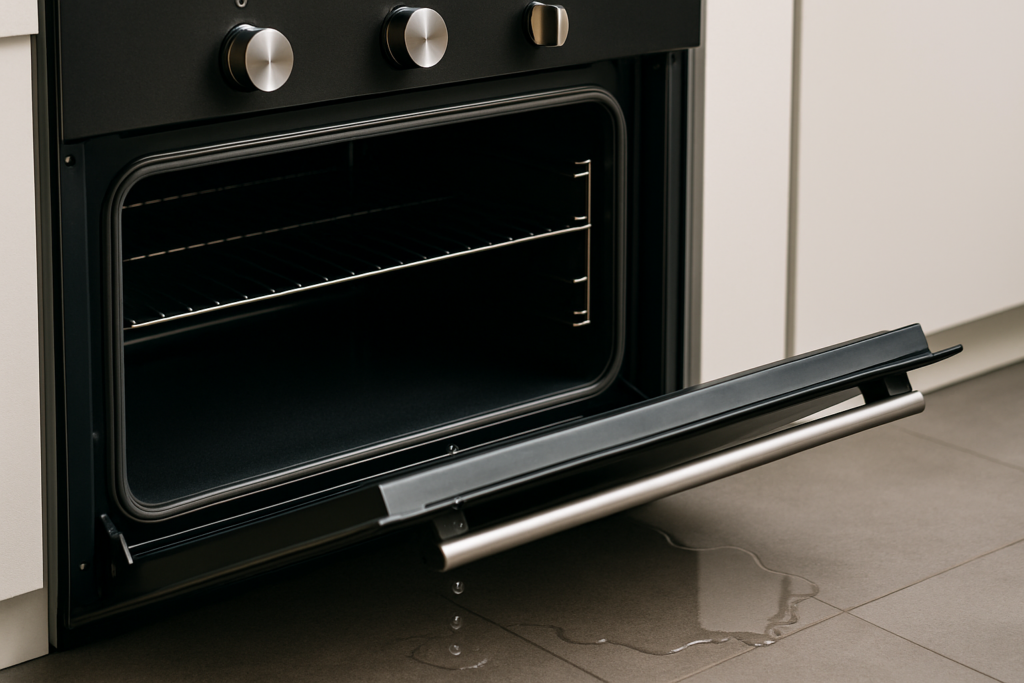
Water pooling under your oven is one of those problems that catches you completely off guard. You’re not running a dishwasher or washing machine nearby, so where is all that moisture coming from? Turns out, several types of ovens can develop leaks, and the culprit usually comes down to a handful of common issues with condensation systems, self-cleaning cycles, or faulty components.
The good news is that most oven water leaks are fixable without calling in a repair tech. Let’s walk through the most common causes and how to solve them yourself.
Condensation From Steam Cooking Features
If you have a newer oven with steam cooking capabilities, you’ve got a built-in water reservoir that feeds moisture into the oven cavity. These models include drainage systems that channel excess water away from the cooking area, but these drains can get clogged with food debris or mineral deposits.
Check the water reservoir first. Pull it out and inspect for cracks or improper seating. Even a slight misalignment can cause water to leak onto your floor instead of draining properly. Clean the reservoir thoroughly and make sure it clicks back into place correctly.
Next, locate the drain tube at the bottom of your oven. This small hose connects the oven cavity to a collection tray or drain pan. Remove it and flush it with warm water mixed with vinegar to dissolve any buildup. If the tube is cracked or brittle, you’ll need to replace it. Most appliance parts suppliers carry universal drain tubes that fit standard ovens.

Oven Drain Hose Kit
Replace damaged or clogged drainage tubes to stop water pooling under your oven.
Door Seal Problems and Self-Cleaning Cycles
Your oven door gasket creates an airtight seal that keeps heat and moisture inside during cooking. Over time, this rubber seal degrades from constant heat exposure and starts cracking or pulling away from the door frame. When that happens, steam escapes and condensation drips down the front of your oven.
Inspect the entire perimeter of your oven door. Run your finger along the gasket and feel for any gaps, tears, or areas where the rubber has hardened. A worn gasket needs immediate replacement since it also affects cooking efficiency and increases energy costs.
Replacing a door seal is simpler than you’d think. Most gaskets are held in place with clips or slots rather than adhesive. Pull out the old seal, clean the channel with soapy water, and press the new oven door gasket into place starting at the top corners and working your way around.
Self-cleaning cycles generate extreme heat that produces significant amounts of steam and condensation. Some models aren’t designed to handle this moisture effectively, especially older units. Water can collect at the bottom of the oven and leak through small gaps in the insulation. Running the self-clean cycle less frequently and wiping up spills manually can prevent this issue.
Hidden Drain Pan Issues
Many ovens have a drain pan tucked underneath the main cavity that collects condensation during normal operation. This pan sits below the oven floor and isn’t always easy to access, but it can overflow if it’s full or tip over if mounting brackets have loosened.
You’ll need to pull your oven away from the wall and remove the lower access panel to check this. Wear gloves since the area collects grease and grime. Empty the pan if it’s full, and check for rust holes that might be letting water drip through. A corroded pan needs replacement, but you can temporarily seal small holes with high-temperature epoxy as a stopgap measure.
Make sure the pan sits level and all mounting clips are secure. Even a slight tilt causes water to spill over one edge instead of evaporating naturally.

Oven Cleaning Kit
Keep your oven cavity and drain areas clean to prevent buildup that blocks drainage systems.
Frequently Asked Questions
Why does water leak from my oven only when using convection mode?
Convection cooking circulates hot air rapidly, which can create more condensation than traditional baking. The fan draws moisture from your food and circulates it throughout the cavity. If your door seal has even small gaps, that moisture escapes as steam and condenses on the cooler exterior surfaces of your oven, creating visible water drips. Check your gasket first, then verify that the convection fan cover isn’t loose or damaged, which can disrupt proper airflow.
Can a faulty heating element cause water leaks?
Not directly, but a malfunctioning heating element creates uneven temperatures that produce excess condensation. When your oven can’t maintain consistent heat, cold spots develop where moisture collects instead of evaporating. You’ll often notice water pooling in specific areas of the oven floor rather than distributed evenly. Test your heating elements with a multimeter to check for proper resistance readings, usually between 20 and 115 ohms depending on your model.
This article contains affiliate links. We may earn a small commission at no extra cost to you.