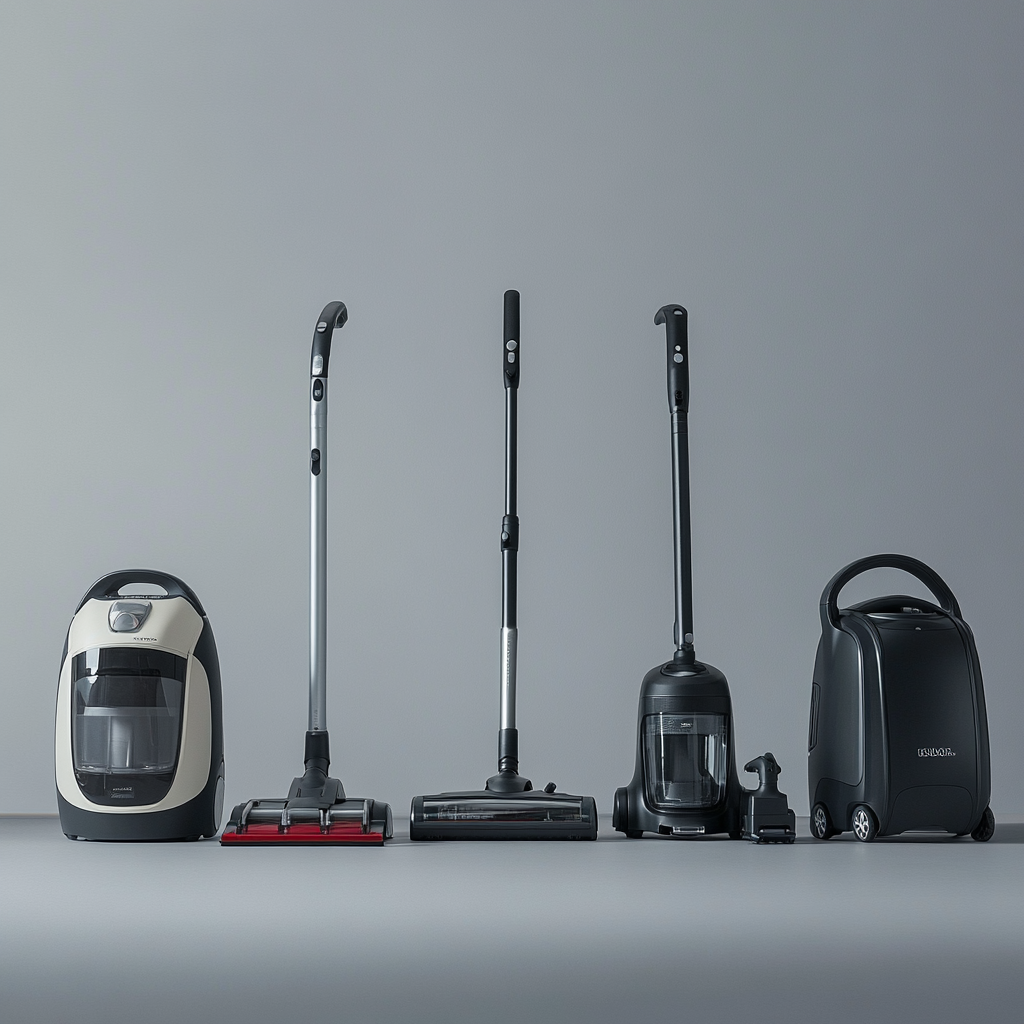
Choosing between an upright and canister vacuum can feel overwhelming when you’re staring at an entire aisle of options. Both styles have their devoted fans, and for good reason. Your decision ultimately comes down to your home’s layout, your physical needs, and what surfaces you’re cleaning most often.
The truth is, there’s no universal “best” choice. What works perfectly for a single-story home with wall-to-wall carpet might be completely wrong for a multi-level house with mostly hardwood floors. Let’s break down the real differences so you can pick the right tool for your specific situation.
Performance Differences That Actually Matter
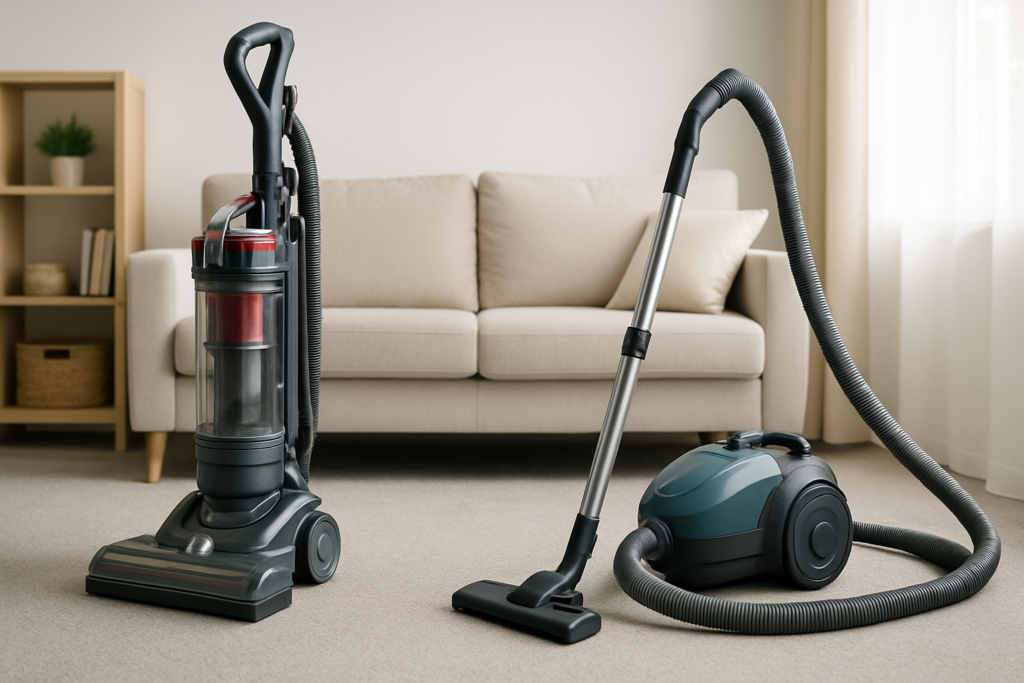
Upright vacuums dominate when it comes to carpet cleaning. Their design allows for better brush roll contact with carpet fibers, and most models include a beater bar that agitates dirt more effectively. If you have medium to high-pile carpeting throughout your home, an upright will typically give you superior results.
Canister vacuums excel on hard surfaces and low-pile rugs. The separate motor and cleaning head design provides consistent suction without the weight of the motor pressing down on delicate floors. They’re also gentler on area rugs and won’t scratch hardwood or tile surfaces.
For homes with mixed flooring, canister vacuums offer more versatility. You can easily switch between different floor tools without adjusting height settings or worrying about brush rolls scratching your floors.
Shark Navigator Lift Away Professional
A versatile upright that converts to a portable canister for stairs and furniture cleaning
Maneuverability and Storage Considerations
Canister vacuums win the maneuverability contest hands down. The lightweight cleaning wand moves effortlessly around furniture legs, under beds, and into tight corners. The separate canister follows behind on wheels, making it easy to navigate around obstacles.
Upright vacuums can feel clunky in furnished rooms. You’ll find yourself constantly lifting and repositioning the entire unit to clean around coffee tables and chair legs. However, they’re more efficient for large, open carpet areas where you can vacuum in straight lines.
Storage is where uprights have a clear advantage. They stand upright in closets and take up minimal floor space. Canister vacuums require more storage room for both the canister and the hose, and you’ll need to find a place to hang or store the various attachments.
For stairs, canister vacuums are far superior. You can set the canister at the bottom and clean the entire staircase with the lightweight wand. With an upright, you’re either carrying the full weight up and down each step or struggling with a handheld attachment that lacks proper suction power.
Miele Complete C3 Marin Canister Vacuum
Premium canister vacuum with exceptional build quality and powerful suction for all floor types
Physical Comfort and Ease of Use
Your physical limitations should heavily influence your choice. Upright vacuums require more pushing and pulling motions, which can strain your back and shoulders during extended cleaning sessions. The handle height and weight distribution vary significantly between models.
Canister vacuums put less stress on your body. You’re only maneuvering the lightweight wand while the heavy motor stays on the ground. This makes them ideal for people with back problems or limited upper body strength.
However, canister vacuums do require you to pull the unit behind you, and some people find this annoying. The canister can get stuck on furniture legs or flip over on thick carpets if you pull too aggressively.
Making Your Final Decision
Choose an upright vacuum if you have mostly carpeted floors, prefer quick setup and storage, and don’t mind the extra physical effort. Look for models with good filtration systems and adjustable height settings for different carpet types.
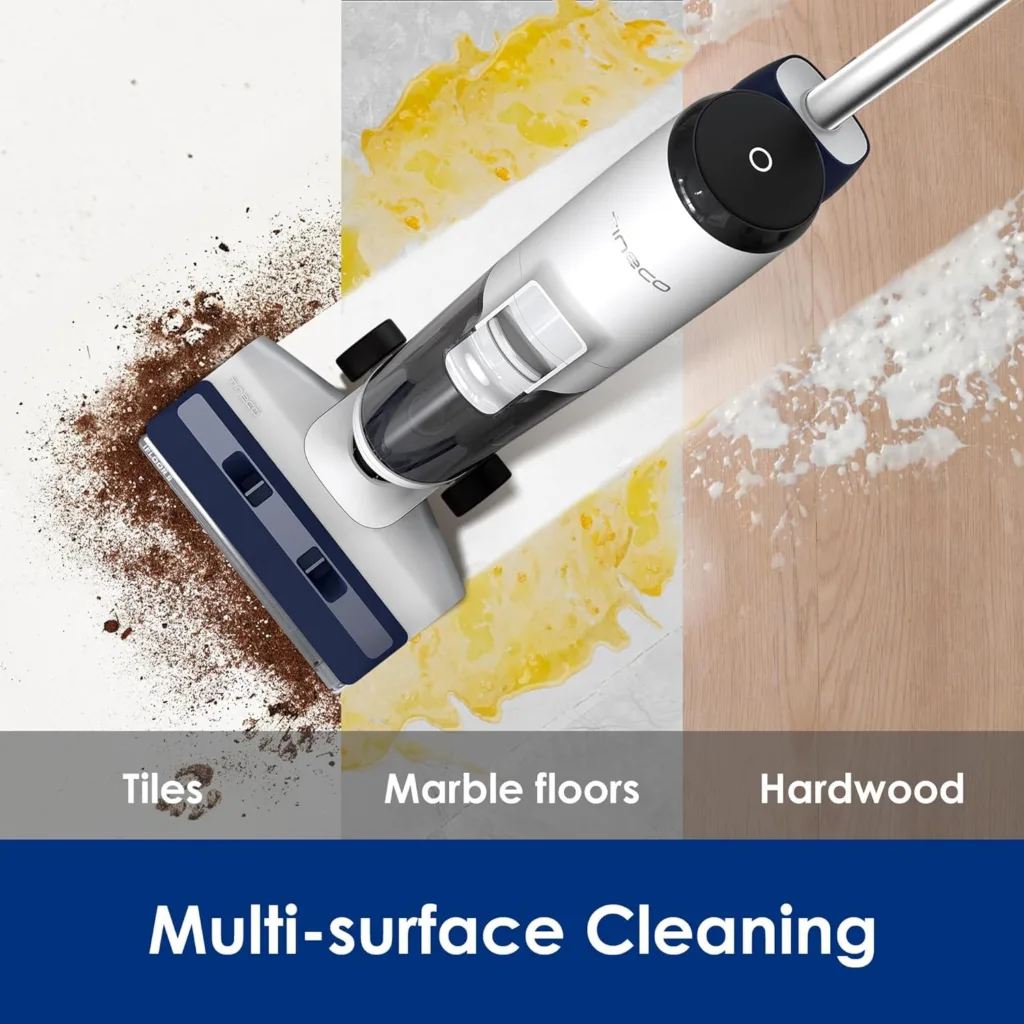
Go with a canister vacuum if you have mostly hard floors, multiple levels in your home, or physical limitations that make maneuvering heavy equipment difficult. The Bissell CrossWave Pet Pro offers excellent versatility for homes with mixed flooring needs.
For budget-conscious shoppers, upright vacuums generally offer more cleaning power per dollar spent. Canister vacuums tend to cost more upfront but often last longer and provide better filtration systems.
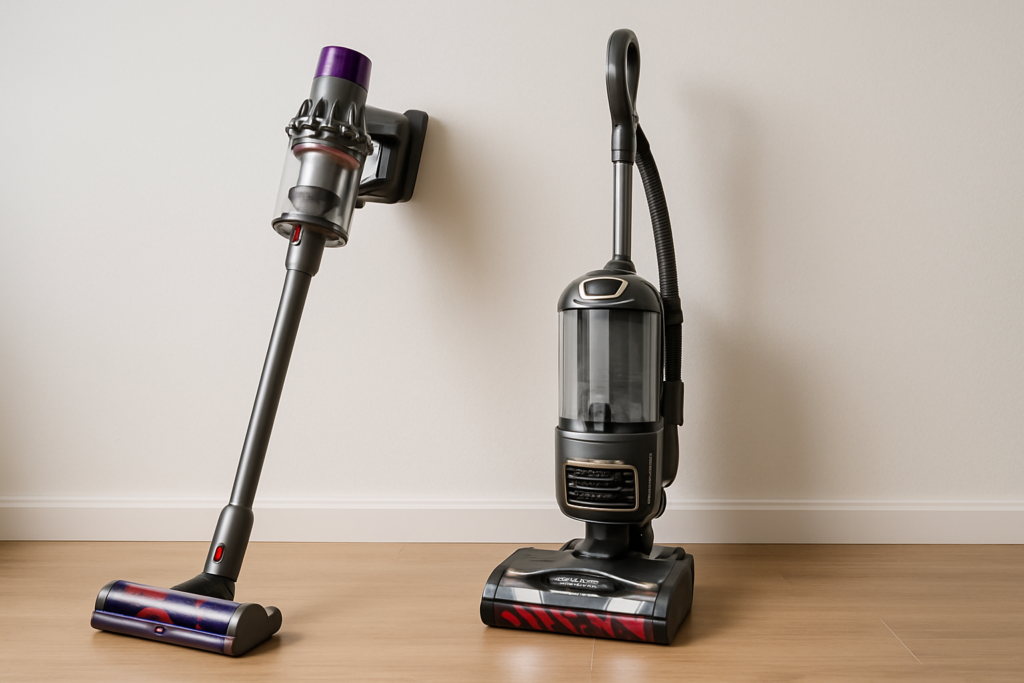
Dyson V15 Detect Absolute
Cordless stick vacuum that combines the convenience of an upright with canister-like versatility
Frequently Asked Questions
Can I use a canister vacuum on thick carpet?
Yes, but choose a canister model specifically designed for carpet cleaning. Look for models with a motorized brush head and adjustable suction settings. High-end canister vacuums often outperform budget uprights on thick carpets, but they’ll cost significantly more.
Do upright vacuums work well on hardwood floors?
Modern upright vacuums with brush roll shut-off features work adequately on hard floors, but they’re not optimal. The wide cleaning head can scatter debris, and the fixed design makes it harder to clean along baseboards and in corners compared to the flexible wand of a canister vacuum.
This article contains affiliate links. We may earn a small commission at no extra cost to you.