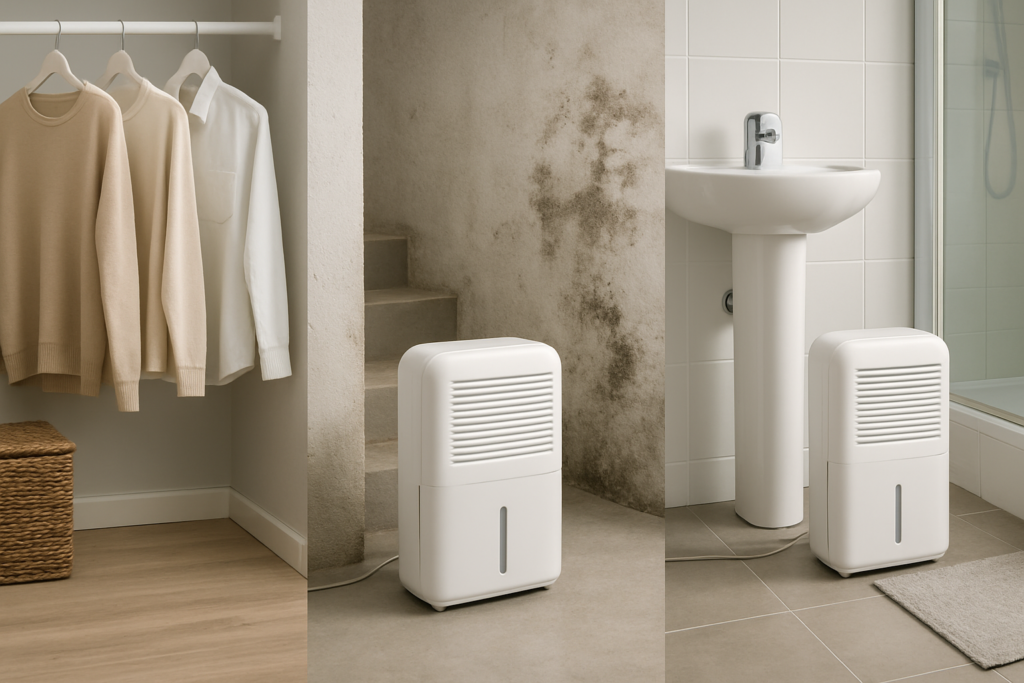
Nothing ruins the satisfaction of a clean home quite like opening a closet door to find fuzzy black spots creeping across your favorite clothes or walking into your basement to discover that musty smell that hits you like a wall. Mold doesn’t just look terrible and smell worse, it can trigger allergies, damage your belongings, and potentially create serious health issues for your family.
The frustrating truth is that mold thrives in the exact spaces we use most for storage and daily routines. Your bathroom steams up twice daily, your basement stays naturally cool and damp, and your closets trap air and moisture with little ventilation. But with the right approach, you can turn these mold magnets into dry, healthy spaces that protect both your belongings and your family’s wellbeing.
Understanding Humidity and Mold Growth
Mold needs three things to survive: moisture, organic material, and warm temperatures. Unfortunately, your home provides all three in abundance. The key factor you can control is moisture, and that starts with understanding humidity levels.
Keep indoor humidity between 30% and 50% to prevent mold growth. Above 60% humidity, mold spores start germinating within 24 to 48 hours. During summer months or in naturally humid climates, this becomes a constant battle that requires active management.
A digital hygrometer takes the guesswork out of monitoring moisture levels. Place one in each problem area to track humidity throughout the day. You’ll quickly discover patterns, like how your bathroom humidity spikes after showers or how your basement stays consistently above safe levels.
ThermoPro TP50 Digital Hygrometer
This accurate, easy-to-read model helps you monitor humidity levels in real-time.
Temperature also plays a role. Mold grows fastest between 77°F and 86°F, but it can develop in much cooler conditions if moisture levels stay high. Your basement might hover around 65°F, but if humidity reaches 70%, you’re still creating perfect conditions for mold growth.
Mastering Bathroom Moisture Control
Your bathroom generates more moisture than any other room in your house. A 10-minute shower releases about half a gallon of water into the air, and without proper ventilation, that moisture settles on every surface.
Run your exhaust fan during every shower and for at least 30 minutes afterward. Many people make the mistake of turning it off immediately when they finish, but the moisture needs time to clear completely. If your current fan sounds like a jet engine, you’re less likely to use it consistently.
Replace old, noisy bathroom fans with modern, quiet models rated for your room size. Calculate cubic feet per minute (CFM) by multiplying your bathroom’s square footage by 1.1. A 50-square-foot bathroom needs a 55 CFM fan minimum.
Open your bathroom door after showering to improve air circulation. This simple step helps humid air escape instead of condensing on walls and around fixtures. Wipe down shower walls with a squeegee or towel after each use to remove surface moisture before it evaporates into the air.
Check for and repair any plumbing leaks immediately. Even a small drip behind your toilet or under your sink creates constant moisture that feeds mold growth. Look for water stains, soft drywall, or musty odors that indicate hidden moisture problems.
Creating Better Closet Air Circulation
Closets trap air and moisture like sealed boxes, creating perfect conditions for mold to develop on clothes, shoes, and storage items. Most closets have zero ventilation, so you need to create circulation artificially.
Leave closet doors open whenever possible to allow air exchange with the rest of your home. This simple change can dramatically reduce moisture buildup, especially in walk-in closets or deep reach-in spaces.
Install battery-powered closet fans to move stale air. These small units mount easily on closet walls or shelves and run silently to maintain constant air movement. Look for models with humidity sensors that activate automatically when moisture levels rise.
Space your hanging clothes properly to allow air flow between garments. Overcrowded closets trap moisture and prevent air circulation. Leave at least an inch between hanging items and avoid stuffing clothes tightly together on shelves.
Never store damp clothes or shoes in closets. That wet raincoat or sweaty gym clothes can raise humidity levels throughout the entire space. Always dry items completely before putting them away, or hang them elsewhere until they’re ready for storage.
Eva-dry E-333 Mini Dehumidifier
This renewable dehumidifier works perfectly in small spaces without requiring electricity or batteries.
Tackling Basement Moisture Problems
Basements naturally collect moisture from ground contact, temperature differences, and poor ventilation. Even finished basements with good insulation can develop humidity problems that lead to widespread mold growth.
Run a dehumidifier during humid months to maintain proper moisture levels. Size your unit correctly by calculating your basement’s square footage and current humidity levels. A 1,000-square-foot basement with moderate moisture issues needs at least a 30-pint capacity unit.
Position your dehumidifier in the center of the space for maximum effectiveness. Avoid corners or areas blocked by furniture where air circulation is limited. Empty the collection bucket regularly or connect a drain hose to run continuously without maintenance.
Seal foundation cracks and gaps where moisture enters from outside. Even hairline cracks in concrete walls can allow significant moisture infiltration during heavy rains or snow melts. Use hydraulic cement for active leaks and polyurethane sealant for stable cracks.
Improve drainage around your home’s foundation to prevent water from pooling near basement walls. Clean gutters regularly, extend downspouts at least six feet from the foundation, and ensure proper grading that slopes away from your house.
Install proper ventilation if your basement lacks air circulation. This might mean adding exhaust fans, opening basement windows during dry weather, or connecting your basement to your home’s HVAC system for consistent air exchange.
Choosing the Right Moisture Absorbers
Chemical moisture absorbers provide targeted humidity control in specific areas where dehumidifiers aren’t practical. These products work particularly well in closets, storage areas, and other enclosed spaces.
Calcium chloride absorbers offer the strongest moisture-pulling power and work well in very humid conditions. These products typically come in hanging bags or containers that collect water as they absorb moisture from the air. Replace them every 2-3 months depending on humidity levels.
Silica gel packets work better for smaller spaces and delicate items like stored seasonal clothes or important documents. Unlike calcium chloride, silica gel can be recharged by heating in a low oven, making it more economical for long-term use.
DampRid Moisture Absorber
These refillable containers provide continuous moisture control and last for months in typical conditions.
Activated charcoal combines moisture absorption with odor elimination, making it ideal for basements or storage areas that smell musty. Place charcoal bags in corners, near stored items, or anywhere air circulation is poor.
Position absorbers strategically throughout problem areas rather than relying on single large units. Multiple smaller absorbers create more effective coverage and help identify specific moisture sources when some fill faster than others.
Ventilation Strategies That Actually Work
Good ventilation removes moisture-laden air and replaces it with drier air from outside or other areas of your home. But ventilation only works when outdoor humidity is lower than indoor levels, so timing matters.
Use exhaust fans during and after moisture-producing activities. Beyond bathroom fans, consider adding exhaust fans in laundry areas, basements, or any space where you notice condensation forming on windows or walls.
Open windows strategically during low-humidity periods. Early morning hours often provide the driest outdoor air, while afternoon and evening humidity levels may be higher than your indoor air. Check weather apps for hourly humidity readings to time window opening effectively.
Create cross-ventilation by opening windows or doors on opposite sides of rooms when possible. This creates air flow that carries moisture out rather than just mixing humid air around the same space.
Clean all vents and fans regularly to maintain maximum efficiency. Dust buildup reduces airflow significantly and can cause motors to work harder and fail sooner. Remove vent covers monthly and vacuum both sides thoroughly.
Long-term Mold Prevention Maintenance
Preventing mold requires ongoing attention rather than one-time fixes. Develop regular maintenance routines that catch moisture problems before they become mold problems.
Check humidity levels weekly in problem areas using your hygrometer. Keep a simple log of readings to identify seasonal patterns or gradual changes that indicate developing issues. Sudden spikes often point to new leaks or ventilation problems.
Inspect potential trouble spots monthly for early signs of moisture damage. Look for water stains, peeling paint, warped materials, or musty odors that indicate hidden moisture. Address these issues immediately before mold has time to establish.
Replace moisture absorbers and clean dehumidifiers according to manufacturer schedules. Overworked or poorly maintained equipment becomes less effective and may fail completely during peak humidity periods when you need it most.
Test and clean exhaust fans every few months to ensure proper operation. A fan that moves slowly or makes unusual noises needs attention before it stops working entirely. Most fans accumulate dust on blades and housing that reduces efficiency significantly.
Frequently Asked Questions
What humidity level prevents mold growth completely?
Keep humidity between 30% and 50% to prevent mold growth effectively. Levels above 60% allow mold spores to germinate within 24-48 hours, while humidity below 30% can cause other problems like dry skin and respiratory irritation. Aim for 45% as your target for optimal comfort and mold prevention.
How often should I run my bathroom exhaust fan?
Run your bathroom fan during every shower or bath and for 30 minutes afterward to remove all moisture. Many people turn fans off too quickly, leaving humid air to condense on surfaces. Consider installing a timer switch that automatically runs the fan for the proper duration after each use.
Can I use a regular fan instead of a dehumidifier in my basement?
Regular fans only move air around and don’t remove moisture from it. While circulation helps prevent stagnant air that promotes mold growth, only dehumidifiers actually extract water from humid air. Use fans to supplement dehumidifiers for better air movement, but don’t rely on them as your primary moisture control method.
Why do my clothes smell musty even after washing?
Musty-smelling clothes often indicate mold spores embedded in fabric fibers or storage in humid conditions. Wash affected items in hot water with white vinegar, then dry completely before storing. Check your storage areas for high humidity and improve ventilation or add moisture absorbers to prevent the problem from recurring.
This article contains affiliate links. We may earn a small commission at no extra cost to you.