You walk down the cleaning aisle at your local supermarket, and it hits you: the overwhelming smell of chemicals and the staggering array of bottles promising to make your home spotless. Meanwhile, your grandmother swears by her simple concoction of vinegar and baking soda that’s worked for decades. This leaves many eco-conscious homeowners wondering whether to go the DIY route or trust commercial green products for their cleaning needs.
The decision between homemade and store-bought eco-friendly cleaners isn’t just about effectiveness. You need to consider cost, convenience, safety, and actual environmental impact. Some homemade solutions work better than expensive green brands, while others fall short when tackling tough stains or sanitizing surfaces.
Let’s break down everything you need to know to make the right choice for your home, budget, and environmental values.
The Real Environmental Impact
When we talk about environmental friendliness, packaging often gets overlooked. Your homemade cleaners win big here since you can reuse the same spray bottles indefinitely. Store-bought products, even the greenest ones, come wrapped in plastic that adds to landfill waste.
However, the ingredient sourcing tells a more complex story. Large eco-friendly manufacturers often have better access to sustainably sourced raw materials and more efficient production processes. They can also invest in renewable energy for their facilities, something impossible to replicate in your kitchen.
Transportation presents another consideration. Commercial products travel long distances from factory to store to your home. Your homemade versions use ingredients that also traveled to reach you, but you’re eliminating one step in the supply chain.
The water usage factor surprises many people. Professional manufacturing facilities recycle and treat their wastewater more effectively than typical household drains. When you make cleaners at home, those ingredients eventually go down your drain and into local water systems with less treatment.
Effectiveness Showdown: What Actually Works
Not all cleaning tasks are created equal, and the homemade versus store-bought debate changes depending on what you’re trying to clean.
Where Homemade Wins
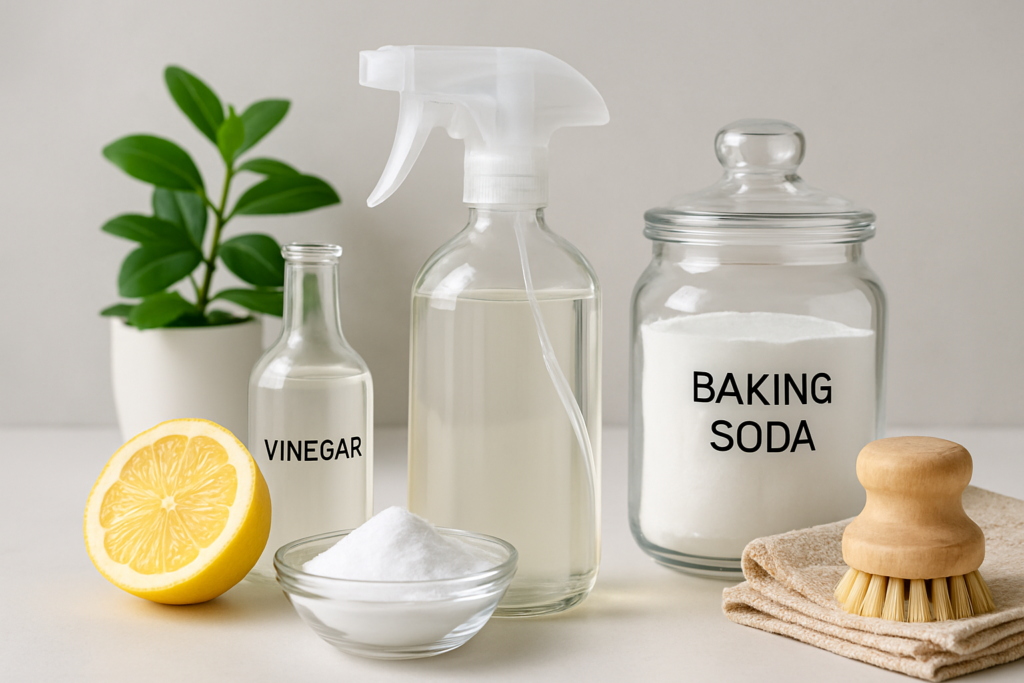
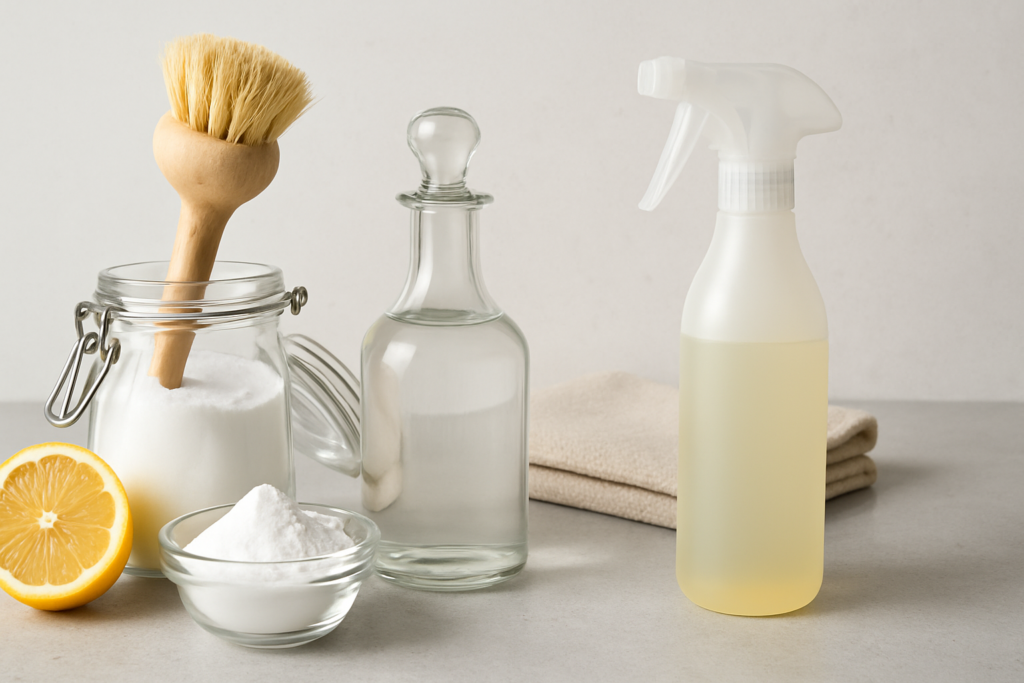
White vinegar mixed with water handles glass, mirrors, and most hard surfaces beautifully. You get streak-free results that rival expensive commercial glass cleaners. Baking soda works as an excellent abrasive for scrubbing without scratching surfaces.
For deodorizing, homemade solutions often outperform commercial alternatives. A simple mixture of vodka and essential oils eliminates odors from fabric without leaving chemical residues.
Grease cutting represents another homemade victory. Dawn dish soap mixed with white vinegar creates a powerful degreaser that tackles kitchen messes better than many specialized products.
Where Store-Bought Takes the Lead
Disinfecting remains the biggest challenge for homemade cleaners. While vinegar has some antimicrobial properties, it can’t match EPA-registered disinfectants for killing bacteria and viruses. During flu season or when dealing with raw meat prep areas, commercial disinfectants provide necessary protection.
Toilet bowl cleaning presents another area where commercial products excel. The specialized acids in eco-friendly toilet cleaners remove mineral deposits and stains that homemade alternatives struggle with.
Laundry detergent represents perhaps the biggest performance gap. Modern eco-friendly detergents contain enzymes that break down specific stains and proteins. Your homemade soap might smell great, but it won’t tackle grass stains or food spills like enzyme-based commercial products.
Seventh Generation Disinfecting Multi-Surface Cleaner
EPA-registered formula that kills 99.99% of bacteria and viruses without harsh chemical fumes
Cost Analysis: Your Wallet’s Perspective
The upfront cost advantage clearly goes to homemade cleaners. A gallon of white vinegar costs less than most single bottles of commercial cleaner, and it’ll make dozens of cleaning solutions.
Baking soda, castile soap, and essential oils require a larger initial investment, but they last for months. When you break down the per-use cost, homemade cleaners typically cost 70-80% less than their commercial counterparts.
However, factor in your time, and the equation shifts. Mixing, measuring, and bottling your own cleaners takes time that might be better spent elsewhere. Commercial products offer grab-and-go convenience that has real value.
Storage costs matter too. You need space for multiple ingredients, mixing supplies, and finished products. Commercial cleaners require less storage space per cleaning task since they’re formulated for specific jobs.
Safety Considerations You Can’t Ignore
Many people assume homemade automatically means safer, but this isn’t always true. Mixing certain ingredients can create dangerous chemical reactions. Never combine bleach with vinegar or ammonia with anything acidic.
Essential oils, while natural, can cause allergic reactions or skin sensitivities. Some oils are toxic to pets, particularly cats. Tea tree oil and eucalyptus can be dangerous around animals.
Commercial eco-friendly products undergo extensive safety testing and include proper warning labels. They’re formulated to avoid dangerous chemical interactions and include safety data sheets.
Child safety represents another consideration. Your homemade cleaners need proper labeling and secure storage just like commercial products. Kids can’t tell the difference between your vinegar solution and water by looking.
Better Life All-Purpose Cleaner
Plant-based formula that’s safe around kids and pets while still delivering powerful cleaning performance
Shelf Life and Storage Realities
Commercial eco-friendly cleaners typically last 2-3 years unopened and 6-12 months after opening. They include preservatives that prevent bacterial growth and ingredient separation.
Your homemade cleaners have much shorter lifespans. Most vinegar-based solutions stay effective for 2-3 months, while soap-based cleaners might separate or develop bacteria within weeks. You need to make smaller batches more frequently.
Essential oils lose potency over time, especially when exposed to light and heat. Your lavender-scented bathroom cleaner won’t smell the same after a month in a warm bathroom.
Storage requirements also differ. Commercial products come in UV-resistant bottles with proper seals. Your homemade versions need dark glass bottles stored in cool, dry places to maintain effectiveness.
Tried and True Homemade Recipes
These recipes have been tested extensively and deliver reliable results when made correctly.
All-Purpose Cleaner
Mix one cup white vinegar, one cup water, and 15 drops of your favorite essential oil in a spray bottle. This handles countertops, appliances, and most hard surfaces. Avoid using on natural stone like marble or granite.
Glass and Mirror Cleaner
Combine two cups water, half cup white vinegar, and one tablespoon cornstarch. The cornstarch prevents streaking better than commercial products. Shake well before each use since the cornstarch settles.
Heavy-Duty Degreaser
Mix equal parts Dawn dish soap and white vinegar. Heat the vinegar slightly before mixing for better grease-cutting power. This works excellently on stovetops, range hoods, and oven interiors.
Fabric Freshener
Combine one cup water, quarter cup white vinegar, and 10 drops essential oil in a spray bottle. Use vodka instead of vinegar for delicate fabrics that might be damaged by acid.
Smart Ingredient Sourcing
Buy white vinegar in gallon jugs from warehouse stores for the best value. Look for 5% acidity, which provides optimal cleaning power without being too harsh.
Choose pure castile soap without added fragrances or oils. Dr. Bronner’s Pure-Castile Soap remains the gold standard, available in various scents or unscented.
Essential oils vary dramatically in quality and price. Young Living and doTERRA offer high-quality oils, but store brands work fine for cleaning purposes. Focus on oils with natural antimicrobial properties like tea tree, eucalyptus, and lavender.
Source baking soda in bulk from restaurant supply stores or buy the large boxes from warehouse clubs. The cleaning-grade baking soda costs less than food-grade for non-cooking uses.
When to Choose Store-Bought
Certain situations call for commercial products despite the benefits of homemade alternatives.
Households with immune-compromised family members need EPA-registered disinfectants that homemade solutions can’t provide. The antimicrobial properties of vinegar aren’t sufficient for serious sanitization needs.
Busy families might find the time investment of making cleaners impractical. Commercial products offer convenience that’s worth the extra cost when time is limited.
Specialty cleaning tasks often require commercial solutions. Removing soap scum, hard water stains, or mold typically needs specialized formulations that are difficult to replicate at home.
ECOS Plant-Powered Laundry Detergent
Concentrated enzyme formula that outperforms homemade alternatives on tough stains while remaining gentle on fabrics
The Hybrid Approach
The most practical solution combines both approaches based on specific needs and circumstances.
Use homemade cleaners for daily maintenance cleaning like wiping counters, cleaning mirrors, and freshening fabrics. These tasks don’t require heavy-duty formulations, and homemade solutions excel here.
Keep commercial products for weekly deep cleaning, disinfecting, and tackling stubborn stains. This gives you the convenience and effectiveness of commercial formulations when you need them most.
Seasonal considerations also matter. During cold and flu season, having EPA-registered disinfectants available makes sense. The rest of the year, homemade alternatives handle most cleaning tasks effectively.
Consider your household’s specific needs. Homes with pets might need commercial enzymatic cleaners for accidents, while families with small children might prefer homemade solutions for daily toy cleaning.
Making Your Decision
Your choice between homemade and store-bought eco-friendly cleaners depends on weighing multiple factors against your specific situation.
Choose homemade if you have time to prepare solutions, want maximum cost savings, and primarily need basic cleaning tasks handled. You’ll reduce packaging waste and know exactly what ingredients you’re using.
Go with store-bought when you need serious disinfection, want grab-and-go convenience, or deal with tough cleaning challenges that require specialized formulations. The time savings and guaranteed effectiveness justify the higher cost for many households.
Most families benefit from a combination approach, using homemade solutions for routine cleaning and commercial products for specific situations that demand stronger formulations.
Frequently Asked Questions
Are homemade cleaners actually safer than commercial eco-friendly products?
Not necessarily. While homemade cleaners use simple ingredients, they can still cause skin irritation or allergic reactions. Commercial eco-friendly products undergo safety testing and include proper warning labels. Essential oils in homemade cleaners can be particularly problematic for people with sensitivities or homes with pets.
How long do homemade cleaning solutions stay effective?
Most homemade cleaners remain effective for 2-3 months when stored properly in dark, cool places. Vinegar-based solutions last longer than soap-based ones. Essential oils lose potency over time, so the scent will fade before the cleaning power diminishes. Make smaller batches more frequently for best results.
Can homemade cleaners actually disinfect surfaces?
White vinegar has some antimicrobial properties and can kill certain bacteria, but it’s not EPA-registered as a disinfectant. For true disinfection that kills 99.9% of bacteria and viruses, you need commercial products with proven efficacy. Use homemade cleaners for general cleaning and commercial disinfectants when sanitization is crucial.
Which approach saves more money in the long run?
Homemade cleaners typically cost 70-80% less per use than commercial alternatives. However, you need to factor in your time for mixing and preparation. For families who value convenience highly, the time saved with commercial products might justify the extra cost. The biggest savings come from using homemade cleaners for daily tasks and commercial products only when necessary.
This article contains affiliate links. We may earn a small commission at no extra cost to you.