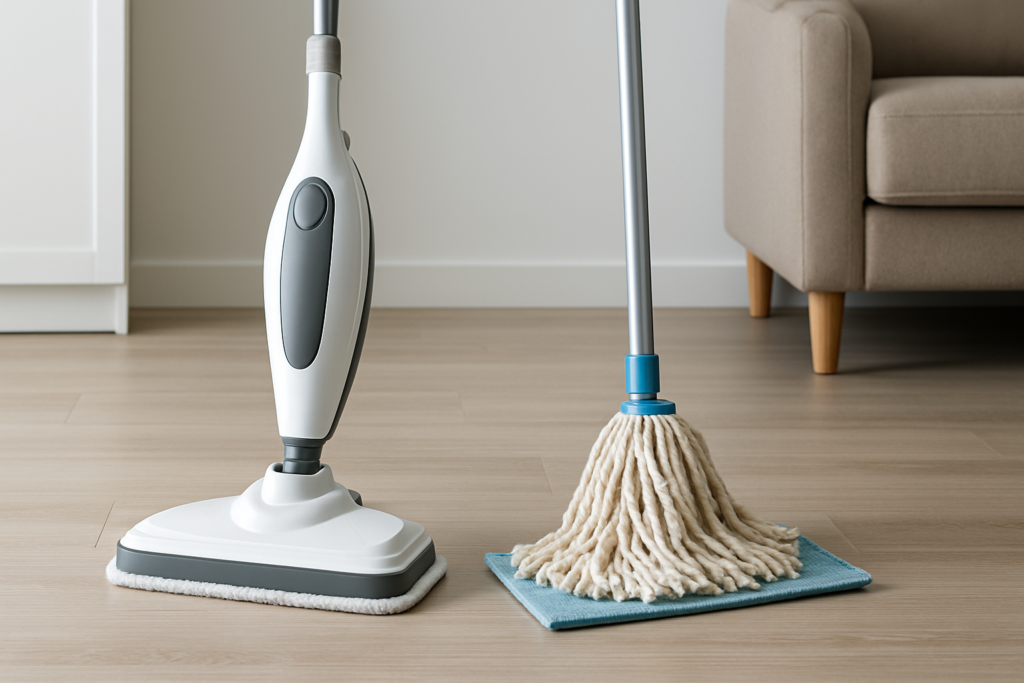
Standing in the cleaning aisle, staring at mops and wondering if you should join the steam revolution or stick with what you know? You’re not alone. The battle between steam mops and traditional mops has been heating up in households everywhere, and for good reason. Both have their die-hard fans who swear by their cleaning power.
This isn’t just about mopping floors anymore. It’s about finding the right balance between effectiveness, convenience, cost, and environmental impact. Steam mops promise to sanitize with just water, while traditional mops offer the flexibility of different cleaning solutions and time-tested reliability.
Let’s break down exactly how these two cleaning methods stack up against each other, so you can make the best choice for your home and cleaning routine.
Cleaning Effectiveness: The Real Test
When it comes to pure cleaning power, steam mops bring some serious heat to the table. The high-temperature steam (usually around 212°F) loosens dirt, grime, and sticky residues more effectively than cold or warm water alone. This makes them particularly good at tackling greasy kitchen floors or sticky spills that seem to laugh at traditional mops.
Traditional mops, however, have their own advantages. You can use specialized cleaners for specific messes, scrub with more pressure, and really work on stubborn spots. The microfiber versions are especially good at trapping dirt and debris rather than just pushing it around.
In real-world testing, steam mops excel at everyday maintenance cleaning and removing surface grime. Traditional mops win when you need to tackle heavy-duty messes, use specific cleaning products, or clean large areas quickly. For most daily cleaning tasks, steam mops provide superior results with less effort.
Bissell CrossWave Pet Pro All-in-One Wet Dry Vacuum
Combines vacuuming and mopping in one pass for ultimate cleaning efficiency
Sanitization Capabilities
This is where steam mops really shine. The high-temperature steam kills 99.9% of common household bacteria and germs without using any chemicals. Studies have shown that steam at 212°F effectively eliminates E. coli, salmonella, and other harmful microorganisms on contact.
Traditional mops can sanitize too, but only when paired with disinfectant cleaners. The cleaning solution does the sanitizing work, not the mop itself. This means you’re dependent on having the right products and using them correctly for proper sanitization.
For families with small children, pets, or anyone with allergies or chemical sensitivities, the steam mop’s ability to sanitize with just water is a significant advantage. You get hospital-level cleanliness without exposing your family to harsh chemicals or strong fumes.
Ease of Use and Convenience
Steam mops score high marks for convenience once you get them going. Fill the water tank, plug it in, wait for it to heat up (usually 30 seconds to 2 minutes), and start cleaning. No mixing solutions, no wringing out dirty water, and no hauling around a heavy bucket.
The cleanup is simpler too. Remove the microfiber pad, toss it in the washing machine, empty any remaining water from the tank, and you’re done. Many models have washable pads that last for dozens of cleaning sessions.
Traditional mops require more setup and cleanup time. You need to get out the bucket, fill it with water and cleaning solution, and deal with dirty mop water throughout the cleaning process. Wringing out a dirty mop isn’t exactly pleasant, and you’ll need to change the water if you’re cleaning a large area.
Storage and Portability
Traditional mops win the storage battle. A basic string or microfiber mop takes up minimal space in a closet, and you can easily carry it anywhere in your home. Most steam mops are bulkier and need to be stored upright or have a designated spot due to their size and cord.
For quick cleanups, traditional mops are faster to deploy. Grab the mop, wet it in the sink, and tackle the spill. Steam mops need heating time, making them less practical for immediate response to accidents.
O-Cedar EasyWring Microfiber Spin Mop
Features a hands-free wringing system that keeps your hands clean and dry
Floor Type Compatibility
Not all floors are created equal, and your mop choice should reflect that. Steam mops work wonderfully on sealed hardwood, tile, laminate, and vinyl floors. The key word here is “sealed.” Unsealed hardwood, waxed floors, or delicate surfaces can be damaged by the high heat and moisture.
Traditional mops are more universally compatible. You can adjust the moisture level, use appropriate cleaning solutions, and control the pressure. They’re safe for virtually any floor type when used correctly, including unsealed wood, natural stone, and delicate surfaces.
Tile floors with grout lines present an interesting case. Steam mops can clean and sanitize the tile surface effectively, but they’re not great at scrubbing grout lines. Traditional mops with the right cleaner and some elbow grease often do better at deep-cleaning grout.
Special Considerations
Luxury vinyl planks and some laminate floors have specific care instructions that may exclude steam cleaning. Always check your flooring manufacturer’s warranty and care guidelines before using a steam mop. Using steam on incompatible floors can void warranties and cause permanent damage.
For homes with multiple floor types, traditional mops offer more versatility. You can use the same mop system throughout your house with different cleaning solutions as needed.
Cost Analysis
The upfront cost difference is significant. A quality steam mop represents a larger initial investment compared to a basic traditional mop and bucket setup. However, you need to look beyond the purchase price to understand the true cost.
Steam mops eliminate the ongoing cost of floor cleaners, disinfectants, and frequent mop replacements. You’ll only need to replace microfiber pads occasionally and use distilled water for best performance. Over time, this can add up to substantial savings, especially if you clean floors frequently.
Traditional mops have lower upfront costs but higher ongoing expenses. You’ll regularly buy cleaning solutions, replace worn-out mops, and potentially use more water. The microfiber versions last longer than string mops but still need periodic replacement.
Long-term Value
A well-maintained steam mop can last several years with regular use. The main maintenance involves descaling (like a coffee maker) and replacing pads. Traditional mops, especially basic string versions, need replacement more frequently but cost much less each time.
Consider your cleaning frequency when evaluating costs. If you mop floors daily or have a large home, the steam mop’s operating savings become more significant. For occasional cleaning or small spaces, traditional mops might be more economical.
Shark Steam Pocket Mop
Lightweight design with dual-sided pads for extended cleaning time
Environmental Impact
Steam mops take a clear lead in environmental friendliness. They eliminate the need for chemical cleaners, reducing plastic bottle waste and preventing harsh chemicals from entering water systems. Using only water and electricity, they minimize your cleaning routine’s environmental footprint.
The electricity usage is relatively minimal. Most steam mops use about the same power as a coffee maker and only need to be plugged in during use. Compared to the environmental cost of manufacturing, packaging, and disposing of cleaning chemicals, the energy use is negligible.
Traditional mops have a more complex environmental impact. While the mop itself might be made from natural materials, the cleaning solutions often contain chemicals that can harm aquatic ecosystems. The plastic bottles, frequent product replacements, and transportation all contribute to environmental costs.
However, traditional mops made from sustainable materials like cotton or bamboo can be composted at end-of-life. Steam mops contain electronic components that require proper e-waste recycling.
Performance in Real-World Scenarios
In busy households with kids and pets, steam mops excel at daily maintenance cleaning. They’re perfect for sanitizing areas where children play on the floor or where pets spend time. The quick setup and effective cleaning make them ideal for regular use.
For deep cleaning sessions or dealing with major spills, traditional mops often perform better. You can scrub harder, use targeted cleaning products, and easily rinse and re-wet the mop as needed. They’re also better for cleaning under furniture or in tight spaces where a steam mop’s cord might be limiting.
Commercial settings or large homes often favor traditional mops for their speed and ability to cover large areas quickly. Steam mops, while effective, can be slower for extensive cleaning jobs due to water tank capacity and the need to move carefully to avoid streaking.
Bona Hardwood Floor Premium Spray Mop
Specifically designed for hardwood floors with residue-free cleaning solution
Specific Cleaning Challenges
Pet accidents require different approaches with each mop type. Traditional mops allow you to use enzyme cleaners and other specialized products that break down odors and stains. Steam mops can sanitize the area but won’t necessarily eliminate odors without pre-treatment.
Kitchen grease and sticky spills respond well to steam’s heat, making steam mops excellent for kitchen floors. However, you might need multiple passes or pre-treatment for heavily soiled areas.
Making the Right Choice
Your ideal mop depends on your specific situation and priorities. Steam mops are excellent for households that prioritize sanitization, have chemical sensitivities, or want to reduce environmental impact. They’re particularly good for regular maintenance cleaning of compatible floor types.
Traditional mops remain the better choice for homes with mixed floor types, those who prefer deep scrubbing action, or anyone who needs maximum flexibility in cleaning products. They’re also more practical for quick cleanups and large cleaning projects.
Many cleaning enthusiasts actually keep both types on hand. Use the steam mop for regular maintenance and sanitization, and break out the traditional mop for deep cleaning, spills, or areas where steam isn’t appropriate.
Frequently Asked Questions
Can I use tap water in my steam mop?
While tap water works, distilled water is better for your steam mop’s longevity. Hard water minerals can build up inside the unit, reducing efficiency and potentially causing damage. If you have very hard water, distilled water is definitely worth the small extra cost to protect your investment.
How often should I replace steam mop pads?
Quality microfiber pads can last 50-100 washes if properly cared for. Replace them when they lose their absorbency, develop permanent stains, or become frayed. Having multiple pads lets you rotate them and ensures you always have clean ones available.
Are steam mops safe for all sealed hardwood floors?
Most sealed hardwood floors can handle steam mopping, but always check your flooring manufacturer’s recommendations first. Some newer finishes or exotic woods may have specific restrictions. When in doubt, test in an inconspicuous area first.
Which method gets floors drier faster?
Steam mops typically leave floors drier because they use less water overall and the heat helps with evaporation. Traditional mops can leave floors quite wet, especially if you’re not careful about wringing them out properly. This makes steam mops better for high-traffic areas where you can’t wait for floors to dry.
This article contains affiliate links. We may earn a small commission at no extra cost to you.