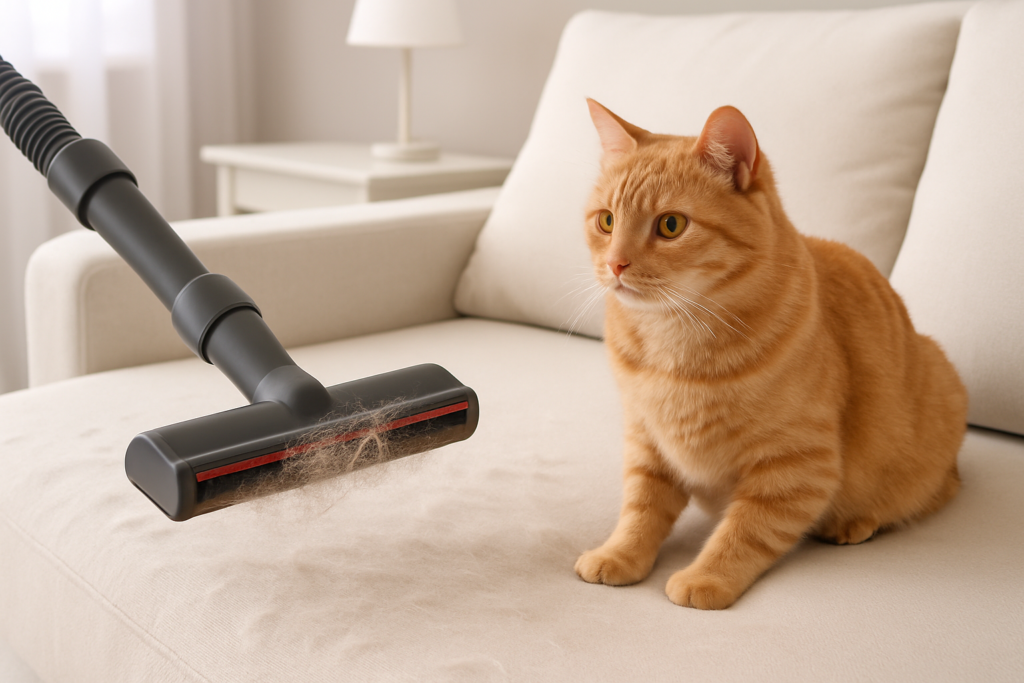
Pet hair has a supernatural ability to find its way onto every surface in your home. One minute your couch looks pristine, the next it’s covered in a layer of fur that seems to have materialized out of thin air. Whether you’re dealing with a golden retriever’s endless shedding or a cat that treats your black clothes as personal scratching posts, you’re not alone in this fuzzy battle.
The key to winning the war against pet hair isn’t just having the right tools, it’s knowing which technique works best for each surface. What works wonders on your carpet might be useless on your car seats, and that expensive lint roller you bought might not be the best solution for your upholstery after all.
Furniture and Upholstery: Beyond the Basic Vacuum
Your furniture bears the brunt of pet hair accumulation, especially if your furry friend has claimed the couch as their personal throne. Traditional vacuuming often falls short because pet hair weaves itself into fabric fibers with surprising tenacity.
Start with a slightly damp rubber glove. Put it on and run your hand over the upholstery in one direction. The rubber creates static electricity that pulls hair from the fabric, and the slight moisture helps clump it together for easy removal. This technique works particularly well on microfiber and velvet surfaces.
For leather furniture, use a damp cloth followed by a dryer sheet. The anti-static properties in dryer sheets not only remove existing hair but also help repel future accumulation. Just make sure to test the dryer sheet on an inconspicuous area first to ensure it won’t affect the leather’s finish.
The ChomChom Roller has gained a cult following among pet owners for good reason. This reusable tool uses no batteries or sticky tape, instead relying on fabric and static to lift hair from upholstery.
ChomChom Pet Hair Remover
This reusable tool works on upholstery without batteries or sticky tape, making it incredibly cost-effective long-term.
Carpets and Rugs: The Deep Clean Approach
Carpets trap pet hair like a magnet, and regular vacuuming often just pushes it deeper into the fibers. You need to loosen the hair before you can effectively remove it.
A squeegee might seem like an odd choice for carpet cleaning, but it’s incredibly effective. Run it across your carpet in long strokes, and watch as it pulls embedded hair to the surface. The rubber edge creates friction that loosens hair from deep within the carpet fibers.
For area rugs, try the tennis ball method. Throw a few clean tennis balls in the dryer with your washable rugs. The balls bounce around, creating agitation that loosens hair while the dryer’s heat and movement help separate it from the fabric.
Fabric softener mixed with water in a spray bottle can work wonders on stubborn carpet hair. Mix one part fabric softener with three parts water, lightly mist the carpet, and then vacuum. The fabric softener loosens the hair’s grip on the fibers.
Clothing: Strategic Removal Techniques
Pet hair on clothes requires different strategies depending on the fabric type and how much hair you’re dealing with. Cotton and synthetic blends respond well to different techniques than wool or silk.
For everyday clothes, throw them in the dryer for 10 minutes on a no-heat setting with a dryer sheet before washing. This pre-treatment loosens hair and helps it collect in the lint trap rather than redistributing during the wash cycle.
Slightly damp hands work better than dry ones for removing hair from clothing. The moisture helps hair clump together, making it easier to pull off in larger chunks. Roll your palms over the fabric in one direction, then pick off the collected hair balls.
The Evercare Magic Lint Brush uses velvet fabric instead of sticky tape, making it reusable and more effective on certain fabrics. Unlike traditional lint rollers, it can be cleaned by brushing it in the opposite direction.
Evercare Magic Lint Brush
This reusable velvet brush works better than sticky rollers on many fabric types and saves money on replacement sheets.
Car Interiors: Mobile Hair Removal
Car interiors present unique challenges because of limited space, different materials, and often years of accumulated pet hair worked deep into seat crevices.
For cloth car seats, use a spray bottle filled with fabric softener solution (same ratio as mentioned for carpets) and a clean pumice stone. Lightly mist the seats and gently rub with the pumice stone. The abrasive surface grabs hair without damaging the fabric.
Leather car seats respond well to balloon static. Rub an inflated balloon over the leather surfaces, and watch as hair jumps onto the balloon due to static electricity. This method works particularly well in dry climates or during winter months when static is naturally higher.
For car floor mats, remove them completely and use the squeegee technique mentioned earlier. Rinse the mats with a hose afterward to remove any remaining hair and debris.
Keep a portable car vacuum in your vehicle for regular maintenance. Models that plug into your car’s 12V outlet provide enough suction for regular touch-ups without requiring you to visit a car wash.
Household Items That Work Wonders
You probably already own several effective pet hair removal tools without realizing it. These common household items can be just as effective as specialized products.
Dryer sheets aren’t just for laundry. Their anti-static properties make them excellent for removing hair from baseboards, lampshades, and other smooth surfaces. They also leave behind a subtle scent that many pets dislike, potentially reducing future marking or rubbing in those areas.
A clean paintbrush with natural bristles works exceptionally well on delicate surfaces like lampshades or intricate furniture details. The bristles grab hair without scratching, and you can clean the brush easily by running a comb through it.
Duct tape wrapped around your hand (sticky side out) creates an inexpensive lint roller alternative. While not as convenient as purpose-made tools, it’s incredibly effective in a pinch and costs significantly less than commercial options.
Uproot Pet Hair Remover
This multi-surface tool works on carpets, furniture, and car interiors with impressive effectiveness and durability.
Prevention Strategies That Actually Work
While you can’t eliminate shedding entirely, you can significantly reduce the amount of hair that ends up around your home with some proactive measures.
Regular brushing is your first line of defense. Daily brushing during shedding seasons and every few days during normal periods can reduce loose hair by up to 90%. Use an undercoat rake for double-coated breeds and a slicker brush for shorter-haired pets.
Furniture covers designed for pets create a barrier that’s easier to clean than upholstery. Look for covers with anti-static properties that repel hair rather than attracting it. Waterproof backing also protects against accidents.
Air purifiers with HEPA filters capture airborne pet hair and dander, reducing the amount that settles on surfaces. Place them in rooms where your pet spends the most time for maximum effectiveness.
Frequently Asked Questions
Does fabric softener really help remove pet hair from furniture?
Yes, fabric softener contains lubricants and anti-static agents that help loosen pet hair from fabric fibers. Mix it with water in a 1:3 ratio, lightly spray the surface, wait a few minutes, then vacuum or wipe clean. The softener reduces static cling that keeps hair attached to upholstery.
How often should I clean pet hair to keep it manageable?
Daily maintenance prevents hair from becoming deeply embedded in fabrics. Spend 5-10 minutes each day doing quick removal from your pet’s favorite spots, then do a thorough weekly cleaning of all surfaces. During heavy shedding seasons (typically spring and fall), you might need to increase frequency.
Why doesn’t my regular vacuum work well on pet hair?
Standard vacuums often lack the specialized brush rolls and suction patterns needed for pet hair. Pet hair tends to wrap around brush bristles and clog filters more quickly than regular debris. Consider a vacuum specifically designed for pet owners, or use pre-treatment methods like the squeegee technique to loosen hair before vacuuming.
Managing pet hair requires the right combination of tools, techniques, and consistency. While you’ll never eliminate it completely, these methods will help you maintain a cleaner home without spending hours on cleanup. Remember that different surfaces require different approaches, and what works for your neighbor’s Persian cat might not work for your German Shepherd.
This article contains affiliate links. We may earn a small commission at no extra cost to you.