As an Amazon Associate I earn from qualifying purchases. This article contains affiliate links.
The small symbols inside your clothes are instructions for washing, drying, bleaching, ironing, and professional care. Reading them before a load starts is easier than trying to rescue a stretched sweater afterward.
Use the table below as a starting reference, then follow the complete label on the individual garment. Written warnings, special finishes, and manufacturer instructions can add restrictions beyond the basic symbol.
Learn the five main shapes
| Shape | Care instruction | What to check next |
|---|---|---|
| Wash tub | Washing | Temperature markings, a hand, a cross, and any bars underneath. |
| Triangle | Bleaching | A plain triangle allows bleach when needed; two diagonal lines restrict it to non-chlorine bleach; a crossed-out triangle means no bleach. |
| Square | Drying | A circle inside indicates tumble drying. Other marks describe natural drying methods. |
| Iron | Ironing | Dots indicate permitted heat; a cross means do not iron. |
| Circle | Professional dry cleaning | Letters and other marks provide instructions for the cleaner. |
Dots generally increase with permitted heat, while bars beneath washing or tumble-drying symbols indicate a gentler process. A cross over a symbol means that process isn’t permitted. A hand in a wash tub calls for hand washing. The American Cleaning Institute’s symbol reference chart illustrates these codes.
Check the American Cleaning Institute’s laundry reference for the full illustrated care guide and less familiar variations.
Read the whole label before choosing a cycle
Check the drying instructions at the same time as the wash instructions. A garment may be machine washable but unsuitable for tumble drying. A safe wash choice doesn’t automatically make every later step suitable.
Numeric temperatures on labels may be given in Celsius, and dot systems vary by the care-label standard used. Match the label to your machine’s manual rather than guessing an exact temperature from a casual description such as warm.
Keep bleach choices separate from wash-temperature choices. Permission to wash an item in warm water says nothing about whether chlorine bleach is suitable. Don’t treat a stain with bleach before checking the triangle and any written restrictions.
Set up a place for clothes that need a second look
Put a small hold basket near your sorting area. Use it for unfamiliar labels, damaged tags, items needing stain treatment, or anything that doesn’t fit the load you’re preparing. Check those pieces individually rather than letting them disappear into an everyday hamper.
A useful note for a tricky garment might say: gentle wash, no bleach, reshape, dry flat. Photograph the original care label as a backup, especially when the print is beginning to fade. Keep the photo associated with that garment, not a general fabric category.
Your laundry room layout should make this pause easy. Place the hold basket where you can reach it before opening the washer, and keep treatment products secured in their original packaging.
Use mesh bags for suitable delicate items
When machine washing is allowed, a suitable mesh bag can help keep small pieces together and reduce snagging. Zip it fully, tuck the zipper into its cover where provided, and avoid packing it tightly.
Zippered mesh laundry bags
Choose bags with covered zippers and enough room for garments to move. A mesh bag does not make a hand-wash-only garment machine washable. Opens Amazon search results.
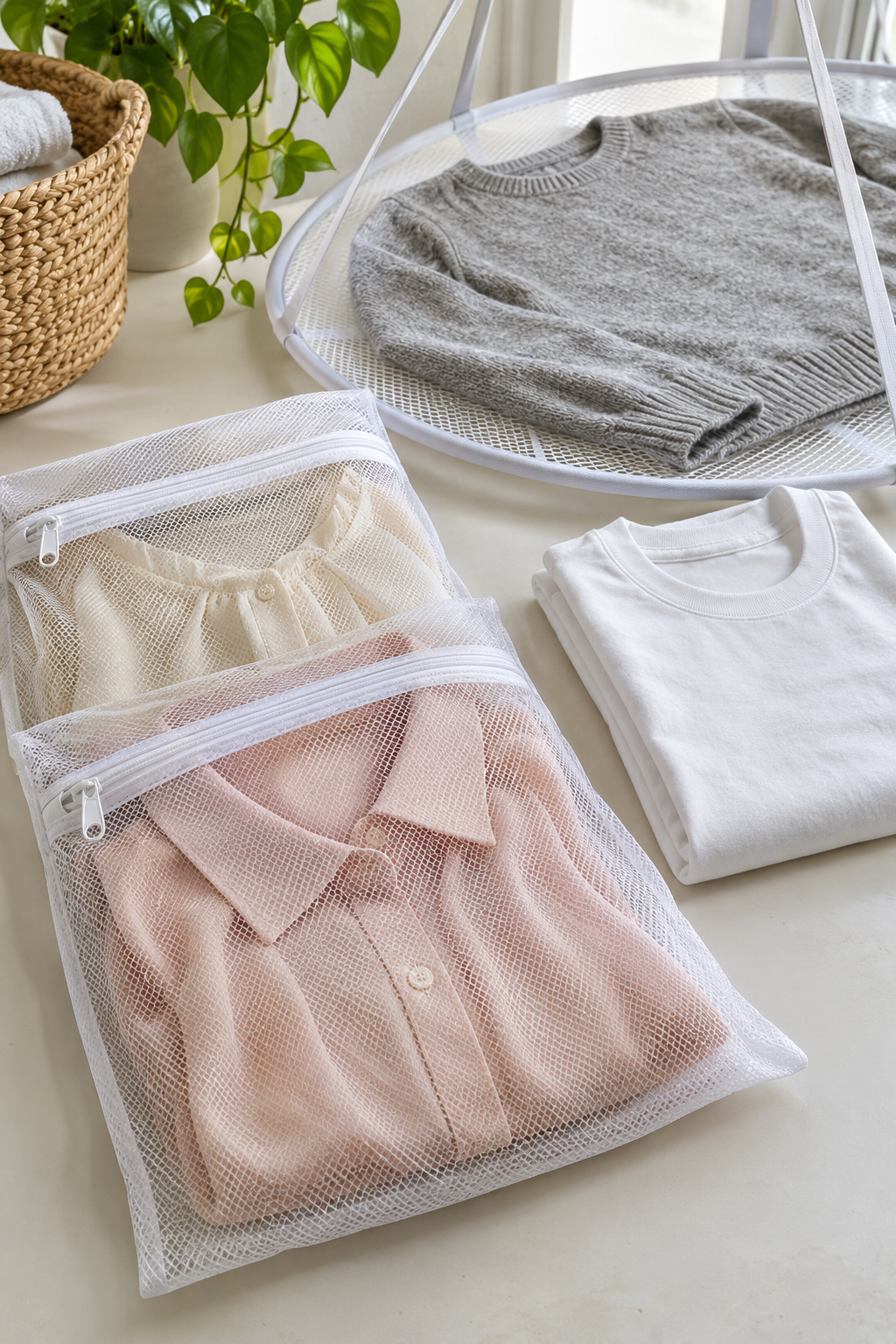
A bag doesn’t override the care label. Hand-wash-only items still need the specified process, and unsuitable garments shouldn’t be put through a dryer just because they were washed inside mesh. Check the bag’s own care and loading instructions too.
Prepare the drying space before washing
Make sure you have enough room for items that must dry flat or hang. Plan for the garment’s full shape instead of folding a wet sweater over a narrow bar. Use a clean, suitable drying surface with airflow and keep it clear of direct heat unless the care instructions permit it.
Flat sweater drying rack
Measure the open rack and choose a stable surface with airflow. Follow the garment label and rack instructions for use and loading. Opens Amazon search results.
After the wash, separate special-care pieces before moving the rest to the dryer. A small note on the washer can help: check for the sweater, mesh bag, or printed top that needs another drying method. Remove the note once the load is finished.
Fit this check into your weekly reset by clearing the hold basket and folding fully dry pieces. Don’t put slightly damp garments into closed drawers just to finish the job.
Common questions
What should you do when the label is missing?
Look for care information from the garment maker using the style or product number. Fiber content alone doesn’t identify every finish, lining, or trim. For a valuable or uncertain piece, ask a qualified cleaner rather than experimenting with heat or bleach.
Does cold water make any garment safe to machine wash?
No. Temperature is only one part of the process. Agitation, soaking, detergent, and drying can also affect the item. Follow all parts of the label.
Article images are AI-generated illustrations.