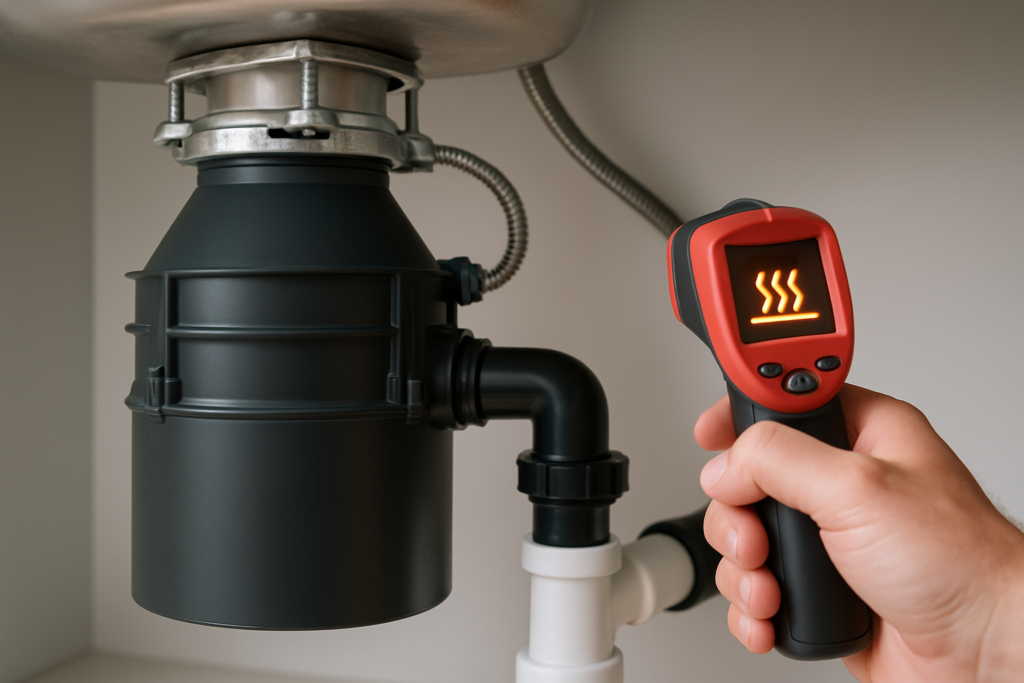
You walk into your kitchen and notice a strange smell coming from under the sink. Your garbage disposal seems to be running fine, but something’s off. Wait a minute. Garbage disposals don’t heat. If you’re experiencing warmth or unusual smells from your disposal, you’re likely dealing with motor strain, electrical issues, or a jammed unit. Let me clear up this confusion and help you diagnose what’s actually going on.
The truth is, garbage disposals are designed to grind food waste, not generate heat. If your disposal feels hot to the touch or smells like burning, you’ve got a mechanical problem that needs attention right away.
Understanding What’s Really Happening When Your Disposal Gets Hot
Your garbage disposal contains an electric motor that spins a grinding plate at roughly 1,800 RPM. When this motor encounters resistance from jammed debris or worn bearings, it works harder and generates excess heat. This isn’t a heating element like in your water heater. This is friction and electrical resistance creating unwanted warmth.
The motor sits in a sealed housing beneath your sink, insulated by rubber gaskets and metal casing. Under normal operation, it stays cool or slightly warm. When you feel significant heat radiating from the unit, your disposal is telling you it’s struggling.
Most disposals have a built-in thermal overload protector. This safety device trips when the motor temperature exceeds safe operating limits, usually around 150-170°F. You’ll find a red reset button on the bottom of the unit. When this trips, your disposal won’t run until it cools down and you press the reset.
Common Causes of Overheating Disposals
Jamming is the number one culprit. Silverware, bottle caps, bones, and fibrous vegetables like celery can wedge between the grinding plate and the chamber wall. The motor continues trying to spin, but the blockage creates massive resistance. Within minutes, you’ve got a dangerously hot motor.
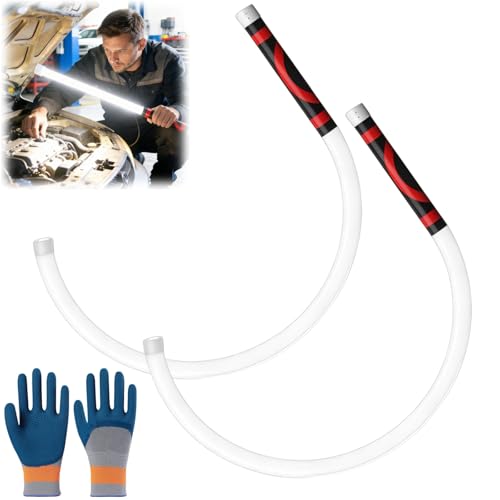
Check for jams by turning off the circuit breaker, then using an Allen wrench in the hex socket on the disposal’s bottom. Most units use a 1/4-inch hex. Rotate the wrench back and forth to manually free the grinding mechanism. You can also use a garbage disposal wrench specifically designed for this purpose.

Garbage Disposal Wrench Set
Essential tool for clearing jams without calling a plumber
Worn bearings create another heat problem. After years of use, the flywheel bearings degrade, causing the motor to work harder during normal operation. You’ll often hear grinding or squealing noises before the overheating becomes obvious. Unfortunately, bearing wear usually means it’s time for a replacement disposal rather than a repair.
Electrical issues can also generate heat. A failing motor capacitor, damaged wiring, or voltage problems force the motor to draw excessive current. This shows up as heat in the motor housing and sometimes at the electrical connections. You might notice your lights dimming when you run the disposal, another sign of electrical trouble.
The Reset Button and Thermal Protection
That little red button on your disposal’s bottom isn’t just for show. It’s a critical safety feature that prevents motor burnout and potential fires. When the internal thermostat detects excessive temperature, it cuts power to the motor.
After your disposal trips, wait at least 15 minutes before hitting reset. The motor needs time to cool below the threshold temperature. Repeatedly resetting a hot motor just causes more damage. Feel the disposal housing with your hand. It should be cool or barely warm before you attempt a reset.
If the reset button won’t stay pressed or immediately pops back out, your disposal has a serious problem. Either the motor is still too hot, there’s a persistent jam, or the thermal protector itself has failed. Don’t force it. Continuing to run an overheating disposal can damage your electrical system or start a fire.
How to Fix an Overheating Disposal
Start with the basics. Turn off power at the circuit breaker, not just the wall switch. Remove the rubber splash guard and shine a flashlight into the chamber. Look for obvious obstructions like utensils or large bone fragments. Use tongs or pliers to remove anything you can see. Never put your hand into the disposal chamber, even with the power off.
Next, grab your Allen wrench or disposal tool and work the flywheel manually. Insert it into the hex socket underneath and turn it back and forth. You should feel resistance at first, then smooth rotation as you clear the jam. Make several complete rotations in both directions.
Check the reset button. Press it firmly until you hear or feel it click into place. Turn the power back on at the breaker, run cold water, and test the disposal with the wall switch. It should spin smoothly without unusual noise or vibration.
Run cold water for 30 seconds before and after grinding any food waste. Hot water might seem logical, but cold water solidifies greasy substances so they grind up properly instead of coating your pipes. This simple habit prevents many disposal problems.
When to Replace Instead of Repair
Disposals typically last 8-15 years depending on usage and water quality. If yours is approaching that age and experiencing frequent overheating, replacement makes more financial sense than repeated repairs. Modern units like the InSinkErator Evolution series or Waste King L-8000 offer better grinding power and quieter operation.
Persistent electrical trips, even after clearing jams, indicate internal motor damage. Leaks around the mounting assembly or bottom housing also signal the end of your disposal’s useful life. Water and electricity don’t mix well, making leaking disposals particularly dangerous.
Installation isn’t terribly complex if you’re handy. You’ll need basic plumbing tools, plumber’s putty, and about an hour. The mounting assembly stays in place for most replacements, making it even easier. Just match your current disposal’s mounting system, or be prepared to install new mounting hardware.
Prevention Tips for Long-Term Performance
Feed waste gradually, not in large clumps. Your disposal can only grind so much material at once. Stuffing it full overwhelms the motor and increases jam risk. Think of it like a paper shredder, it works better with a steady feed than a stack of documents.
Avoid fibrous foods like corn husks, onion skins, celery strings, and artichokes. These wrap around the flywheel and create drag on the motor. Grease, coffee grounds, and expandable foods like pasta also cause problems over time. Use your trash can for these items instead.
Run your disposal regularly, even if you don’t have food waste. Weekly operation prevents rust and corrosion in the grinding chamber. Toss in a few ice cubes and rock salt once a month to clean the grinding components and sharpen the impellers. Citrus peels help control odors naturally.
Frequently Asked Questions
Why does my garbage disposal smell like it’s burning?
A burning smell indicates the motor is overheating from a jam, worn bearings, or electrical problems. Turn off the disposal immediately, check for obstructions, and let it cool completely before pressing the reset button. If the smell persists after clearing jams, the motor may be failing and need replacement.
How long should I wait after a disposal overheats?
Wait at least 15-20 minutes for the motor to cool below the thermal cutoff temperature. Feel the disposal housing to confirm it’s no longer hot to the touch. Attempting to reset too early can damage the thermal protector and void your warranty.
Can I replace just the motor in my garbage disposal?
While technically possible, motor replacement costs nearly as much as a new disposal and requires specialized tools and knowledge. Modern disposals are designed as sealed units meant for complete replacement rather than component repair. You’ll save time and money buying a new unit with a fresh warranty.
This article contains affiliate links. We may earn a small commission at no extra cost to you.