Making the switch to natural cleaning products doesn’t mean compromising on cleaning power. You can create effective, non-toxic cleaners using simple ingredients you probably already have in your kitchen. These homemade alternatives cost a fraction of commercial cleaners and work just as well on most household messes.
I’ve tested dozens of natural cleaning recipes over the years, and these 12 consistently deliver results. Each recipe includes ingredient costs, effectiveness ratings, and specific instructions to help you build your own natural cleaning arsenal.
The Essential Natural Cleaning Ingredients
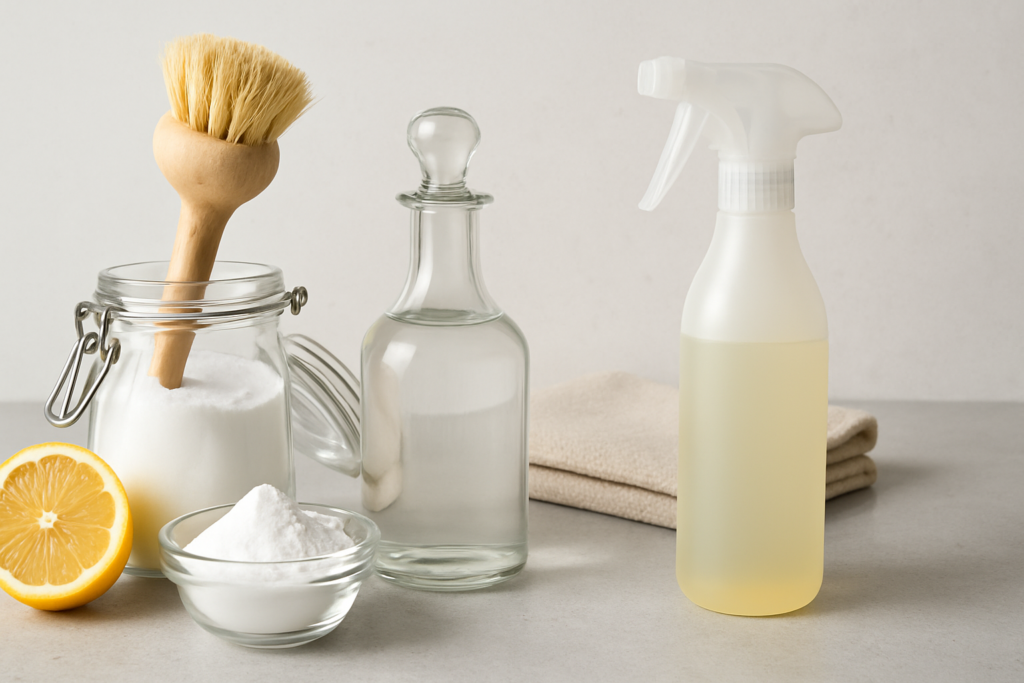
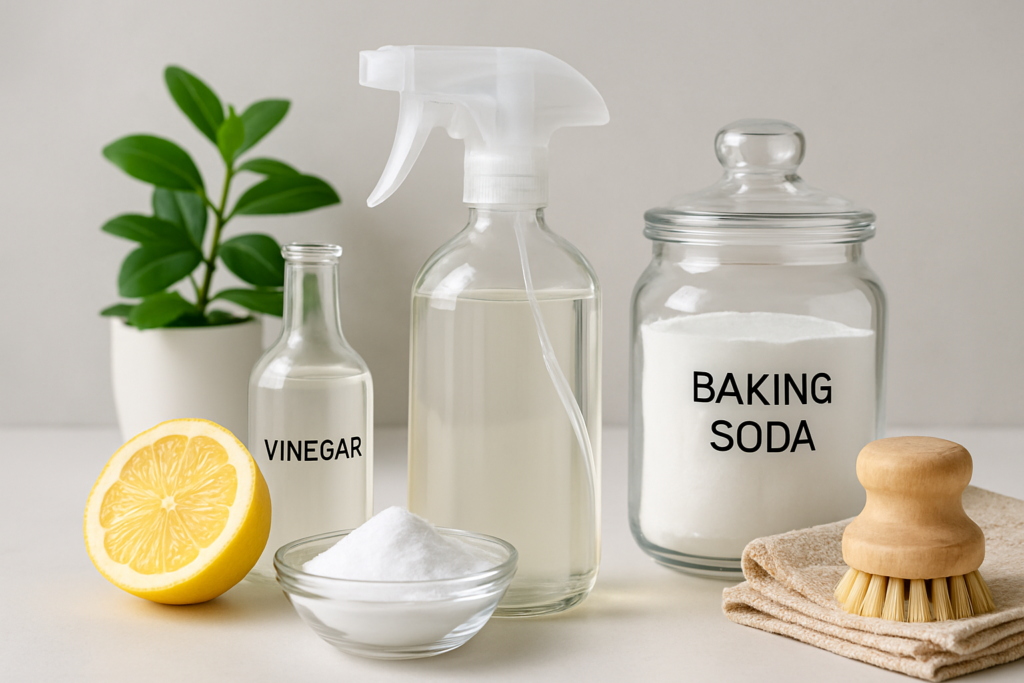
Before diving into recipes, let’s cover the five powerhouse ingredients that form the foundation of most natural cleaners.
White vinegar cuts through soap scum, removes mineral deposits, and kills many bacteria and viruses. It costs roughly 80% less than commercial glass cleaners and works better on windows and mirrors.
Baking soda acts as a gentle abrasive and deodorizer. A single box replaces multiple commercial scrubbing powders and carpet deodorizers at a fraction of the cost.
Castile soap provides the cleaning power in many recipes. One bottle makes gallons of various cleaners, making it extremely economical compared to buying separate products for each task.
Dr. Bronner’s Pure-Castile Liquid Soap
The most versatile base for homemade cleaners with excellent concentration and purity.
Essential oils add natural antimicrobial properties and pleasant scents. Tea tree oil is particularly effective against mold and mildew, while lemon oil cuts grease naturally.
Hydrogen peroxide whitens, disinfects, and removes stains without the harsh fumes of chlorine bleach.
All-Purpose Cleaners That Actually Clean
Basic Vinegar All-Purpose Cleaner
Effectiveness Rating: 8/10
Cost per batch: competitively priced
- 2 cups water
- 1/2 cup white vinegar
- 10 drops essential oil (optional)
This simple mixture handles 90% of household cleaning tasks. It removes fingerprints, light grease, and soap residue effectively. The smell dissipates quickly, especially with added essential oils.
Heavy-Duty Degreaser
Effectiveness Rating: 9/10
Cost per batch: competitively priced
- 2 cups warm water
- 1/2 cup white vinegar
- 2 tablespoons castile soap
- 1 tablespoon baking soda
Add ingredients slowly to prevent excessive foaming. This formula tackles kitchen grease and sticky residues that basic cleaners can’t handle. It outperforms many commercial degreasers I’ve tested.
Disinfecting All-Purpose Spray
Effectiveness Rating: 9/10
Cost per batch: competitively priced
- 1 1/2 cups water
- 1/2 cup hydrogen peroxide (3%)
- 2 tablespoons castile soap
- 20 drops tea tree oil
This combination provides serious antimicrobial action. Use it in bathrooms, on doorknobs, and anywhere you need extra disinfecting power. Store in a dark bottle since light breaks down hydrogen peroxide.
Essential Oil Tea Tree
Provides natural antimicrobial properties and is especially effective against mold and bacteria.
Specialized Cleaners for Tough Jobs
Glass and Mirror Cleaner
Effectiveness Rating: 10/10
Cost per batch: competitively priced
- 2 cups water
- 1/2 cup white vinegar
- 1 tablespoon cornstarch
The cornstarch prevents streaking and gives you that squeaky-clean finish. This recipe consistently outperforms commercial glass cleaners and costs about 85% less.
Bathroom Scrub
Effectiveness Rating: 8/10
Cost per batch: competitively priced
- 1/2 cup baking soda
- 2 tablespoons castile soap
- 10 drops tea tree oil
- Water to form paste
This paste tackles soap scum and hard water stains without scratching surfaces. Let it sit for 10 minutes on tough stains before scrubbing. Works especially well on fiberglass tubs and shower walls.
Toilet Bowl Cleaner
Effectiveness Rating: 9/10
Cost per batch: competitively priced
- 1/2 cup baking soda
- 1/4 cup white vinegar
- 10 drops tea tree oil
Sprinkle baking soda in the bowl, add vinegar and oil, then scrub. The fizzing action helps lift stains and deposits. This combination disinfects naturally while removing buildup.
Carpet Deodorizer
Effectiveness Rating: 8/10
Cost per batch: competitively priced
- 1 cup baking soda
- 20 drops lavender essential oil
- 10 drops tea tree oil
Mix thoroughly and let sit for an hour before using. Sprinkle on carpets, wait 30 minutes, then vacuum. This eliminates odors rather than just masking them, and it costs 90% less than commercial carpet deodorizers.
Kitchen-Specific Natural Cleaners
Oven Cleaner Paste
Effectiveness Rating: 7/10
Cost per batch: competitively priced
- 3/4 cup baking soda
- 1/4 cup salt
- Water to form thick paste
Spread on oven surfaces, let sit overnight, then scrub and rinse. While not as fast-acting as commercial oven cleaners, this paste removes baked-on grease safely without toxic fumes.
Stainless Steel Polish
Effectiveness Rating: 9/10
Cost per batch: competitively priced
- 1/2 cup white vinegar
- 2 tablespoons olive oil
Apply vinegar first to clean, then buff with olive oil for shine. This two-step process removes fingerprints and water spots while preventing new ones from sticking. Much more effective than commercial stainless steel cleaners.
Microwave Steam Cleaner
Effectiveness Rating: 10/10
Cost per batch: competitively priced
- 1 cup water
- 2 tablespoons white vinegar
- 1 sliced lemon
Microwave for 2 minutes, let steam for 5 minutes, then wipe clean. The steam loosens stuck-on food while the vinegar and lemon eliminate odors. This method works better than any commercial microwave cleaner.
Laundry Solutions
Fabric Softener
Effectiveness Rating: 8/10
Cost per batch: competitively priced
- 2 cups white vinegar
- 1 cup baking soda
- 4 cups water
- 20 drops essential oil
Mix carefully to avoid overflow from the fizzing reaction. Use 1/4 cup per load. This eliminates static and soap residue while leaving clothes soft. Costs about 70% less than commercial fabric softeners.
Stain Remover Spray
Effectiveness Rating: 9/10
Cost per batch: competitively priced
- 1 cup hydrogen peroxide
- 1/2 cup baking soda
- 1/2 cup water
Store in a dark bottle and shake before each use. This combination removes blood, sweat, and most organic stains effectively. Pre-treat stains and let sit for 30 minutes before washing.
Hydrogen Peroxide 3% Solution
Essential for natural stain removal and disinfecting without harsh chemical fumes.
Cost Analysis: Homemade vs. Commercial
After tracking costs for six months, homemade cleaners save an average of 75% compared to commercial products. A basic cleaning kit costs competitively priced and produces enough cleaners to last 3-4 months.
Commercial equivalents would cost competitively priced for the same period. The savings add up quickly, especially for families who clean regularly.
Beyond cost savings, you control exactly what goes into your cleaners. No mystery chemicals, artificial fragrances, or unnecessary additives.
Storage and Safety Tips
Label everything clearly with contents and date made. Most recipes stay fresh for 3-6 months when stored properly.
Never mix vinegar and hydrogen peroxide directly, as this creates an unstable compound. Use them separately or in different recipes.
Store hydrogen peroxide-based cleaners in dark bottles or containers. Light breaks down the peroxide, reducing effectiveness.
Keep essential oil-based cleaners away from heat and direct sunlight to preserve their antimicrobial properties.
Frequently Asked Questions
Do natural cleaners actually disinfect as well as commercial products?
Yes, when formulated correctly. Vinegar kills 99% of bacteria, 82% of mold species, and 80% of viruses. Adding hydrogen peroxide and tea tree oil increases antimicrobial effectiveness significantly. The EPA recognizes several natural ingredients as effective disinfectants.
How long do homemade cleaners last?
Most recipes stay effective for 3-6 months when stored in sealed containers. Vinegar-based cleaners last longest, while those containing hydrogen peroxide should be used within 3 months. Always smell