Your carpets take a beating. Between foot traffic, spills, pet accidents, and everyday dust, they can start looking dingy faster than you’d like. Professional carpet cleaning works wonders, but let’s be honest: it’s expensive, and scheduling someone to come to your house isn’t always convenient.
The good news is that you can get professional-level results on your own with the right equipment and technique. Deep cleaning your carpets yourself saves money and lets you tackle problem areas on your own schedule. Here’s how to do it properly.
Choosing Your Equipment: Rental vs. Purchase
You’ve got two main options: renting a machine from your local grocery or hardware store, or buying a home carpet cleaner. Both can deliver excellent results if you use them correctly.
Rental machines like the Rug Doctor pack serious cleaning power. They’re heavier, have stronger suction, and use commercial-grade cleaning solutions. You can typically rent one for about a day, which is enough time to clean an average-sized home if you work efficiently. The downside is the hassle of pickup and return, plus those rental fees add up if you need to clean regularly.
Home-owned machines offer convenience. When your dog has an accident or you spill wine on the living room floor, you don’t need to wait. Popular models like the Bissell ProHeat 2X Revolution or Hoover SmartWash are lighter and easier to store than rentals, though they won’t match the raw power of commercial units.

Bissell ProHeat 2X Revolution
A solid mid-range option with strong suction and built-in heating for regular deep cleaning sessions
For most people, owning makes sense if you have kids, pets, or high-traffic areas that need attention more than once or twice a year. Otherwise, renting works fine for annual deep cleans.
Prep Work Makes All the Difference
Don’t skip the preparation phase. Thorough prep work directly impacts your final results.
Start by removing all furniture you can realistically move. Chairs, small tables, and decorative pieces should all come out of the room. For heavy furniture like sofas and beds, you can work around them, but you’ll get better coverage if you can at least shift them temporarily.
Next, vacuum the entire carpet thoroughly. I’m not talking about a quick pass. You want to remove as much dry soil, hair, and debris as possible before introducing any water. Make multiple passes in different directions, especially in high-traffic areas. Use your vacuum’s crevice tool along baseboards and in corners.
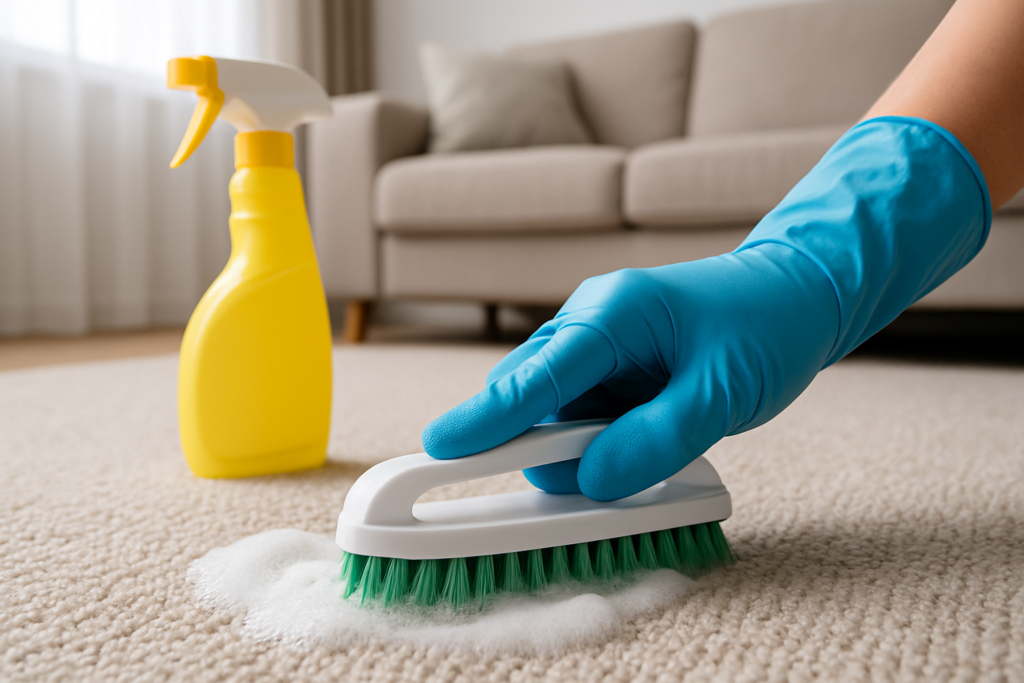
Pre-treat tough stains before you start the main cleaning. Old coffee spills, wine stains, and pet accidents need extra attention. Apply a carpet stain remover and let it sit for 5-10 minutes. Blot (don’t rub) with a clean white cloth.
The Deep Cleaning Process
Fill your machine’s clean water tank with hot tap water (not boiling, just hot from your faucet). Add the recommended amount of cleaning solution. Don’t go overboard with the soap thinking more equals cleaner. Extra detergent just leaves residue that attracts dirt faster.
Start in the corner farthest from your exit point. You don’t want to walk across freshly cleaned wet carpet to leave the room. Work in overlapping rows, moving backward as you go.
Here’s the technique most people get wrong: slow down. Pull the machine backward slowly while holding the trigger to release cleaning solution and scrub. Most machines clean on the backward stroke, not the forward one. Then make another slow backward pass without the trigger to extract as much water as possible.

Hoover PowerDash Pet
A lightweight and compact choice that’s perfect for apartments or smaller homes with pet cleaning needs
Make at least two extraction passes for every cleaning pass. The more water you remove, the faster your carpets will dry and the better they’ll look. Wet carpets are magnets for dirt, so thorough extraction matters.
Pay special attention to high-traffic lanes. Hallways, the path from the kitchen to the living room, and areas in front of furniture get the most wear. These spots benefit from an extra cleaning pass.
Drying and Finishing
Proper drying prevents mildew and keeps your carpets smelling fresh. Open windows if weather permits. Turn on ceiling fans or set up box fans to circulate air. If you have air conditioning or heating running, that helps too.
Keep foot traffic off the carpets until they’re completely dry. This usually takes 6-12 hours depending on humidity, airflow, and how much water you extracted. Walking on damp carpet compresses the fibers and can transfer dirt from your shoes.
Once dry, vacuum again. This fluffs up the carpet fibers and removes any loosened debris that worked its way to the surface during drying.
Common Mistakes to Avoid
Using too much cleaning solution is mistake number one. Follow the manufacturer’s dilution instructions exactly. Excess soap leaves a sticky residue that actually makes your carpets get dirty faster.
Moving too fast is another frequent error. Carpet cleaning machines need time to work. Rushing through the process means less dirt extraction and wetter carpets.
Don’t over-wet your carpets. If you can squeeze water out of the carpet after cleaning, you’ve used too much water or didn’t extract enough. This can damage carpet backing and padding, and it creates perfect conditions for mold growth.
Never use regular household cleaning products in your carpet cleaner unless the manufacturer specifically says it’s safe. Using the wrong chemicals can damage the machine and void your warranty. Stick with solutions designed for carpet cleaning machines.
Frequently Asked Questions
How often should I deep clean my carpets?
Most homes benefit from deep cleaning every 6-12 months. Homes with pets, kids, or allergy sufferers should clean every 3-6 months. High-traffic areas like hallways and living rooms might need spot cleaning between full sessions.
Can I use vinegar or other home remedies instead of carpet cleaning solution?
While white vinegar and water can work for light cleaning, it’s not recommended for deep cleaning sessions. Commercial carpet cleaning solutions are specifically formulated to break down oils and dirt while being safe for carpet fibers. Vinegar can damage some carpet types and doesn’t extract soil as effectively. Plus, many carpet warranties require approved cleaning solutions.
Why do my carpets look worse a few days after cleaning?
This usually happens because of leftover soap residue. When you use too much cleaning solution or don’t rinse thoroughly, sticky residue remains in the fibers. This residue attracts dirt like a magnet, making carpets look dingy within days. The solution is to run the machine over problem areas again with plain hot water to rinse out the excess detergent.
This article contains affiliate links. We may earn a small commission at no extra cost to you.