You’ve invested in beautiful area rugs that tie your rooms together, but over time they collect dirt, stains, and odors. Cleaning them at home can save you money, but the wrong approach can lead to color bleeding, shrinkage, or texture damage that ruins your rug permanently.
The key to successful rug cleaning is matching your method to your rug’s material. Different fibers react differently to water, cleaning solutions, and scrubbing techniques. Let’s break down how to identify what you’re working with and clean it safely.
Identify Your Rug Material First
Before you do anything else, figure out what your rug is made from. Check the manufacturer’s tag if it’s still attached. If not, you can usually identify the material by touch and appearance.
Wool rugs feel soft and slightly coarse, with a natural texture that’s dense and heavy. They’re durable but sensitive to harsh chemicals and hot water. Synthetic rugs made from polypropylene, polyester, or nylon feel smoother and lighter. These are more forgiving and can handle stronger cleaning solutions.
Cotton rugs are flat-woven and lightweight, similar to heavy fabric. Jute, sisal, and seagrass rugs have a rough, natural texture and are made from plant fibers. These natural fiber rugs hate moisture and can fall apart if you oversaturate them.
Silk or delicate antique rugs should never be cleaned at home. These require professional care. One wrong move can cause irreversible damage.
Safe Cleaning Methods by Material Type
Wool Rugs
Wool is naturally stain-resistant but shrinks and felts when exposed to hot water or aggressive scrubbing. Always use cold water and a wool-safe cleaner with a neutral pH.
Start by vacuuming both sides of the rug to remove loose dirt. Mix your cleaning solution according to package directions, then test it on a small hidden corner. Wait 24 hours to check for color bleeding or texture changes.

Bissell Wool Safe Rug Cleaner
Specifically formulated for natural fibers without harsh chemicals that damage wool
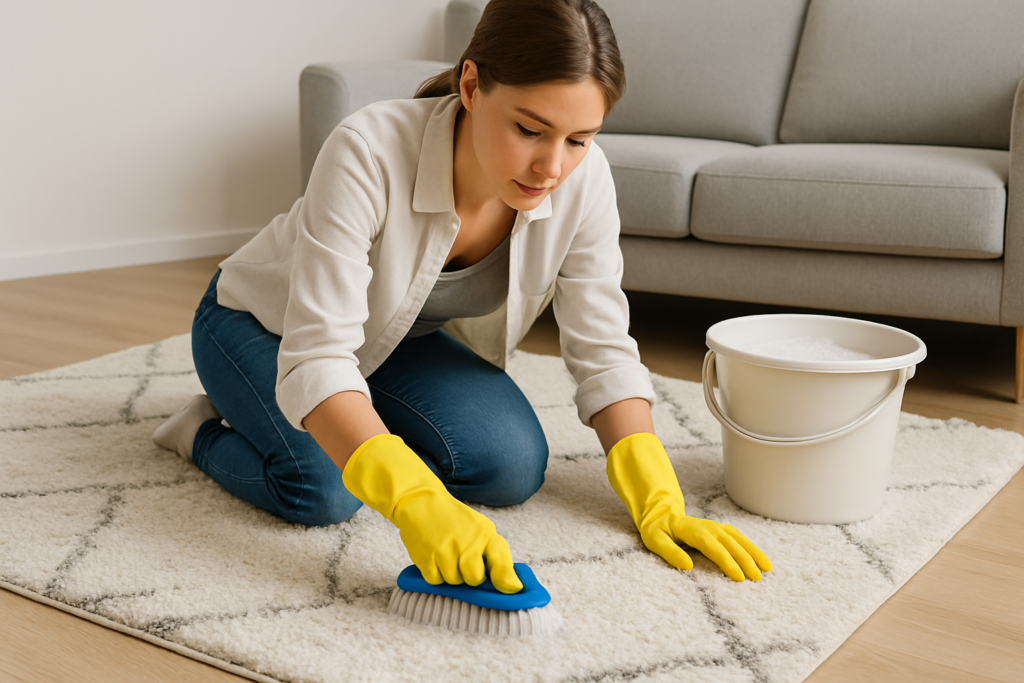
Apply the solution with a soft brush or cloth, working in the direction of the pile. Don’t soak the rug. Use just enough moisture to clean the surface. Blot with clean towels to remove excess water, then lay flat or hang to dry completely. Never put wool rugs in direct sunlight or use heated dryers.
Synthetic Rugs
Polypropylene and polyester rugs are the easiest to clean at home. They resist stains, dry quickly, and can handle more aggressive cleaning.
Vacuum thoroughly, then use a standard carpet cleaning solution or make your own with dish soap and warm water. You can scrub these rugs more vigorously than wool without damaging the fibers.
For deep cleaning, take synthetic rugs outside and hose them down. Scrub with a deck brush and cleaning solution, rinse thoroughly, then hang over a railing or fence to drip dry. These rugs can also go in the washing machine if they’re small enough, though you should skip the dryer.
Cotton Rugs
Cotton rugs are machine washable, which makes them the most convenient option. Use cold water and mild detergent on a gentle cycle. Hang to dry or tumble dry on low heat.
For spot cleaning, blot spills immediately with a clean cloth. Use a mixture of water and white vinegar for most stains. Cotton doesn’t hold up well to harsh chemicals, so stick with gentle cleaners.
Natural Fiber Rugs
Jute, sisal, and seagrass rugs require the most careful approach. Water causes these fibers to swell, shrink, and potentially rot. Never wet clean natural fiber rugs.
Vacuum regularly with a handheld attachment or brush setting. For stains, use a dry cleaning powder designed for natural fibers. Sprinkle it on, let it sit for the recommended time, then vacuum it up.
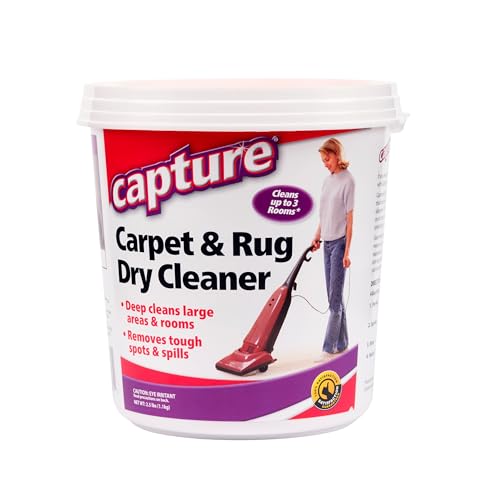
Capture Carpet Dry Cleaner Powder
Works without water, perfect for natural fiber rugs that can’t get wet
For liquid spills, blot immediately with a dry cloth. Don’t rub or apply any liquid cleaners. Let the area air dry completely and vacuum once dry.
Common Mistakes That Ruin Rugs
Using too much water is the biggest mistake people make. Oversaturated rugs take forever to dry, which leads to mold, mildew, and backing damage. Always use minimal moisture and ensure complete drying.
Hot water might seem more effective, but it causes shrinkage and color bleeding in many rug types. Stick with cold or lukewarm water unless your specific rug care label says otherwise.
Skipping the spot test is asking for trouble. What works on one rug might destroy another. Always test cleaning solutions on a hidden area first and wait a full day to check the results.
Frequently Asked Questions
How often should I deep clean my area rugs?
Deep clean high-traffic rugs every 12 to 18 months, depending on use. Low-traffic rugs can go two to three years between deep cleanings. Regular vacuuming once or twice a week prevents dirt from embedding in the fibers and extends the time between major cleanings.
Can I use a carpet cleaner machine on area rugs?
You can use machines like the Bissell Little Green on synthetic and wool rugs, but avoid them for natural fiber rugs. Use the lowest moisture setting available and make multiple dry passes to extract as much water as possible. Make sure the rug dries completely within 24 hours to prevent mold growth.
This article contains affiliate links. We may earn a small commission at no extra cost to you.