A cluttered cabinet stuffed with cleaning products creates more problems than it solves. You can’t find what you need, bottles leak onto each other, and safety becomes a serious concern when chemicals aren’t stored properly. Poor organization also leads to overbuying products you already have hidden in the back.
Smart storage keeps your cleaning supplies safe, accessible, and properly separated. The key is creating a system that protects your family while making it easy to grab what you need for any cleaning task. Here’s how to organize your cleaning products like a pro.
Safety First: Child Protection and Access Control
Child safety should drive every storage decision you make. Even with child-resistant caps, cleaning products pose serious risks if little hands can reach them. The most effective approach is storing all cleaning supplies in a locked cabinet or behind child safety locks.
Height matters too. Store cleaning products at least 4 feet off the ground, well above a child’s natural reach. Avoid storing them under kitchen sinks where curious toddlers love to explore. Instead, choose upper cabinets in laundry rooms or utility areas.
Child Safety Cabinet Locks
Magnetic locks provide strong security while remaining convenient for adults to operate.
Keep original labels intact and never transfer cleaning products to food containers. This prevents dangerous mix-ups and ensures you can quickly identify products in emergencies. If a label becomes damaged, replace it immediately with clear, permanent labeling.
Chemical Compatibility and Separation
Not all cleaning products play well together. Mixing certain chemicals can create toxic gases or dangerous reactions, even when stored side by side. Understanding which products to separate protects your family and prevents accidents.
Never store bleach near ammonia-based products or acids like toilet bowl cleaners. Keep these separated by at least one shelf or use dividers within the same storage area. Hydrogen peroxide should stay away from metals and organic materials that might catalyze unwanted reactions.
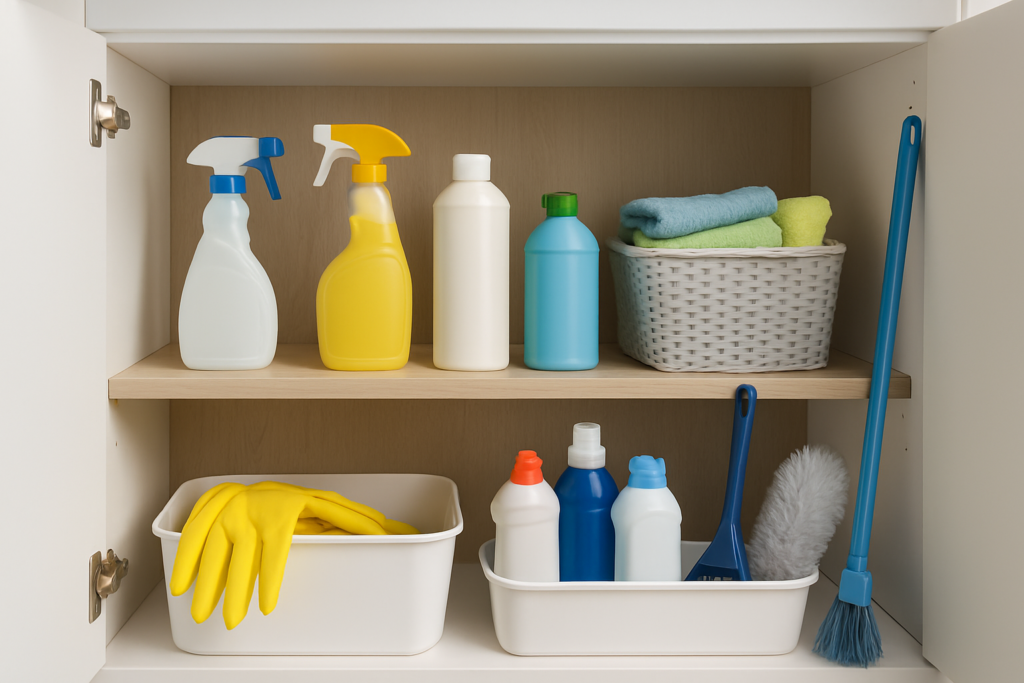
Create distinct zones for different product types. Group glass cleaners together, keep bathroom cleaners in one section, and store floor care products separately. This natural organization also prevents chemical interactions and makes finding specific products much easier.
Temperature-sensitive products need special consideration. Store wax-based cleaners and some natural products away from heat sources like water heaters or heating vents. Extreme temperatures can break down active ingredients and reduce effectiveness.
Ventilation and Storage Environment
Proper airflow prevents dangerous fume buildup and extends product life. Even sealed containers can release vapors over time, especially in warm conditions. Choose storage areas with adequate ventilation or install small vents if needed.
Humidity destroys powdered cleaners and can cause rust on metal containers. Avoid storing cleaning supplies in damp basements or humid bathrooms. Laundry rooms work well if they have proper ventilation, but watch for moisture from washers and dryers.
Temperature stability matters more than exact temperature. Avoid areas with frequent temperature swings like garages or attics. These fluctuations can cause containers to expand and contract, leading to leaks and product degradation.
Storage Solutions for Different Spaces
Your available space determines the best storage approach. Small homes require creative solutions, while larger spaces allow for dedicated cleaning closets. Match your storage system to your space constraints and cleaning routine.
Kitchen and Pantry Storage
Upper cabinets work perfectly for daily-use cleaning products. Install pull-down shelves or door-mounted organizers to maximize vertical space. These systems bring products down to eye level while keeping them safely elevated.
Over Door Shoe Organizer
Clear pockets make it easy to identify cleaning products while keeping them organized and accessible.
Lazy Susans transform corner cabinets into efficient storage. You can easily rotate to find specific products without moving everything else. Choose models with raised edges to prevent bottles from sliding off during rotation.
Laundry Room Organization
Laundry rooms often provide the most logical location for cleaning supply storage. Install sturdy shelving above or beside your washer and dryer. Metal wire shelving resists moisture and provides good airflow around stored products.
Wall-mounted utility cabinets work exceptionally well in laundry areas. They keep products contained while providing easy access during cleaning sessions. Look for models with adjustable shelves to accommodate different bottle sizes.
Pegboard systems offer flexible storage for spray bottles and tools. You can rearrange hooks and baskets as your needs change. This visibility also helps prevent overbuying duplicate products.
Bathroom and Utility Closets
Bathroom storage requires extra attention to humidity control. Use sealed containers or cabinets with tight-fitting doors. Install small moisture absorbers if ventilation is limited.
Utility closets provide excellent centralized storage when properly organized. Install adjustable shelving from floor to ceiling, but reserve lower shelves for less dangerous items like paper towels and rags.
Organization Systems That Actually Work
The best storage system matches your cleaning habits and available time. Complex systems fail if they require too much maintenance. Choose methods you’ll actually follow consistently.
Zone-Based Organization
Create cleaning stations for different areas of your home. Keep bathroom cleaners together, kitchen products in another section, and floor care items grouped separately. This natural organization speeds up cleaning tasks and reduces confusion.
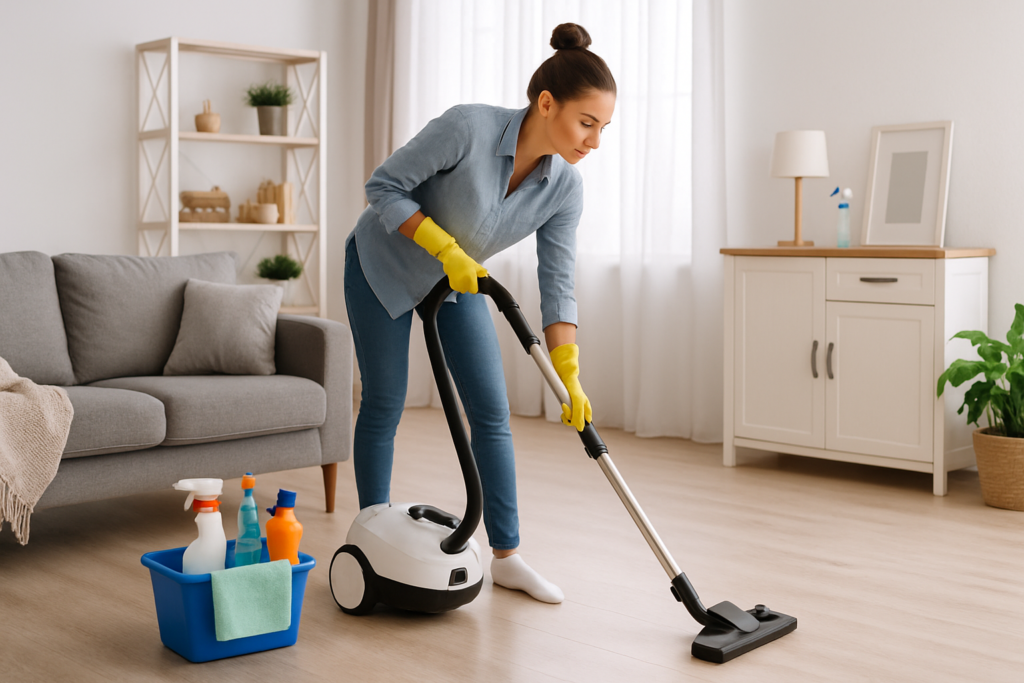
Use clear bins or baskets to create portable cleaning caddies. You can grab the entire bathroom cleaning kit and carry it where needed. This approach works especially well in multi-story homes.
Clear Storage Bins with Handles
Transparent bins let you see contents at a glance while handles make transport easy between rooms.
Frequency-Based Placement
Store frequently used products at eye level and within easy reach. Reserve higher and lower shelves for occasional-use items. This reduces strain and makes daily cleaning more convenient.
Keep emergency cleaning supplies like carpet stain removers easily accessible. Store them in a designated “quick access” area where you can grab them immediately when spills occur.
Label Everything Clearly
Good labeling systems prevent mistakes and help family members maintain organization. Use waterproof labels that won’t fade or peel in humid storage areas.
Color coding takes organization further. Use different colored bins or labels for different rooms or product types. This visual system makes it easy for anyone to return items to the correct location.
Maintenance and Regular Review
Storage systems require periodic maintenance to stay functional and safe. Schedule quarterly reviews to check for expired products, damaged containers, and organizational issues.
Dispose of expired or damaged products properly. Many communities have hazardous waste collection events for chemical products. Never pour cleaning products down drains or throw them in regular trash.
Test your organization system regularly. If you consistently struggle to find certain products or the system feels cumbersome, make adjustments. The best storage solution evolves with your needs and habits.
Frequently Asked Questions
How long do cleaning products typically last in storage?
Most cleaning products remain effective for 1-2 years when stored properly in cool, dry conditions. Bleach loses potency after about 6 months, while powdered cleaners can last longer if kept moisture-free. Check expiration dates during quarterly organization reviews and replace products that have separated, changed color, or developed unusual odors.
Can I store cleaning products in my garage or basement?
Garages and basements often have temperature extremes and humidity issues that can damage cleaning products and create safety hazards. If these are your only options, choose the most temperature-stable area possible and use sealed containers. Install ventilation if needed and check stored products more frequently for leaks or degradation.
What’s the safest way to organize spray bottles and tall containers?
Store tall bottles and spray cleaners with caps pointing upward to prevent leaks. Use shelf dividers or narrow bins to prevent bottles from falling over. Keep spray nozzles in the “off” position to prevent accidental discharge. Consider installing narrow pull-out drawers designed specifically for tall cleaning bottles if you have many spray products.
This article contains affiliate links. We may earn a small commission at no extra cost to you.