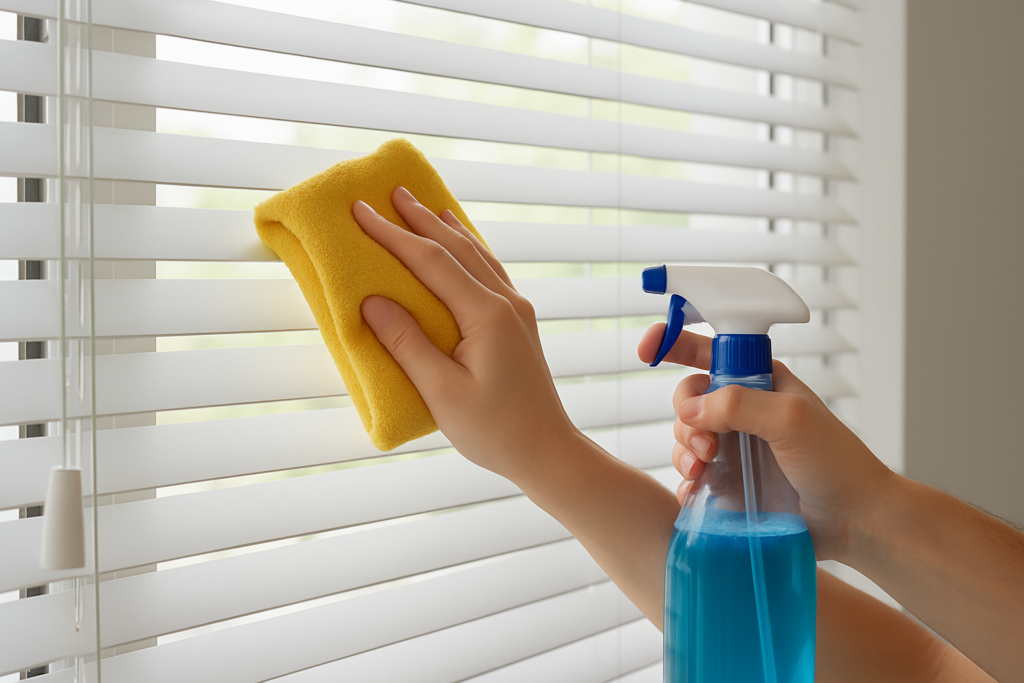
Cleaning blinds ranks right up there with cleaning ceiling fans on the list of household tasks everyone dreads. The good news is you don’t need to wrestle your blinds off the wall and drag them to the bathtub. With the right approach for your specific blind material, you can get them spotless while they stay mounted.
Different blind materials need different care techniques. What works perfectly for vinyl can damage wood, and what’s safe for aluminum might stain fabric. Let’s break down exactly how to clean each type without the hassle of removal.
Method 1: Wood and Faux Wood Blinds
Wood blinds are beautiful but temperamental. Too much water causes warping, and harsh chemicals strip the finish. Your best bet is dry cleaning followed by minimal moisture.
Start with an electrostatic duster. These specialized tools use static electricity to pull dust off surfaces rather than just pushing it around. Close the blinds fully in one direction, dust from top to bottom, then flip them and repeat on the other side.

Electrostatic Blind Duster
The microfiber design grabs dust without scratching delicate wood finishes
For stuck-on grime, mix one part white vinegar with four parts water. Dampen a microfiber cloth with this solution, wring it out until it’s barely moist, then wipe each slat individually. Dry immediately with a clean cloth to prevent water spots or warping.
Faux wood blinds are more forgiving since they’re typically made from vinyl or composite materials that resist moisture. You can use slightly more water, but still avoid soaking them.
Method 2: Vinyl and Aluminum Blinds
These are your most durable blinds and can handle more aggressive cleaning. Vinyl and aluminum won’t warp from water, so you have more options.
For regular maintenance, a blind cleaning brush with multiple prongs works wonders. These tools clean several slats at once, cutting your time in half. Simply close the blinds, position the brush over three or four slats, and run it from one end to the other.
When dealing with kitchen blinds covered in grease or bathroom blinds with soap scum, you need something stronger. Mix warm water with a few drops of dish soap (Dawn works particularly well for grease). Use a sponge to wash each slat, working from top to bottom so dirty water doesn’t drip onto clean slats.
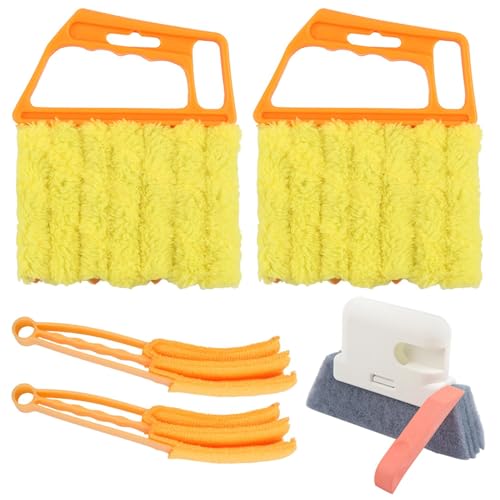
Blind Cleaning Tool Kit
Complete kits usually include both the multi-slat brush and microfiber attachments for different cleaning needs
For extremely grimy vinyl or aluminum blinds, fill a spray bottle with equal parts water and white vinegar. Add a tablespoon of dish soap and shake gently. Spray directly onto the blinds, wait two minutes, then wipe clean with a damp cloth. This method cuts through years of buildup without harsh chemicals.
Method 3: Fabric Blinds
Fabric blinds, including cellular shades and Roman blinds, present unique challenges. Water can leave permanent stains, and rubbing too hard damages the fabric structure.
Your primary tool should be a vacuum cleaner with a brush attachment. Set it to low suction and gently run the brush over each section of fabric. Hold the blind steady with your other hand to prevent the suction from pulling it off the mounting brackets.
For spot cleaning, use a fabric upholstery cleaner. Test it on an inconspicuous area first. Spray lightly, blot (never rub) with a white cloth, and allow to air dry completely before raising or lowering the blinds.
Cellular shades with honeycomb structures trap dust inside the cells. An air compressor on low pressure or a can of compressed air can blow out accumulated dust from these hidden areas. Hold the can upright and use short bursts to avoid moisture from the propellant.
The Ultrasonic Option for Deep Cleaning
While we’re focusing on in-place cleaning, it’s worth mentioning ultrasonic cleaning technology. Some professional cleaning services now offer portable ultrasonic blind cleaning systems that come to your home.
These systems use high-frequency sound waves in a water bath to remove dirt without scrubbing or chemicals. The cleaner sets up a temporary tank, immerses one section of your blinds at a time while they’re still mounted, and the ultrasonic waves do the work. This method is particularly effective for intricate pleated fabrics and delicate materials that can’t withstand traditional cleaning.
For home use, small ultrasonic jewelry cleaners can handle individual blind slats or cords, though this obviously takes longer than professional equipment designed specifically for blinds.
Special Considerations for Bathroom Blinds
Bathroom blinds face constant humidity, leading to mildew and mold growth. Prevention beats cleaning every time.
After showering, open the window or run the exhaust fan for at least 20 minutes. This simple habit dramatically reduces moisture buildup on blinds. Keep blinds fully open during this time to maximize air circulation.
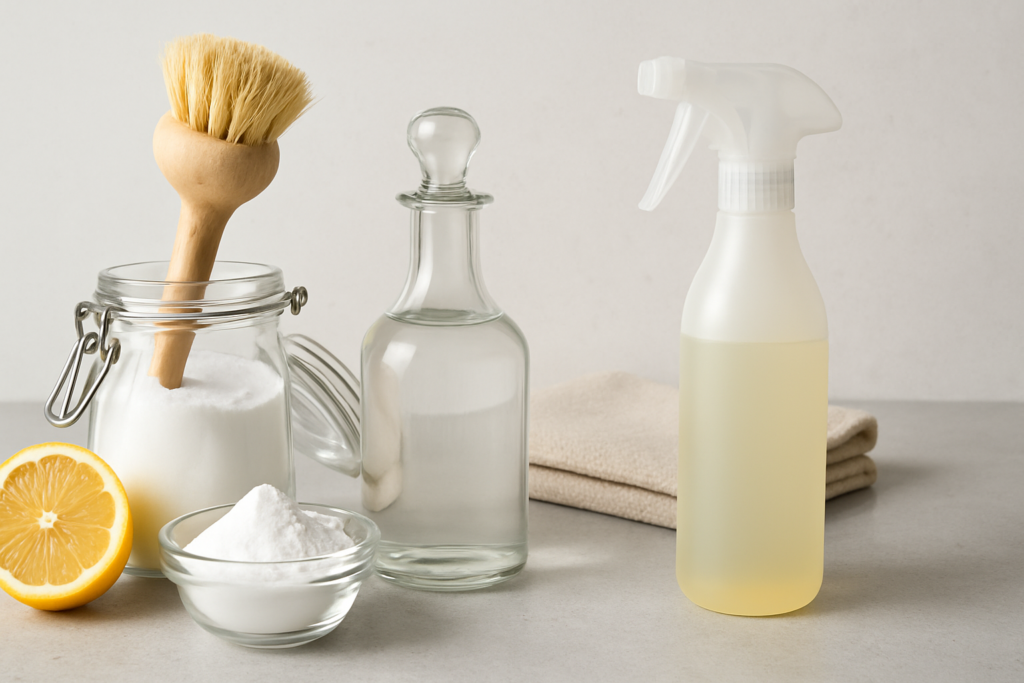
For existing mildew on vinyl or aluminum bathroom blinds, create a cleaning solution with one cup of water, one tablespoon of white vinegar, and one tablespoon of baking soda. The fizzing action helps lift mildew from textured surfaces. Apply with a soft brush, let sit for five minutes, then wipe clean.
Never use this method on wood or fabric blinds. For those materials, improve ventilation and consider using a small dehumidifier in the bathroom to keep moisture levels down.
Fabric blinds really shouldn’t be used in bathrooms with showers or tubs. The constant moisture will eventually cause problems no amount of cleaning can fix. Stick with vinyl, aluminum, or faux wood in high-humidity areas.
Frequently Asked Questions
How often should I clean my blinds?
Dust your blinds weekly with an electrostatic duster or vacuum attachment to prevent buildup. Deep clean them every three to six months, depending on your environment. Homes with pets, smoking, or high dust levels need more frequent attention. Kitchen blinds benefit from monthly cleaning due to grease accumulation.
Can I use a steam cleaner on blinds?
Steam cleaners work well on vinyl and aluminum blinds but should never be used on wood or fabric. The intense heat and moisture will warp wood and can set stains in fabric. For vinyl and aluminum, keep the steam nozzle at least six inches away and use quick passes rather than holding it in one spot.
What’s the best way to clean blind cords and mechanisms?
Wipe cords with a cloth dampened with mild soap and water, running the cloth along the length of the cord rather than around it to avoid twisting. For the headrail and mechanisms, use a dry electrostatic duster or vacuum with a brush attachment. Avoid getting water in the mechanical parts, as this can cause rust or jamming.
This article contains affiliate links. We may earn a small commission at no extra cost to you.