Nothing ruins the look of a clean home like streaky, smudged windows. You’ve probably tried countless times to get that crystal-clear finish, only to end up with more streaks than when you started. The truth is, professional window cleaners make it look effortless because they know specific techniques and use the right tools.
Getting streak-free windows isn’t about working harder, it’s about working smarter. With the right approach, you can achieve professional results every single time. Let’s break down exactly how the pros do it, from choosing the perfect cleaning solution to mastering the squeegee technique that makes all the difference.
Essential Tools for Professional Window Cleaning
Professional window cleaners don’t rely on paper towels and generic glass cleaner. They use specialized tools designed specifically for streak-free results. Your success depends on having the right equipment from the start.
A quality squeegee is absolutely critical. Look for one with a sharp, high-quality rubber blade that makes full contact with the glass. The Ettore Master Brass Squeegee is the gold standard among professionals. The blade should be slightly narrower than your window width to avoid catching on frames.
Ettore Master Brass Squeegee
The professional standard with a sharp rubber blade that creates perfect contact with glass surfaces
You’ll also need a good scrubber or washer sleeve to apply the cleaning solution. Microfiber scrubbers work exceptionally well because they grab dirt without scratching. Pair this with a sturdy extension pole for second-story windows, and you’ll have most situations covered.
Don’t forget about a quality bucket with measurement marks and a lint-free cloth for detailing. Professional window cleaning buckets often include clips to hold your squeegee, making the job much more efficient.
The Best Window Cleaning Solutions
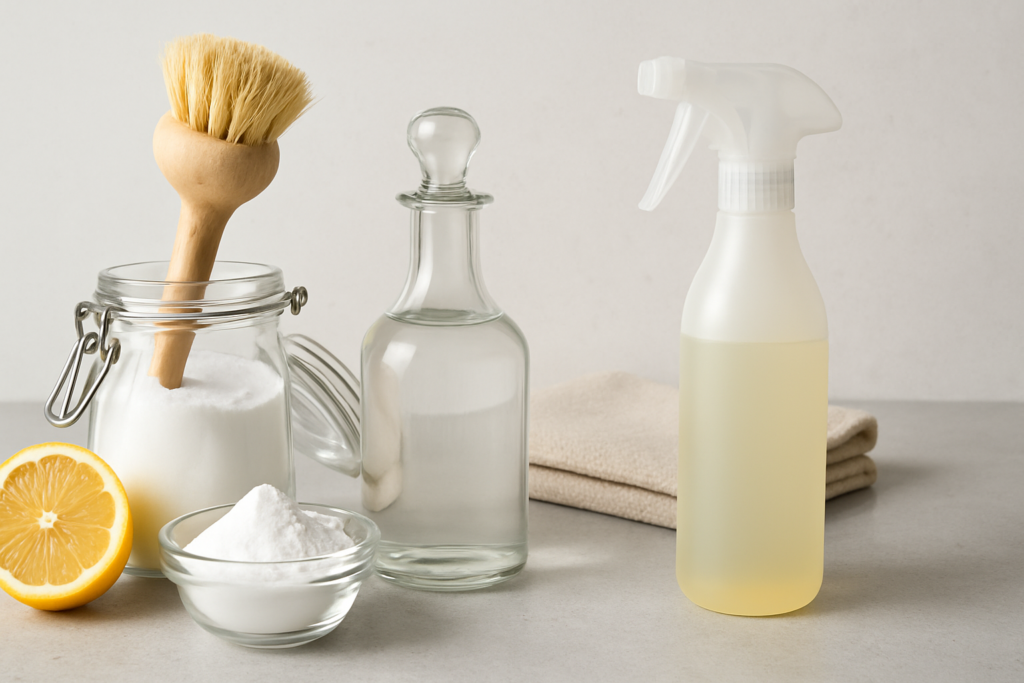
Commercial glass cleaners often leave residue that creates streaks. Professional window cleaners typically mix their own solutions for superior results. The most effective solution is surprisingly simple: just a few drops of dish soap in water.
Use about one teaspoon of quality dish soap per gallon of water. Dawn or Joy work exceptionally well because they cut through grease and grime without leaving residue. Avoid using too much soap, as this actually creates more streaks and film.
For heavily soiled windows, add a cup of white vinegar to your soap solution. The vinegar helps break down mineral deposits and stubborn grime. This combination works particularly well on exterior windows that face sprinkler systems or deal with hard water spots.
Skip the commercial glass cleaners entirely when using a squeegee. They’re formulated for paper towel application and often contain ingredients that interfere with proper squeegee action. Save them for mirrors and small glass surfaces where you’ll finish with a cloth.
Mastering the Professional Squeegee Technique
The squeegee technique separates amateurs from professionals. Most people make the mistake of pressing too hard or moving too slowly. Proper technique requires a light touch and confident, smooth movements.
Start by thoroughly wetting the entire window with your cleaning solution. Use your scrubber to work the solution into all areas, paying special attention to corners and edges where dirt accumulates.
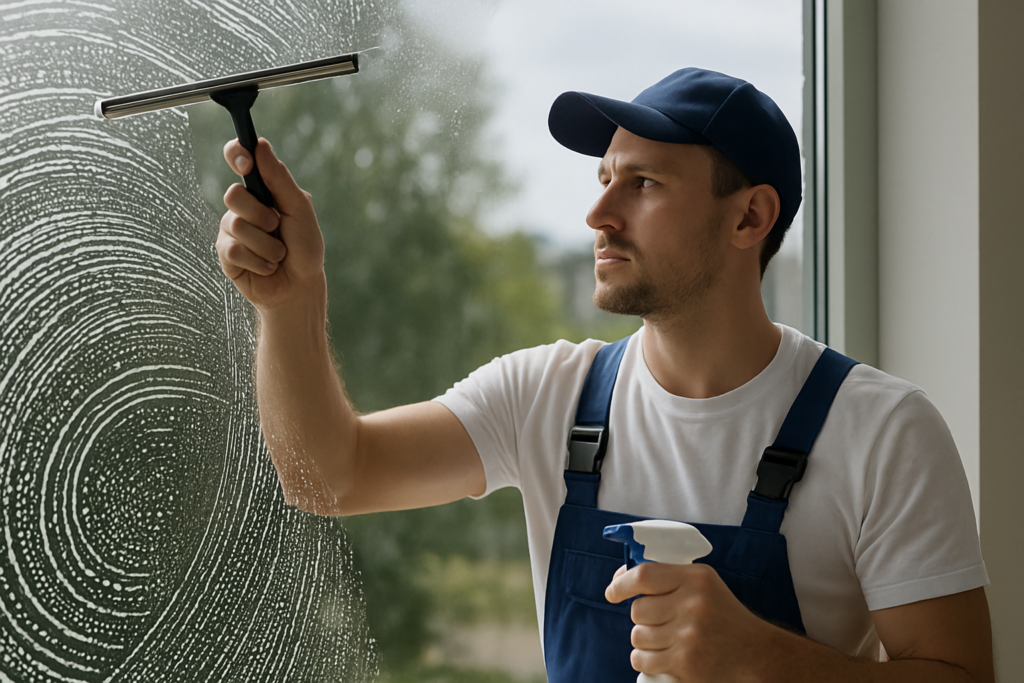
Position your squeegee at the top corner of the window at a slight angle, about 30 degrees. Pull straight across to the opposite corner in one smooth motion. The key is maintaining consistent pressure and speed throughout the entire stroke.
After each horizontal pass, wipe the squeegee blade clean with a lint-free cloth. This prevents dirty water from being dragged across clean areas. Overlap each stroke slightly to avoid leaving lines between passes.
For the final pass along the bottom edge, use a vertical motion to remove any remaining water. This technique, called “detailing,” ensures no water spots form as the window dries.
Inside vs Outside: Different Approaches for Different Challenges
Interior and exterior windows require different strategies because they face different types of dirt and environmental challenges. Understanding these differences helps you adapt your technique for optimal results.
Cleaning Interior Windows
Interior windows are typically easier to clean because they don’t face weather, but they present their own challenges. Dust, fingerprints, and pet nose prints are the main culprits. The squeegee technique works perfectly, but you need to protect surrounding surfaces.
Place towels along window sills and floors to catch dripping water. Interior windows often have decorative films or treatments that can be damaged by excess moisture. Work more quickly on interior surfaces to minimize water contact time.
Use less cleaning solution on interior windows. A light misting is often sufficient, especially if you’re just removing dust and light soil. The controlled environment means you have more time to perfect your squeegee technique without worrying about solution drying too quickly.
Tackling Exterior Windows
Exterior windows face the full force of weather, pollution, and environmental debris. They typically need more aggressive cleaning and may require multiple rounds of treatment. Hard water spots are particularly challenging and may need special attention.
Apply cleaning solution generously to exterior windows and let it dwell for 30-60 seconds before scrubbing. This gives the solution time to break down stuck-on grime. Use circular motions with your scrubber to work stubborn spots.
Work in shade whenever possible. Direct sunlight causes cleaning solutions to dry too quickly, leaving spots and streaks. If you must work in sun, work in smaller sections and move quickly through the squeegee process.
Professional Window Scrubber
Essential for applying cleaning solution evenly and working through tough exterior grime
Safely Cleaning Second-Story Windows
Second-story windows present obvious safety challenges, but with the right equipment and precautions, you can clean them safely from the ground. Never compromise safety for clean windows.
Extension poles are your best friend for second-story work. Quality poles extend 6-12 feet and accept standard squeegee and scrubber attachments. The technique remains the same, but you’ll need to adjust your angle and apply consistent pressure through the pole.
Consider investing in a telescoping pole system with quick-connect fittings. This allows you to switch between scrubber and squeegee without coming down from your ladder or repositioning.
If you must use a ladder, follow basic safety protocols. Have someone spot you, ensure the ladder is on level ground, and maintain three points of contact at all times. Many professionals recommend hiring someone for second-story work if you’re not completely comfortable with ladder safety.
For really high windows, consider professional services. The cost often justifies the safety benefits, and professionals have specialized equipment for challenging access situations.
How Often Should You Clean Your Windows?
Cleaning frequency depends on your environment, but most homes benefit from professional-level cleaning twice per year. Spring and fall cleanings typically handle the worst seasonal buildup and prepare windows for harsh summer or winter weather.
Homes in dusty environments, near busy roads, or in areas with hard water may need quarterly cleanings. You’ll know it’s time when you notice decreased natural light or obvious soil buildup on the glass surface.
Interior windows typically need less frequent attention unless you have pets, small children, or cook frequently near windows. A quick maintenance cleaning every 3-4 months usually suffices for interior surfaces.
Consider your home’s curb appeal when setting your schedule. Clean windows make an enormous difference in how your home looks from the outside. If you’re planning to sell or hosting outdoor events, prioritize exterior window cleaning.
Common Mistakes That Cause Streaks
Even with the right tools and technique, certain mistakes can sabotage your results. Avoiding these common errors makes the difference between amateur and professional-looking results.
Using too much cleaning solution is a frequent mistake. More soap doesn’t mean cleaner windows. Excess solution leaves residue that creates streaks and attracts dirt faster. Stick to the recommended ratios for best results.
Dirty squeegee blades are streak factories. Replace rubber blades when they become nicked, hard, or lose their sharp edge. A dull blade can’t make proper contact with glass, leaving water behind that becomes spots and streaks.
Working in direct sunlight causes solutions to dry too quickly, leaving mineral deposits and soap residue. Always work in shade when possible, or tackle sunny sides early in the morning or late in the afternoon.
Inconsistent pressure and speed during squeegee strokes creates uneven results. Practice on a less visible window until you develop smooth, confident movements. The motion should feel natural and controlled.
Replacement Squeegee Blades
Keep spare blades on hand since sharp rubber edges are crucial for streak-free results
Frequently Asked Questions
What’s the best weather for cleaning windows?
Overcast days with mild temperatures provide ideal window cleaning conditions. Avoid windy days that blow dirt onto wet surfaces, and don’t clean when temperatures are below 40°F, as solutions may not work effectively and water can freeze on the glass.
Can I use newspaper instead of proper squeegee equipment?
Newspaper was popular years ago when ink formulations were different, but modern newspaper ink can actually smear on glass. Professional squeegee techniques produce far superior results with less effort. Stick to proper tools for best outcomes.
How do I remove hard water spots that won’t come off with regular cleaning?
Stubborn mineral deposits may require a specialized cleaner containing mild acids. White vinegar works for light deposits, but severe buildup might need a commercial lime and mineral remover. Always test in an inconspicuous area first, and rinse thoroughly after treatment.
Should I clean window screens at the same time?
Clean screens definitely improve the overall appearance, but do them separately from glass cleaning. Remove screens and rinse them with a garden hose, using a soft brush for stubborn dirt. Let them dry completely before reinstalling to avoid water spots on freshly cleaned glass.
Professional window cleaning results are absolutely achievable with the right approach. Master the squeegee technique, use proper solutions, and work systematically from top to bottom. Your windows will look crystal clear and streak-free every single time.
This article contains affiliate links. We may earn a small commission at no extra cost to you.