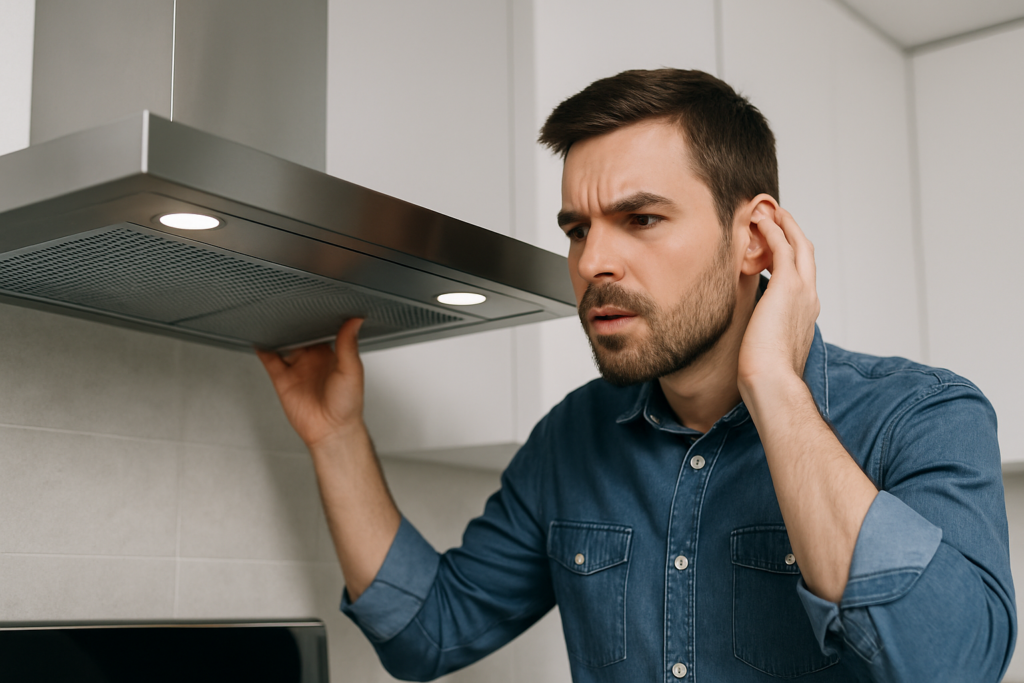
A loud range hood can turn a peaceful cooking session into an ear-splitting experience. That rattling, humming, or screeching noise isn’t just annoying. It’s usually a sign that something inside your hood needs attention before it fails completely.
Most range hood noise problems come down to a handful of mechanical issues. The good news is that many of these are fixable without calling a repair tech. Let’s break down what’s causing that racket and how you can quiet things down.
The Most Common Culprits Behind Range Hood Noise
Dirty or Clogged Filters
Your range hood filters trap grease and debris every time you cook. When they get clogged, the motor works harder to pull air through, creating a strained humming or grinding sound. Grease buildup can also make filters vibrate against the housing, adding a rattling component to the noise.
Pull out your filters and hold them up to the light. If you can’t see through them easily, they need cleaning or replacing. Metal baffle filters can go right in the dishwasher. Aluminum mesh filters need soaking in hot water with degreaser. Charcoal filters in ductless hoods can’t be cleaned and need replacement every 3-6 months depending on use.

Range Hood Grease Filter
Most universal replacement filters fit standard range hoods and restore proper airflow
Loose or Damaged Fan Blades
The blower wheel is the circular fan that actually moves air through your hood. Over time, the mounting nut can loosen, or the blades themselves can accumulate grease and debris. This creates an imbalanced rotation that sounds like rhythmic thumping or wobbling.
Turn off power to your hood at the breaker. Remove the filters and use a flashlight to inspect the blower wheel. You’ll likely see grease buildup on the blades. Clean them with degreaser and a brush. Check that the center mounting nut is tight. If any blades are bent or broken, you’ll need to replace the entire blower assembly.
Worn Out Motor Bearings
Range hood motors run on bearings that allow smooth rotation. After years of use, these bearings wear down and start creating a high-pitched squealing or grinding noise. This usually gets worse as the motor heats up during operation.
Motor bearing failure is one problem you can’t easily fix yourself. The bearings are sealed inside the motor housing. You’ll need to replace the entire motor assembly. Most range hoods use standard motor sizes, so finding a replacement motor for your model shouldn’t be difficult.
Loose Ductwork or Mounting Hardware
Sometimes the noise isn’t coming from the hood itself but from vibrations traveling through loose connections. Check where your ductwork connects to the hood outlet. A loose duct connection will rattle and amplify every vibration from the motor.
Tighten all mounting screws that secure the hood to your cabinets or wall. Check duct connections and secure them with metal foil tape or duct clamps. Never use standard cloth duct tape for range hood applications because grease and heat will cause it to fail.

Aluminum Foil Duct Tape
Professional-grade tape creates airtight seals that won’t degrade from heat or grease exposure
When to Replace vs. Repair
Not every noisy range hood deserves a repair effort. If your hood is over 10 years old and showing multiple problems, replacement makes more sense than throwing parts at an aging unit. Modern range hoods are quieter by design, with better insulation and more efficient motors.
For newer hoods under warranty, contact the manufacturer first. Many will send replacement parts free of charge. For mid-range hoods between 3-8 years old, replacing individual components like motors or blower wheels usually makes financial sense.
Calculate the total cost of parts and your time. If repairs will run more than 60% of a new hood’s cost, just upgrade. You’ll get better performance and lower noise levels with current technology.
Frequently Asked Questions
Why does my range hood get louder over time?
Progressive noise increase usually points to grease accumulation on the blower wheel and motor components. As grease builds up, it adds weight and creates imbalance, making vibrations worse. Regular cleaning every 3-4 months prevents this gradual degradation. Motor bearings also wear naturally with age, developing play that creates noise.
Can I reduce range hood noise without fixing anything?
You can dampen noise somewhat by adding acoustic insulation around the hood interior and ductwork, but this only masks the underlying problem. Using lower fan speeds during light cooking helps too. However, mechanical issues like worn bearings or damaged blades will continue getting worse. Better to address the root cause than cover up symptoms that indicate failing components.
This article contains affiliate links. We may earn a small commission at no extra cost to you.