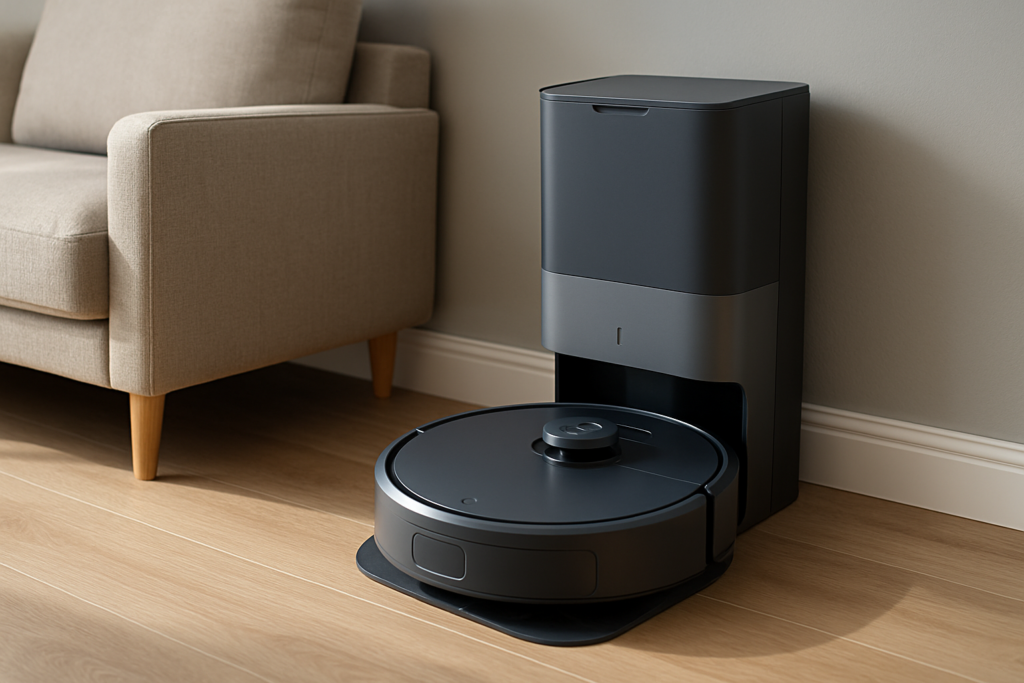
Self-emptying robot vacuums have transformed from luxury gadgets into must-have home cleaning tools. These smart machines not only clean your floors but also empty themselves into a base station, meaning you can go weeks without thinking about vacuuming. The technology has matured significantly, with 2026 models offering better suction, smarter navigation, and larger base station capacities than ever before.
With so many options from brands like iRobot, Roborock, Ecovacs, and Dreame, choosing the right self-emptying robot vacuum can feel overwhelming. We’ve tested the top models to help you find the perfect match for your home and cleaning needs.
Top Self-Emptying Robot Vacuums for 2026
iRobot Roomba j7+ and s9+
iRobot remains the household name in robot vacuums, and their self-emptying models continue to impress. The Roomba j7+ stands out for its obstacle avoidance technology, which can identify and avoid pet waste, shoes, and charging cables. This prevents those dreaded situations where your robot spreads messes around your home.
iRobot Roomba j7+
Best overall choice for homes with pets and obstacles thanks to advanced object recognition
The Roomba s9+ offers superior suction power and a unique D-shaped design that excels at cleaning corners and edges. Both models feature the Clean Base Automatic Dirt Disposal system, which holds up to 60 days of debris. The iRobot app provides detailed cleaning maps and allows you to set no-go zones and specific room cleaning schedules.
Roborock S8 Pro Ultra and Q Revo
Roborock has gained serious ground with their feature-packed models. The S8 Pro Ultra goes beyond just self-emptying by also washing and drying its own mop pad. This makes it perfect for homes with mixed flooring, as it transitions seamlessly from vacuuming carpets to mopping hard floors.
The Q Revo offers similar dual functionality at a more accessible price point. Both models use LiDAR navigation for precise mapping and can climb over thresholds up to 2cm high. Their base stations are larger than Roomba’s but include water tanks for the mopping functions.
Ecovacs Deebot X1 Omni and N8 Pro+
Ecovacs brings strong value to the self-emptying category. The X1 Omni includes a built-in voice assistant and impressive 5000Pa suction power. Like the Roborock models, it combines vacuuming and mopping with a fully automated base station.
Ecovacs Deebot X1 Omni
Excellent value with powerful suction and full mopping automation
The N8 Pro+ focuses purely on vacuuming and offers excellent pet hair pickup with its rubber brush system. Its self-emptying base is compact and can hold debris for up to 30 days of cleaning cycles.
Dreame L10s Ultra
Dreame might be newer to the market, but their L10s Ultra delivers impressive performance. It features automatic mop lifting when transitioning to carpets and strong 7000Pa suction. The base station handles emptying, mop washing, and even refills the robot’s water tank automatically.
Key Features to Consider
Suction Power and Cleaning Performance
Suction power varies significantly between models. The Dreame L10s Ultra leads with 7000Pa, while most Roombas operate around 3000-4000Pa. However, raw suction numbers don’t tell the whole story. Brush design, airflow engineering, and navigation efficiency all impact real-world cleaning performance.
For homes with pets, look for models with rubber brush rolls that resist hair tangles. The Roomba s9+ and Ecovacs models excel here, while some cheaper alternatives still use bristle brushes that require more maintenance.
Mapping and Navigation
Modern self-emptying robots use either camera-based navigation or LiDAR sensors. LiDAR models like the Roborock and Dreame units typically map faster and work better in low light conditions. Camera-based systems like those in newer Roombas can identify specific objects but may struggle in dark rooms.
All top models now offer multi-floor mapping, room-specific cleaning, and no-go zones through their mobile apps. The iRobot app is particularly user-friendly, while Roborock offers more advanced scheduling options.
Base Station Capacity and Features
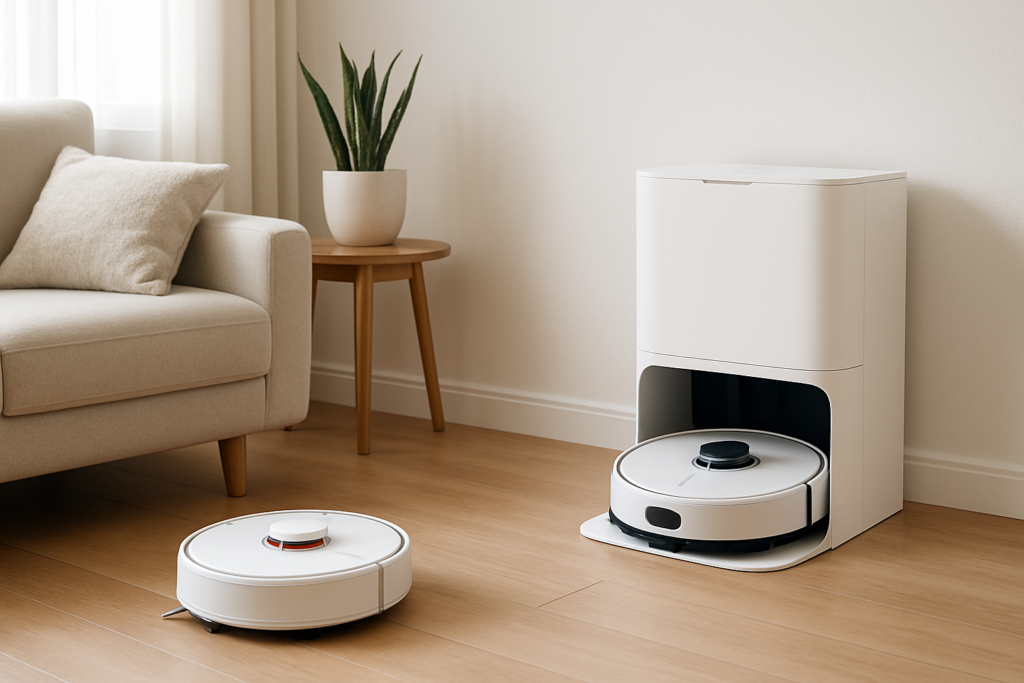
Base station capacity ranges from 30 to 60 days of debris storage. Larger households with pets should prioritize higher capacity models. Some premium bases also include automatic mop washing and drying, which adds convenience but increases the overall footprint.
Consider your available space carefully. All-in-one bases like the Roborock S8 Pro Ultra are substantial units that need dedicated floor space and nearby water access for optimal performance.
Frequently Asked Questions
How often do self-emptying bases need maintenance?
Most self-emptying bases require bag changes every 1-2 months, depending on your home size and debris levels. The bags are typically proprietary and cost between competitively priced-5 each. Bagless models like some Shark variants need more frequent emptying but eliminate ongoing bag costs. You’ll also need to occasionally wipe down sensors and clean the base station’s suction area.
Do self-emptying robot vacuums work well with pets?
Yes, they’re particularly beneficial for pet owners since they can handle daily hair and dander without requiring constant emptying. Models with rubber brush rolls perform better with pet hair than bristle brushes. The Roomba j7+ offers additional peace of mind with its pet waste avoidance feature, while high-suction models like the Dreame L10s Ultra excel at deep cleaning pet hair from carpets.
This article contains affiliate links. We may earn a small commission at no extra cost to you.