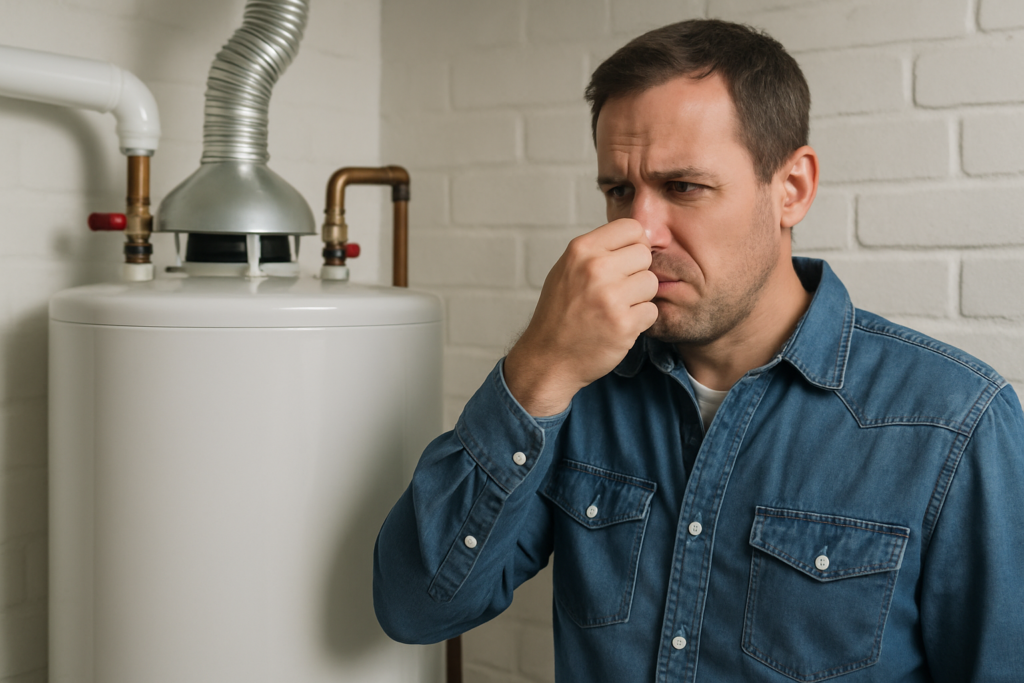
Few things are more unsettling than turning on your hot water tap and getting hit with a smell that reminds you of rotten eggs. You’re not imagining it, and no, your water heater isn’t possessed. What you’re experiencing is one of the most common water heater issues, and the good news is that it’s usually fixable without calling a plumber.
Most water heater odors come from bacterial growth inside your tank, though sometimes the culprit is your water source itself. Let’s walk through why this happens and what you can do about it.
Why Your Water Heater Smells Like Rotten Eggs
That distinctive sulfur smell isn’t coming from the water heater itself. It’s hydrogen sulfide gas, produced when sulfate-reducing bacteria interact with the magnesium or aluminum anode rod inside your tank. These bacteria thrive in warm, oxygen-depleted environments, which perfectly describes the inside of your water heater.
Your anode rod exists to protect the tank from corrosion. It’s essentially a sacrificial metal component that corrodes instead of your tank. Unfortunately, when sulfate-reducing bacteria set up shop in your water heater, they feed on the hydrogen released by the anode rod and produce that unmistakable rotten egg smell.
This issue is more common if you have well water or if your municipal water supply has high sulfate content. Homes with water softeners can also experience this more frequently because softened water can accelerate the bacterial reaction.
Quick Test: Is It Your Water or Your Heater?
Before you start working on your water heater, figure out if the smell is actually coming from it. Run your cold water tap for a minute and smell it. Then do the same with hot water. If only the hot water smells, your water heater is the problem. If both smell, your water source or plumbing is to blame.
You can also test different faucets around your house. Sometimes the smell is isolated to one bathroom, which usually means bacteria in that specific drain trap rather than your water heater.
How to Fix a Smelly Water Heater
Flush and Disinfect Your Tank
The first solution to try is flushing your tank with hydrogen peroxide. This kills the bacteria without replacing any parts. Turn off the power to your electric water heater or set your gas heater to pilot mode. Shut off the cold water supply and attach a garden hose to the drain valve at the bottom of the tank.
Drain several gallons from the tank, then pour two to four pints of 3% hydrogen peroxide into the tank through the cold water inlet. You can find standard hydrogen peroxide at any drugstore. Let it sit for at least two hours (overnight is better), then flush the tank completely by opening the drain valve and the cold water supply simultaneously.

Water Heater Drain Hose
A durable drain hose makes flushing your tank much easier and prevents flooding your garage or basement.
Refill the tank, turn the power back on, and wait an hour for the water to heat up. Run your hot water taps for several minutes to clear any remaining hydrogen peroxide. The smell should be gone or significantly reduced.
Replace the Anode Rod
If flushing doesn’t solve the problem, your next option is replacing the standard anode rod with a powered anode rod (also called an electronic anode). Standard rods are made from magnesium or aluminum, both of which can contribute to bacterial growth. Powered anode rods use electrical current to provide corrosion protection without producing hydrogen that bacteria can feed on.
Installing a powered anode rod requires some basic plumbing skills. You’ll need to drain the tank partway, unscrew the old anode rod from the top of the tank, and install the new one. Most powered anodes come with detailed installation instructions and work with standard residential water heaters.

Water Heater Element Wrench
Essential tool for removing stubborn anode rods and heating elements without damaging your tank.
Powered anode rods eliminate the smell permanently in most cases. They require a nearby electrical outlet but use minimal power. Many homeowners consider this the permanent fix for recurring odor problems.
Increase Your Water Heater Temperature
Bacteria struggle to survive in water hotter than 140°F. Temporarily raising your water heater temperature to 160°F for a few hours can kill off the bacteria causing the smell. This works best in combination with flushing.
Be careful with this approach. Water at 160°F can cause severe burns almost instantly. Make sure everyone in your household knows not to use hot water during this treatment. After you’ve killed the bacteria, set the temperature back to 120°F, which is the recommended safe setting for most homes.
Preventing Future Odor Problems
Regular maintenance prevents most water heater smells. Drain and flush your tank at least once a year to remove sediment buildup where bacteria can hide. This also improves your water heater’s efficiency and extends its lifespan.
Consider installing a water softener bypass for your water heater if you have soft water. While this means your water heater will develop scale faster, it significantly reduces bacterial growth. You’ll need to flush the tank more frequently to manage the scale, but you won’t deal with recurring smells.
Another preventive measure is checking and replacing your anode rod every few years. Most manufacturers recommend inspection every two to three years. A worn-out anode rod can’t effectively protect your tank and is more likely to contribute to bacterial problems.
When to Call a Professional
Sometimes DIY fixes aren’t enough. Call a plumber if the smell persists after multiple flushes and hydrogen peroxide treatments, if you notice rusty water along with the smell, or if your water heater is making unusual noises.
These symptoms might indicate serious corrosion inside the tank. Water heaters typically last 8 to 12 years, and persistent problems often mean you’re approaching the end of that lifespan. A professional can assess whether repair or replacement makes more financial sense.
Frequently Asked Questions
Can a smelly water heater make you sick?
The bacteria that cause water heater odors (sulfate-reducing bacteria) aren’t typically harmful to humans. The hydrogen sulfide gas they produce smells terrible but is generally present at levels too low to cause health problems. However, if you have a compromised immune system or respiratory issues, consult a doctor about your water quality.
How often should I flush my water heater to prevent smells?
Flush your water heater at least once per year for general maintenance. If you’ve had odor problems in the past, flush it every six months and consider quarterly hydrogen peroxide treatments. Homes with well water or high sulfate content may benefit from more frequent flushing.
Will a water filter remove the rotten egg smell?
A whole-house carbon filter can help if your cold water also smells, indicating the problem is in your water source. However, filters won’t solve bacterial growth inside your water heater tank. You’ll need to address the tank directly through flushing, disinfection, or anode rod replacement. Some homeowners use both approaches for complete odor elimination.
This article contains affiliate links. We may earn a small commission at no extra cost to you.