You probably did a double-take when you read that title. Water heaters don’t cool anything, they heat water. But here’s what’s actually happening: you’re dealing with a malfunctioning air conditioning unit or heat pump, and somehow the terms got mixed up in your search. Don’t worry, you’re not alone. This mix-up happens more often than you’d think, especially when you’re frustrated with a broken cooling system at 2 AM on a sweltering summer night.
Let’s clear this up and get to what you really need: solutions for why your cooling system isn’t working properly. Whether you’ve got a central AC unit, a heat pump, or a window unit that’s struggling, the problems usually boil down to three main culprits: restricted airflow, dirty or frozen coils, and compressor issues. We’ll walk through each one and show you how to fix them.
Airflow Restrictions: The Most Common Problem
About 70% of cooling problems start with airflow issues. Your system needs to move a massive amount of air across the evaporator coils to work properly. When something blocks that airflow, the whole system suffers.
Start with your air filter. A clogged filter is like trying to breathe through a pillow. Pull it out and hold it up to a light. If you can’t see light passing through easily, it needs replacing. Most filters should be changed every 30-90 days depending on your environment, pets, and usage.
Next, check your vents and registers. Walk around your home and make sure furniture, curtains, or storage boxes aren’t blocking the return or supply vents. You need at least 80% of your vents open and unobstructed for proper airflow. Closing too many vents actually hurts efficiency rather than helping it.

Air Filter Multi-Pack
Stock up on filters so you’ll actually remember to change them regularly
Your blower motor might also be struggling. Turn your system on and listen carefully at the air handler. You should hear a steady hum and feel strong airflow at your vents. If the airflow seems weak even with a clean filter, the blower wheel might be caked with dust and debris. This requires opening your air handler unit and cleaning the squirrel cage blower, which looks like a cylindrical drum with fins.
Use a soft brush and vacuum to clean the blower wheel carefully. Don’t spray water directly on it, as this can damage the motor bearings. A specialized coil cleaning brush makes this job much easier.
Dirty or Frozen Coils: The Silent System Killer
Your cooling system has two sets of coils. The evaporator coils inside your home absorb heat, while the condenser coils outside release it. When either set gets dirty or frozen, your system loses cooling capacity fast.
Check your outdoor condenser unit first. Turn off the power at the disconnect box, then look at the metal fins surrounding the unit. They should be relatively clean and straight. If they’re clogged with cottonwood seeds, grass clippings, or dirt, your system can’t reject heat properly.
Clean the condenser coils by gently spraying them from the inside out with a garden hose. Don’t use a pressure washer as it will bend the delicate fins. For stubborn dirt, apply a foaming coil cleaner following the product directions, then rinse thoroughly after 10-15 minutes.
Dealing With Frozen Evaporator Coils
If you notice ice building up on the copper lines running to your outdoor unit, or if your indoor coils are frozen, you’ve got a bigger problem. Frozen coils usually mean either severely restricted airflow or low refrigerant levels.
Turn off your cooling system immediately. Switch the fan to “on” mode to help thaw the ice faster. This process can take 2-8 hours depending on how much ice built up. Don’t try to chip or scrape the ice off, you’ll damage the coils.

Digital Thermometer with Probe
Essential for checking temperature splits and diagnosing cooling problems accurately
Once the ice melts completely, replace your air filter and check all the airflow items we discussed earlier. Turn the system back on and monitor it for 30-60 minutes. If ice starts forming again, you probably have a refrigerant leak and need professional help.
Compressor Problems: When to Call the Pros
The compressor is your cooling system’s heart. It pressurizes refrigerant and pumps it through the system. When it fails, you’re looking at either an expensive repair or full system replacement.
Listen to your outdoor unit when it’s running. A healthy compressor makes a steady humming sound. Bad signs include loud clanking, stuttering starts, or the compressor not turning on at all while the fan runs.
Check if your compressor is getting power. With the system calling for cooling, go outside and watch the contactor (the large black relay box). You should hear a definite “click” and see the contactor pull closed when the compressor starts. If the contactor closes but the compressor doesn’t start, or if it starts then quickly shuts off, you likely have a failed capacitor or compressor.
Capacitor Testing
The run capacitor provides the electrical boost your compressor needs to start. These fail regularly, especially in hot climates. A bulging or leaking capacitor needs immediate replacement.
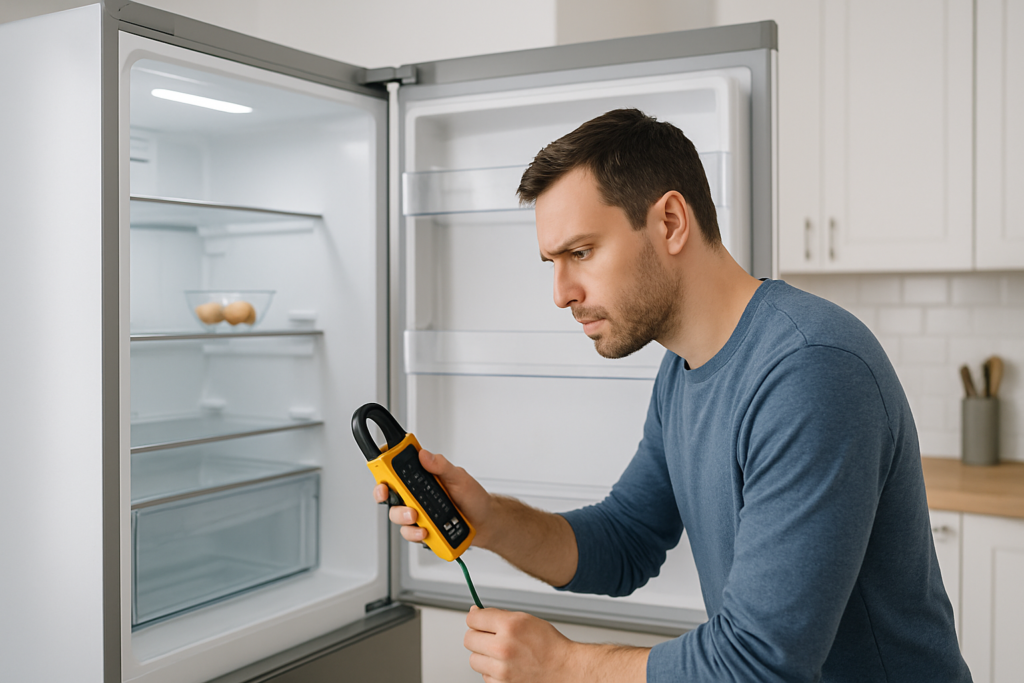
You can test the capacitor with a multimeter, but this involves working with high voltage stored in the capacitor even when power is off. Unless you’re experienced with electrical work, call a technician for this repair. Capacitor replacement is usually affordable and takes about 30 minutes.
If the capacitor tests fine but your compressor still won’t run, you’re looking at a compressor failure. This repair often costs 50-70% of a new system’s price, so you’ll need to weigh repair versus replacement based on your system’s age.
Refrigerant Leaks and Low Charge
Your cooling system needs the correct refrigerant charge to work properly. Too little refrigerant means reduced cooling capacity, longer run times, and potentially frozen coils. Too much causes high head pressure and can damage the compressor.
You can’t check refrigerant levels without proper gauges and knowledge. But you can look for signs of leaks. Check the copper line connections at both the indoor and outdoor units. Look for oily residue, which indicates refrigerant leaking along with the oil that travels through the system.
The service valves on your outdoor unit are common leak points. These are the brass fittings where technicians connect their gauge sets. If you see oil or frost forming around these valves during operation, you’ve found your leak.
Don’t buy those refrigerant recharge kits at auto parts stores. They’re designed for car AC systems and will likely make your home cooling problem worse. Refrigerant work requires EPA certification for good reason. An improperly charged system will cost you more in the long run through higher electric bills and potential compressor damage.
Frequently Asked Questions
How often should I have my cooling system serviced?
Annual maintenance before cooling season starts is ideal. A technician will check refrigerant levels, clean coils, test the compressor and capacitors, and catch small problems before they become expensive failures. Spring is the best time to schedule this service before HVAC companies get slammed with emergency calls.
Why does my AC cool during the day but struggle at night?
This seems backwards, but it usually means your system is undersized or the outdoor unit isn’t rejecting heat properly. During the day, the temperature difference between inside and outside helps your system work. At night, especially if outdoor temperatures stay high, a dirty condenser coil or failing compressor shows its limitations. Clean your outdoor coils thoroughly and check if the condenser fan is running at full speed.
Can I run my cooling system with a frozen coil?
Never run your system with frozen coils. The ice blocks airflow and forces your compressor to work against extreme pressures, which can cause permanent damage. Turn the system off, switch the fan to “on” to speed thawing, and fix the underlying cause before running cooling again. Usually this means replacing a clogged filter or addressing a refrigerant leak.
This article contains affiliate links. We may earn a small commission at no extra cost to you.