There’s nothing quite like the frustration of stepping into a cold shower because your water heater keeps tripping the circuit breaker. This isn’t just an inconvenience. It’s a sign that something’s wrong with either your water heater or your electrical system, and ignoring it can lead to more serious problems down the road.
Most water heater breaker trips happen for predictable reasons that you can diagnose and often fix yourself. Let’s break down the most common culprits and what you can do about them.
Electrical Overload: When Your Water Heater Demands Too Much
Your circuit breaker exists for one reason: to protect your home from electrical fires. When your water heater draws more current than the circuit can handle, the breaker does its job and shuts everything down.
Electric water heaters typically run on 20 to 30-amp breakers, depending on the unit’s wattage. A standard 40-gallon residential water heater usually needs about 4,500 watts and should be on a dedicated 30-amp circuit. If your breaker keeps tripping immediately when the heater kicks on, you might have an undersized breaker for your unit.
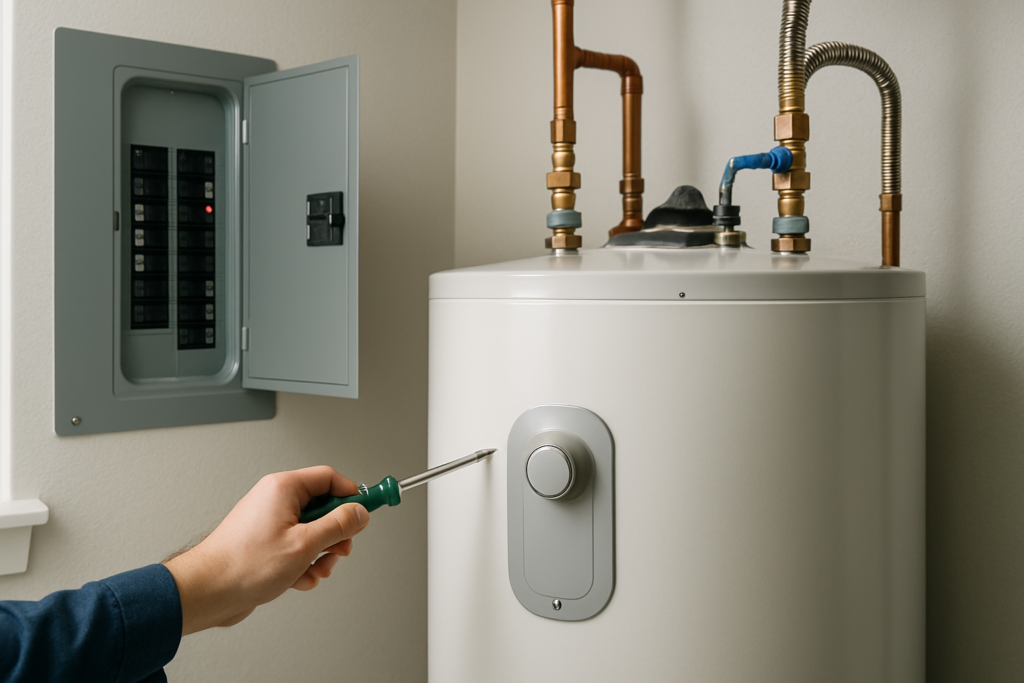
Check your water heater’s nameplate (usually on the side of the tank) and compare the amperage requirements to your breaker rating. You can verify your breaker size by looking at the number stamped on the breaker switch itself in your electrical panel. If the numbers don’t match up properly, you’ll need an electrician to install the correct breaker.
Another common overload situation happens when other appliances share the same circuit. Water heaters should always be on their own dedicated circuit. If you notice the breaker trips when other devices in your home are running, you’ve found your problem.
Faulty Heating Elements: The Hidden Culprit
Most electric water heaters have two heating elements: one at the top and one at the bottom of the tank. When these elements fail, they often short out and draw excessive current, causing your breaker to trip repeatedly.
A failing element typically shows specific symptoms. The breaker might trip after the water heater has been running for a while rather than immediately. You might also notice the water doesn’t get as hot as it used to, or it runs out of hot water faster than normal.
Testing heating elements requires a multimeter and some basic electrical knowledge. You’ll need to turn off the power at the breaker, remove the access panels on your water heater, and test each element for continuity and resistance. A healthy element should read between 10 and 30 ohms, depending on its wattage.

Water Heater Element
Replacing a faulty heating element is one of the most common DIY water heater repairs
Replacing a heating element is actually pretty simple if you’re comfortable working with basic tools. Make sure you drain the tank first and choose an element with the same wattage and voltage as your original. Installing the wrong wattage can cause the same breaker problems you’re trying to fix.
Wiring Problems and Loose Connections
Sometimes the issue isn’t the water heater itself but the wiring connecting it to your electrical panel. Over time, wire connections can loosen, corrode, or degrade, creating resistance that generates heat and draws extra current.
Loose connections at the breaker, at the water heater’s junction box, or anywhere along the circuit can cause intermittent tripping. You might notice the breaker trips randomly rather than following any predictable pattern. Loose wiring also creates hot spots that you can sometimes smell (a burning or melting plastic odor) or see (discolored or melted wire insulation).
Check the connections at your water heater’s electrical box first. Turn off the breaker, remove the cover plate, and look for any signs of burning, corrosion, or loose wire nuts. Tighten any loose connections and replace any damaged wire nuts with new ones rated for the wire gauge you’re working with.
Inspect your circuit breaker connections too. A breaker that feels warm to the touch or shows signs of burning needs immediate attention from a licensed electrician. Don’t mess around with the main panel connections yourself unless you really know what you’re doing.
When to Call a Professional
Some water heater electrical problems require professional help. If you’ve checked the obvious issues and your breaker still trips, or if you smell burning plastic anywhere near your water heater or electrical panel, call an electrician right away.
You should also get professional help if your water heater is older than 10 years and having multiple problems. At that point, the cost of repairs often approaches the cost of replacement, and a new unit will be more energy efficient anyway.
A non-contact voltage tester can help you safely check for power before working on any electrical components. These inexpensive tools are essential for any DIY electrical work.
Frequently Asked Questions
Can I just replace the breaker with a higher amp rating?
Absolutely not. Breakers are sized to protect the wire gauge in your walls. Installing a larger breaker on undersized wire creates a serious fire hazard because the wire can overheat before the breaker trips. If your water heater needs more amperage, you need to run new, appropriately sized wire from the panel to the heater.
How do I know if my water heater element is bad without testing it?
You can’t know for certain without testing, but some telltale signs include the breaker tripping after the heater runs for 10-15 minutes, inconsistent water temperature, or visible rust and corrosion around the element mounting bolts. When elements fail, they often leak slightly, leaving rust stains as evidence.
This article contains affiliate links. We may earn a small commission at no extra cost to you.