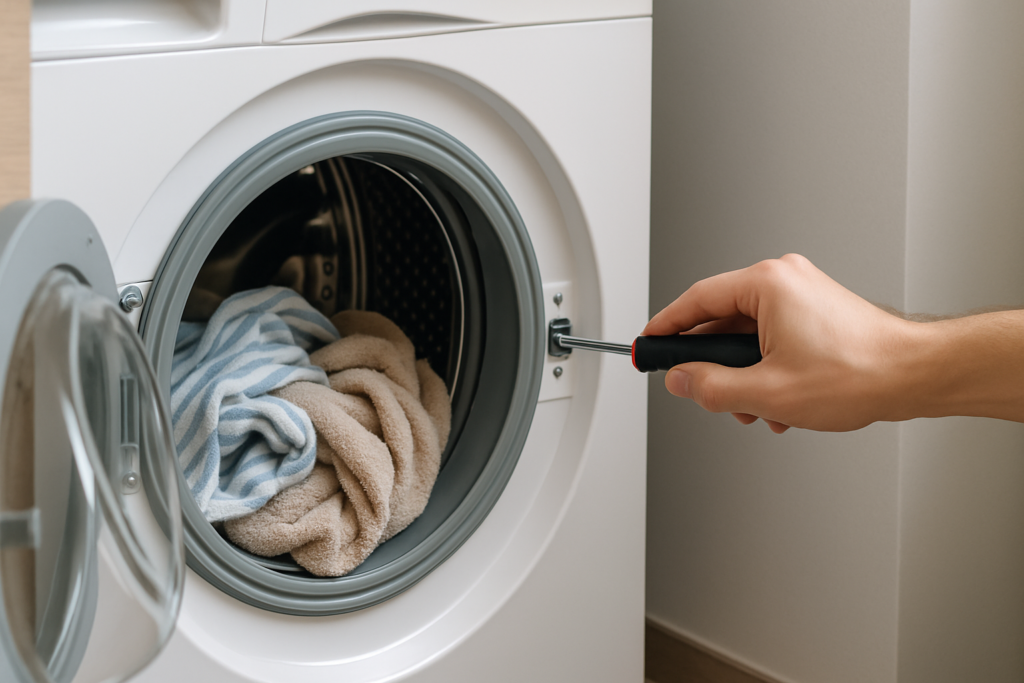
Few things are more frustrating than pulling wet, sopping clothes out of your washing machine after a full cycle. When your washer refuses to spin, you’re left with laundry that’s too drenched to even put in the dryer. Before you call an expensive repair service or start shopping for a new machine, you should know that most spinning problems have simple causes that you can diagnose and often fix yourself.
Understanding why your washing machine won’t spin comes down to a few common culprits. Most spin failures relate to worn belts, faulty motors, or malfunctioning safety switches. With a bit of troubleshooting, you can identify which issue is affecting your machine and decide whether it’s a DIY fix or time to bring in a professional.
The Drive Belt: Your Washer’s Achilles Heel
The drive belt connects your washing machine’s motor to the drum. When this rubber belt wears out, cracks, or snaps completely, your drum won’t spin even though the motor is running. You might hear the motor humming away, but the drum stays still or only wobbles slightly.
Top-loading washers are particularly prone to belt issues because the belt handles significant stress during spin cycles. You can check the belt by unplugging your machine and removing the back or front panel (depending on your model). Look for a thick rubber belt wrapped around pulleys. If it’s loose, cracked, frayed, or missing altogether, you’ve found your problem.
Replacing a drive belt is one of the more manageable DIY washer repairs. Most belts are model-specific, so you’ll need your washer’s exact model number to order the right replacement. A washing machine drive belt typically comes with basic installation instructions, and the job usually takes 30 minutes to an hour.

Washing Machine Drive Belt
Check for a belt compatible with your specific washer model for a reliable replacement
Motor Problems: When the Heart Stops Beating
Your washing machine’s motor does the heavy lifting, literally. When the motor fails, your machine won’t spin, agitate, or do much of anything. Unlike belt issues where you might hear the motor running, a dead motor usually means complete silence or strange burning smells.
Motor failures often show warning signs before they quit entirely. You might notice the machine struggling to start cycles, making unusual grinding or buzzing noises, or tripping your circuit breaker. These symptoms suggest the motor bearings are wearing out or the motor windings are failing.
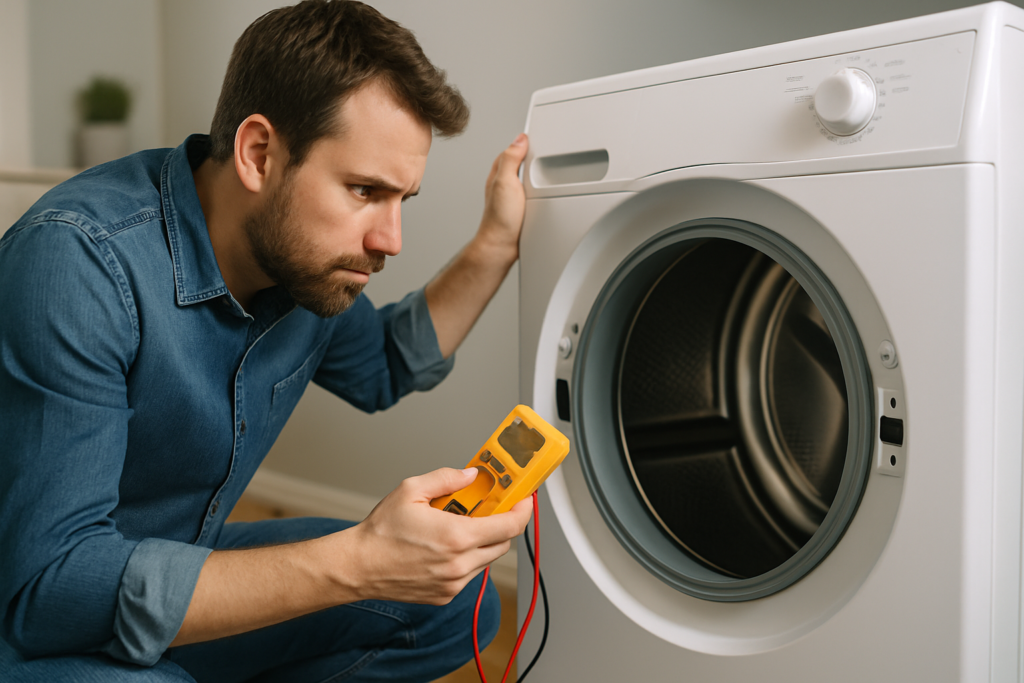
Testing a motor requires a multimeter to check for continuity and proper electrical resistance. Most homeowners find this level of diagnosis beyond their comfort zone, and motor replacement is definitely a job for someone with electrical experience. Motors are expensive components, often costing as much as half the price of a new machine, so weigh your repair costs against replacement carefully.
Lid Switch and Door Latch Issues
Your washing machine has a built-in safety feature that prevents it from spinning when the lid or door is open. The lid switch (on top-loaders) or door latch (on front-loaders) tells the machine when it’s safe to enter the high-speed spin cycle. When this switch fails, your washer thinks the lid is always open and refuses to spin.
Testing the lid switch is simple. On top-loaders, press down on the plastic tab that the lid pushes when closed. You should hear a clicking sound. Start a cycle and manually press the switch. If the machine starts spinning, your switch is faulty.
Front-loaders use electronic door locks that can fail in multiple ways. Sometimes the lock mechanism breaks, other times it’s an electrical issue with the lock sensor. You might see error codes on digital displays pointing to door lock problems.
Replacing a lid switch or door latch is relatively easy and inexpensive. These parts snap or screw into place, and you can find replacement washing machine lid switches for most common brands without much trouble.

Washing Machine Lid Switch
An affordable fix that often solves no-spin issues on top-loading machines
Drain Pump and Water Level Problems
Your washing machine won’t enter the spin cycle if it detects water still in the drum. Most machines have sensors that prevent spinning when water levels are too high, protecting you from floods and preventing damage to the motor.
A clogged or failing drain pump can’t remove water fast enough, tricking the machine into thinking it’s still full. Check your drain pump filter (usually behind a small panel at the front bottom of front-loaders) for coins, lint, or small clothing items. You’d be amazed what accumulates there.
Listen during the drain cycle. A working pump makes a steady humming or buzzing sound. If you hear nothing, or if you hear humming but no water drains, your pump might be clogged or broken. Sometimes you can clean out blockages, but a completely failed pump needs replacement.
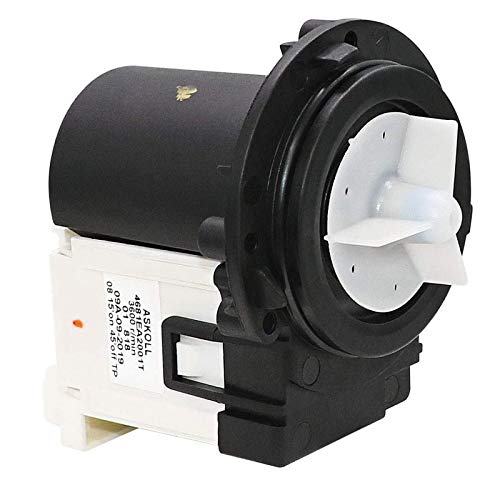
Washer Drain Pump
Essential replacement part when your machine won’t drain properly before spinning
Water level sensors can also malfunction, telling your machine there’s water present when the drum is actually empty. These pressure switches use air tubes that can get clogged or cracked. Inspect the small rubber tube connected to your water level sensor for kinks or blockages.
Load Balance and Suspension Issues
Modern washing machines have sensors that detect unbalanced loads. When clothes clump to one side, creating an uneven distribution, the machine refuses to spin at high speeds to prevent damage. This is actually a feature, not a bug.
If your machine fills, agitates, drains, but then stops before the final spin, try redistributing your clothes manually. Large items like comforters or heavy jeans can easily create imbalance. Running smaller loads or mixing large and small items usually solves this problem.
Repeated balance issues might indicate worn suspension rods or springs. These components keep your drum stable during high-speed spinning. When they wear out, even balanced loads won’t spin properly because the drum can’t stabilize. You’ll often hear loud banging during attempted spin cycles if suspension components are failing.
Frequently Asked Questions
Why does my washer agitate but not spin?
This specific symptom usually points to a broken drive belt or faulty lid switch. The agitation cycle uses different mechanical components than the spin cycle in many machines. Check your belt for damage first, then test your lid switch by manually pressing it during a cycle.
Can an overloaded washer cause spinning problems?
Absolutely. Overloading prevents proper water drainage and creates balance issues that trigger safety sensors. Your machine needs space for clothes to move freely and distribute evenly. Try washing half the load separately to see if the spinning resumes normally.
How much does it cost to repair a washing machine that won’t spin?
Repair costs vary wildly depending on the problem. A simple lid switch replacement might cost you less than calling out a technician if you DIY it, while motor or control board replacements can run several hundred dollars in parts and labor. Generally, if repairs exceed 50% of a new machine’s cost, replacement makes more financial sense.
This article contains affiliate links. We may earn a small commission at no extra cost to you.