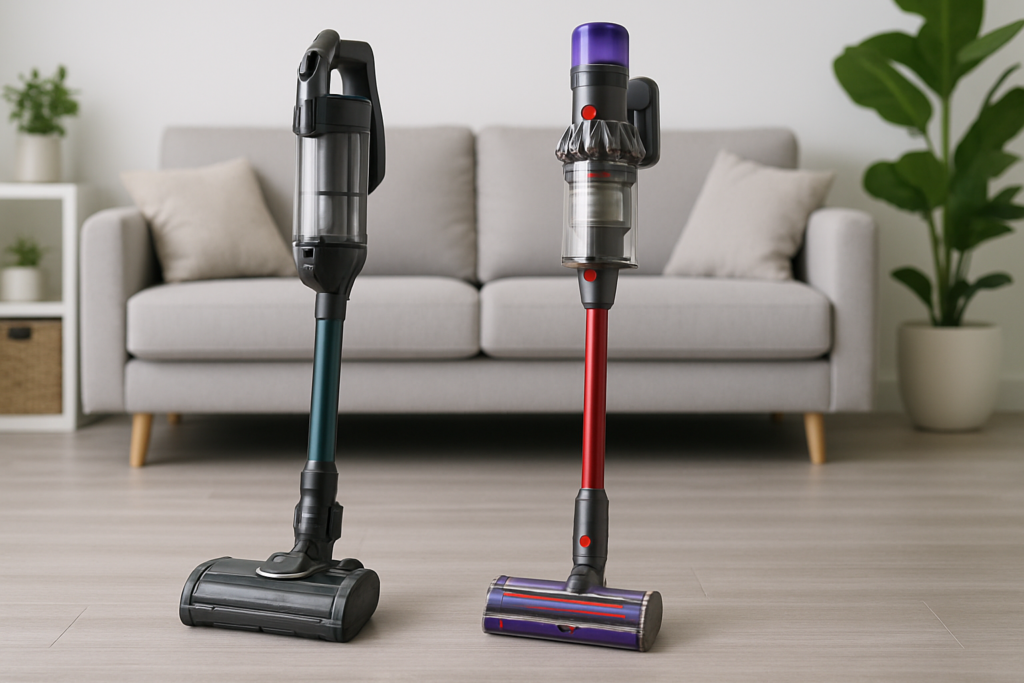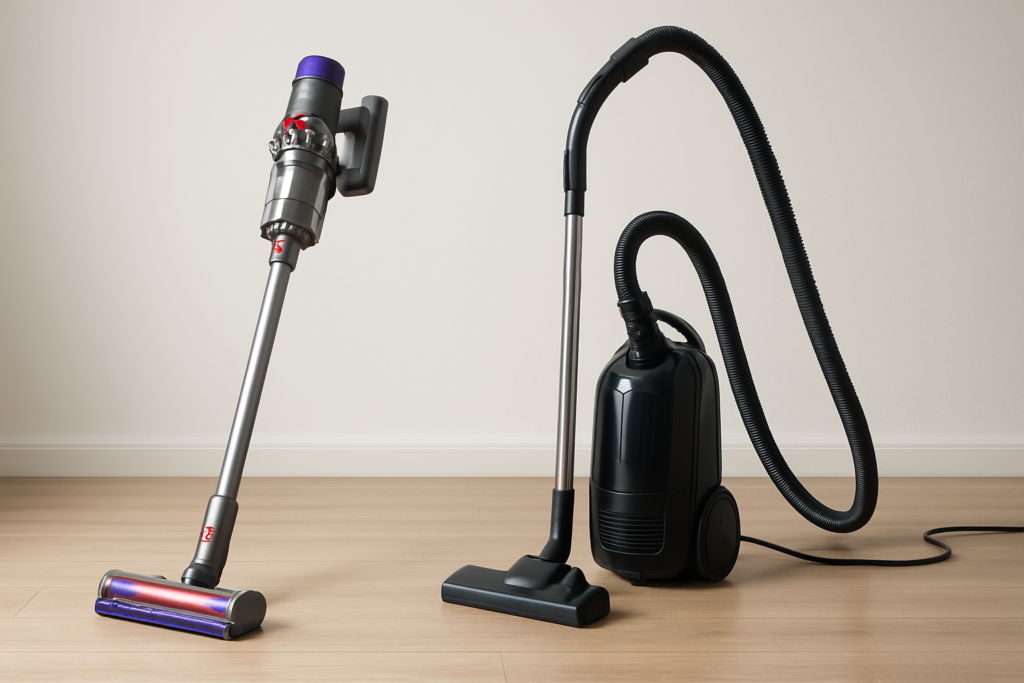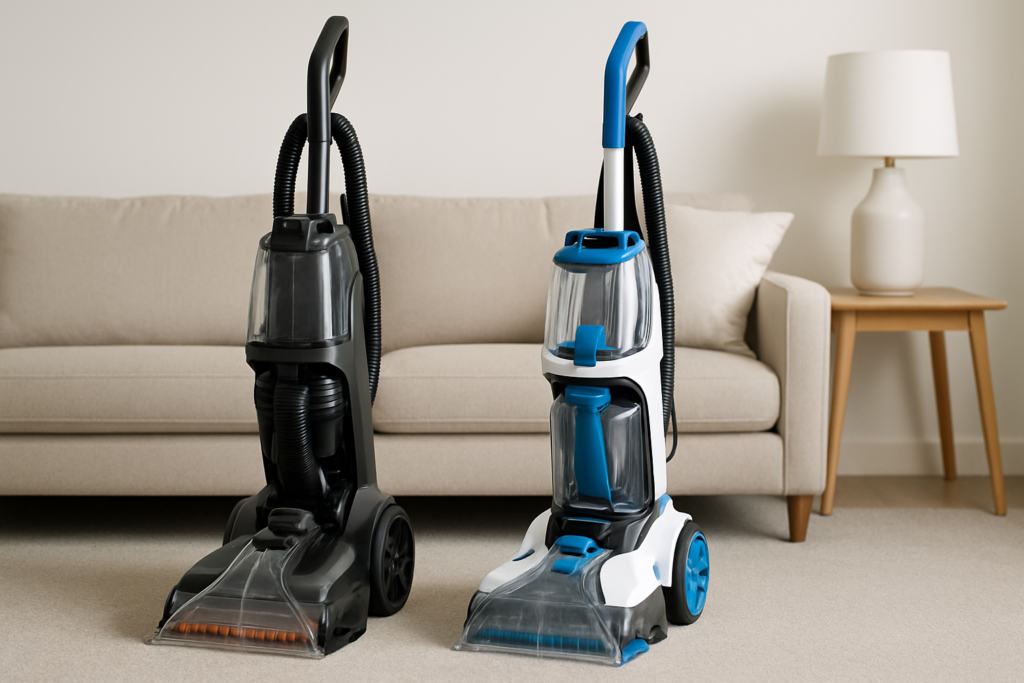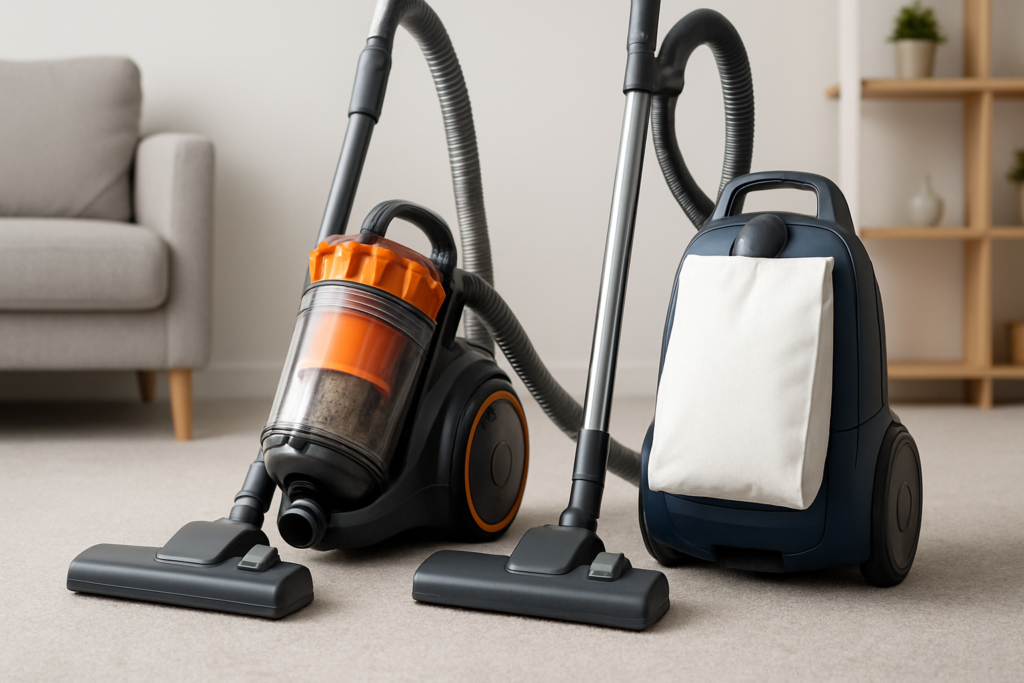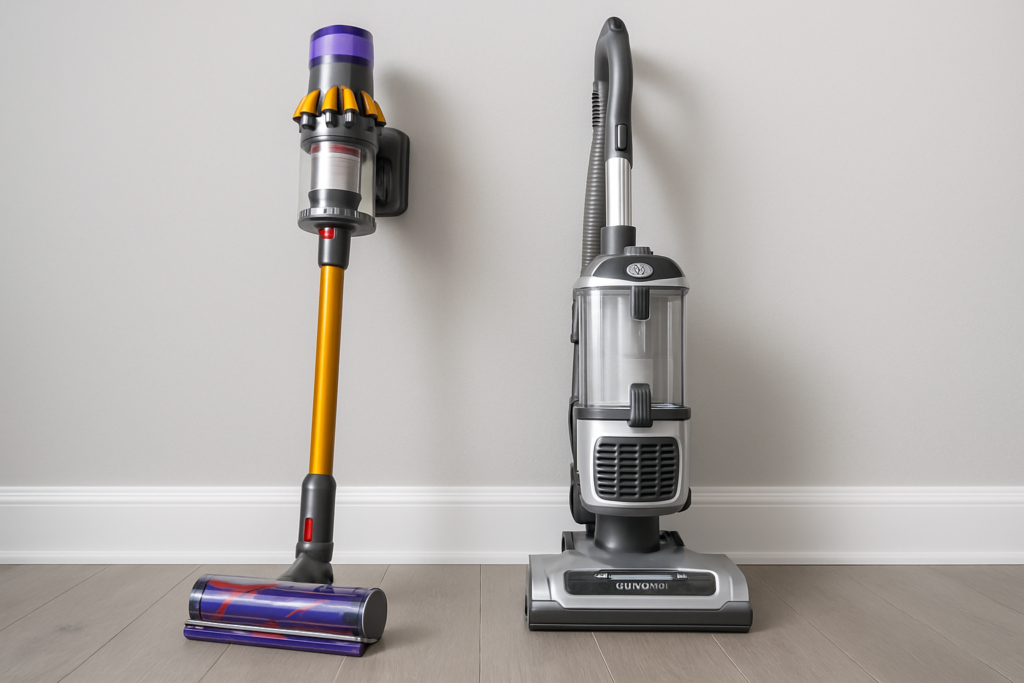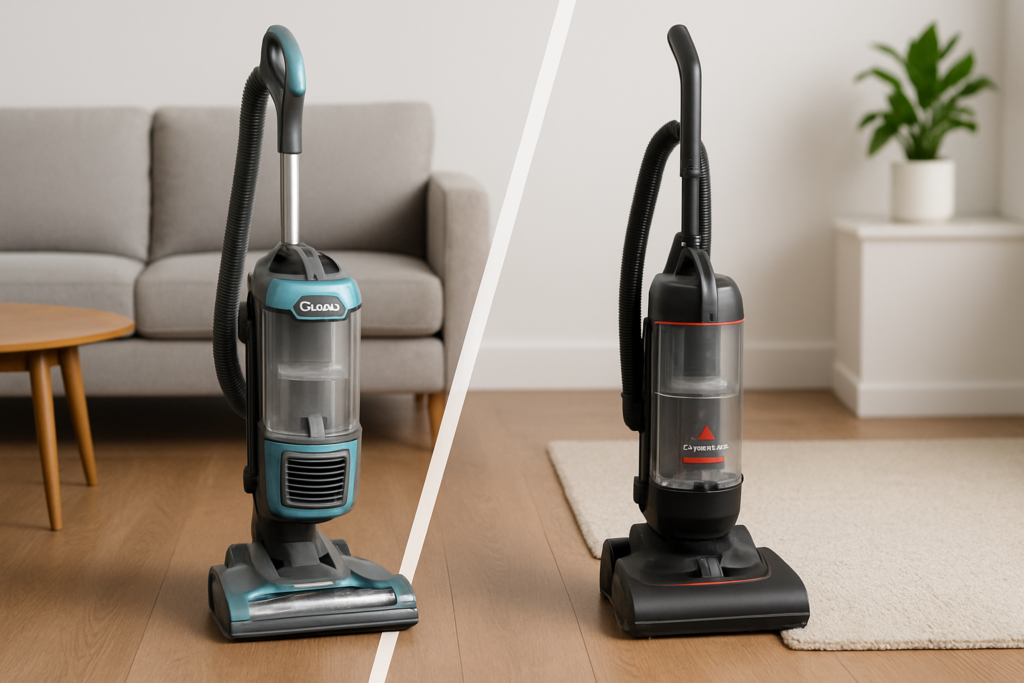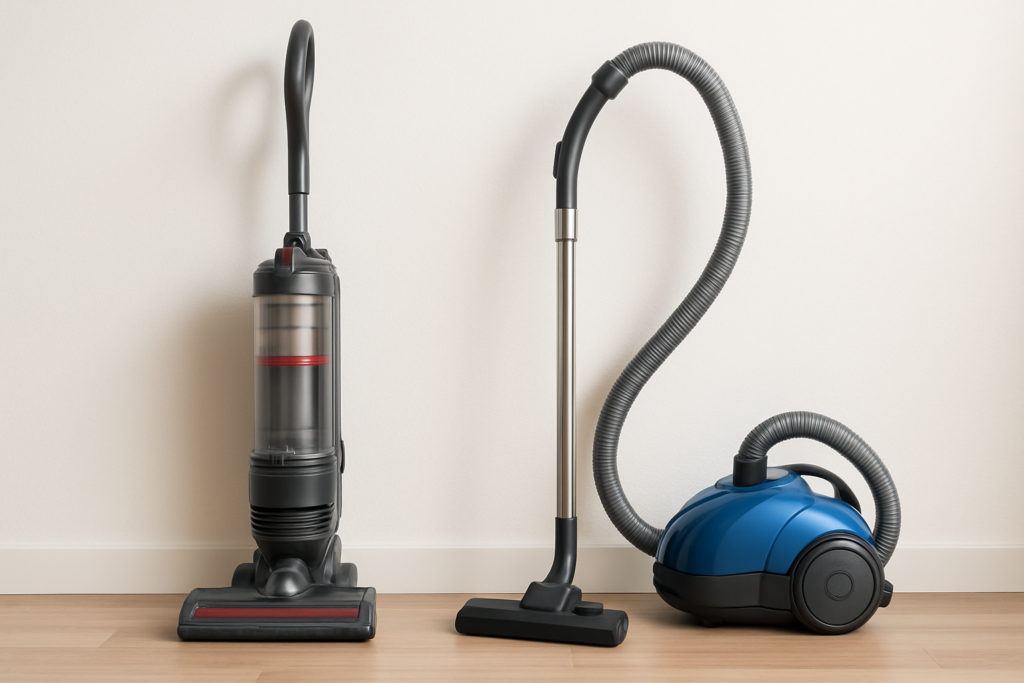
You’re standing in the vacuum aisle, staring at two very different machines. On one side, the familiar upright vacuum towers above the competition with its all-in-one design. On the other, a sleek canister vacuum sits low to the ground, connected to its cleaning wand by a flexible hose. Both promise to keep your home spotless, but they couldn’t be more different in how they approach the job.
This choice matters more than you might think. The vacuum you pick will influence how often you actually clean, how thoroughly you can reach every corner of your home, and whether vacuuming feels like a workout or a simple chore. Your floors, furniture, and back will all have opinions about this decision.
Let’s break down exactly what sets these two vacuum styles apart and help you figure out which one deserves a spot in your cleaning closet.
Design and Build: Two Different Philosophies
Upright vacuums put everything in one vertical package. The motor, dirt container, and cleaning head all stack together in a tower that you push around your floors. This design dates back decades and remains popular because it’s intuitive. You plug it in, flip the switch, and start pushing.
Canister vacuums split the workload between two components. The main body houses the motor and collection system, while a separate cleaning head connects via a flexible hose. You pull the canister behind you as you clean, similar to walking a well-behaved dog.
Each approach creates distinct advantages and limitations that ripple through every aspect of the cleaning experience.
Maneuverability: Where Flexibility Meets Function
Canister vacuums excel at getting into tight spaces. That flexible hose lets you vacuum under furniture without moving it, clean stairs without carrying the entire machine, and reach ceiling fans without a ladder. The low-profile cleaning head slides under beds and couches with ease.
Upright vacuums shine on open floor areas. You can cover a large living room or bedroom quickly, moving in smooth lines across the carpet. However, they struggle around furniture legs and in cramped spaces. Most uprights require you to tip them back to clean under furniture, which often means you’re just pushing debris further underneath.

Shark Navigator Lift-Away Professional NV356E
This hybrid model combines upright convenience with canister-like versatility by allowing the main unit to detach.
The weight distribution differs significantly between the two styles. With uprights, you’re pushing the entire machine’s weight across your floors. Canisters require you to pull the main unit while maneuvering a much lighter cleaning head.
Storage Solutions: Fitting Into Your Life
Upright vacuums typically require more vertical storage space but take up less floor area. Most models stand on their own in a closet corner. The challenge comes with height clearance, especially in closets with shelving.
Canister vacuums need more floor space but can fit under lower shelving. The hose and wand usually store on the canister body, though some models require separate storage for attachments. The compact canister design works well in apartments or homes with limited storage height.
Consider your storage situation carefully. A tall upright won’t help if your only storage space has a low ceiling, and a wide canister becomes problematic in narrow closets.
Cleaning Reach: Beyond the Obvious
This category heavily favors canister vacuums. The flexible hose extends your reach in every direction. You can clean curtains, upholstery, car interiors, and workshop spaces with equal ease. The separation between motor and cleaning head means you can carry just the lightweight wand upstairs while the canister stays below.
Upright vacuums typically include a detachable hose for above-floor cleaning, but it’s usually shorter and less flexible than canister hoses. You’re also limited by the cord length from the wall outlet to wherever you position the main unit.
Stair cleaning reveals the biggest difference. With a canister, you can leave the main unit at the bottom or top and use just the hose and wand. Upright users often end up carrying the entire machine from step to step or struggling with an awkward hose attachment.
Surface Performance: Where the Rubber Meets the Road
Upright vacuums traditionally dominate on carpets, especially deep-pile carpeting. The direct air path from cleaning head to motor creates strong suction, and the rotating brush (beater bar) agitates carpet fibers effectively. Many upright models include height adjustment to optimize performance across different carpet types.
Canister vacuums often outperform uprights on hard floors and area rugs. The flexible connection prevents the aggressive beater bar action that can scatter debris on hard surfaces. Many canister models include specialized hard floor attachments that seal better against smooth surfaces.
Miele Complete C3 Marin Canister Vacuum
German engineering delivers exceptional suction control and specialized attachments for different floor types.
For homes with mixed flooring, both styles can work, but canisters typically transition more smoothly between surface types. You can switch attachments based on the surface you’re cleaning, while uprights usually require you to turn the beater bar on and off.
Pet hair presents another consideration. Upright vacuums with strong beater bars excel at pulling pet hair from carpets. Canister vacuums with turbo brushes (small, powered brush attachments) can match this performance while offering better control for furniture cleaning.
Maintenance and Durability: The Long Game
Upright vacuums typically have fewer hose connections and joints, which means fewer potential failure points. However, the single-unit design makes some maintenance tasks more difficult. Clearing clogs often requires flipping the entire machine over.
Canister vacuums have more complex hose systems that can develop leaks or clogs over time. The flexible hose connection point receives constant stress during use. However, the separation between components makes many maintenance tasks easier. You can access the motor housing without dealing with the cleaning head.
Both styles require regular filter changes and dirt container emptying. Upright filters are usually more accessible, while canister filters may be buried deeper in the housing.
Replacement parts availability varies by manufacturer more than vacuum style. Research the brand’s reputation for long-term parts support before buying either type.
Physical Considerations: Your Body Matters
Users with mobility limitations need to evaluate these options carefully. Upright vacuums require more pushing and pulling force but keep you in an upright position. The single-unit design means less coordination between components.
Canister vacuums reduce the pushing effort since you’re only maneuvering a lightweight cleaning head. However, pulling the canister behind you requires different muscle groups and coordination. The flexible hose connection takes practice to manage smoothly.
Back problems often favor canister vacuums because you can maintain better posture while cleaning. The ability to clean at different angles without bending over reduces strain. Upright users frequently find themselves hunched over to reach certain areas.
Bissell Crosswave Pet Pro All in One Wet Dry Vacuum
While technically an upright, this model’s lighter weight and multi-surface capability make it easier to handle for users with mobility concerns.
Shoulder and arm strength comes into play differently with each style. Uprights require more pushing strength but less overhead reaching. Canisters demand more arm coordination but reduce the overall physical effort.
Making the Right Choice: Practical Decision Points
Your home’s layout should heavily influence this decision. Homes with mostly open floor plans and wall-to-wall carpeting favor upright vacuums. Houses with multiple levels, lots of furniture, or primarily hard floors benefit from canister flexibility.
Consider your cleaning style too. Do you prefer to vacuum quickly in straight lines, or do you like to thoroughly clean around and under furniture? Quick cleaners often prefer uprights, while detail-oriented users gravitate toward canisters.
Storage space, physical capabilities, and floor types all deserve consideration. Make a list of your priorities and see which style addresses more of your key concerns.
Budget plays a role, but both categories include options across all price ranges. Focus on features and performance rather than vacuum style when setting your budget parameters.
Frequently Asked Questions
Do canister vacuums have less suction than uprights?
Not necessarily. Suction power depends on motor design and airflow efficiency, not vacuum style. Many high-end canister vacuums actually provide stronger suction than budget uprights. The flexible hose in canisters can reduce some airflow, but quality models compensate with more powerful motors.
Are upright vacuums better for pet hair?
Uprights traditionally excel at carpet-embedded pet hair due to their aggressive beater bars. However, canister vacuums with turbo brush attachments can match this performance while offering superior pet hair removal from furniture and tight spaces. The best choice depends on where your pets spend most of their time.
Which type lasts longer?
Durability varies more by brand and build quality than vacuum style. Uprights have fewer connection points but put more stress on internal components. Canisters have more complex hose systems but often feature more durable motor housings. Focus on warranty length and brand reputation rather than vacuum type.
Can I get good results with either type on mixed flooring?
Yes, but with different approaches. Modern uprights include beater bar controls and often come with hard floor attachments. Quality canisters include multiple brush heads for different surfaces. Canisters typically transition more smoothly between floor types, while uprights require more manual adjustment but can be faster on large carpeted areas.
This article contains affiliate links. We may earn a small commission at no extra cost to you.