You’re cooking dinner, steam is rising from the stove, and you notice water pooling around your range hood. Or maybe you’ve spotted moisture dripping from the underside, or worse, water damage on your ceiling. A range hood that won’t drain properly is more than just annoying. It can lead to serious problems like mold growth, electrical hazards, and damage to your kitchen cabinets.
Most range hood drainage issues come down to four main culprits: clogged condensate lines, malfunctioning pumps, dirty filters that prevent proper airflow, or improper installation. The good news is that you can fix most of these problems yourself without calling in a professional. Let’s walk through exactly what’s causing your drainage problem and how to get it working again.
Understanding How Range Hood Drainage Works
Not all range hoods need drainage systems, but if yours does, it’s likely because you have a recirculating or ductless model that produces condensation. When hot, moist air hits the cold surfaces inside your hood, it condenses into water droplets. This moisture needs somewhere to go.
Some higher-end range hoods include built-in condensate collection systems with small pumps that move water away from the unit. Others rely on gravity drainage through tubing that connects to your home’s drain system. External venting range hoods typically don’t have this issue since moisture gets pushed outside.
The drainage system usually consists of a collection tray or pan, a small condensate pump (if applicable), plastic tubing, and a connection point to your sink drain or another waste line. When any part of this chain fails, you end up with standing water or leaks.
Check for Clogged Drain Lines First
The most common culprit behind drainage problems is a blocked condensate line. Over time, grease, dust, and mineral deposits build up inside the tubing and restrict water flow. This is especially common if you cook frequently or live in an area with hard water.
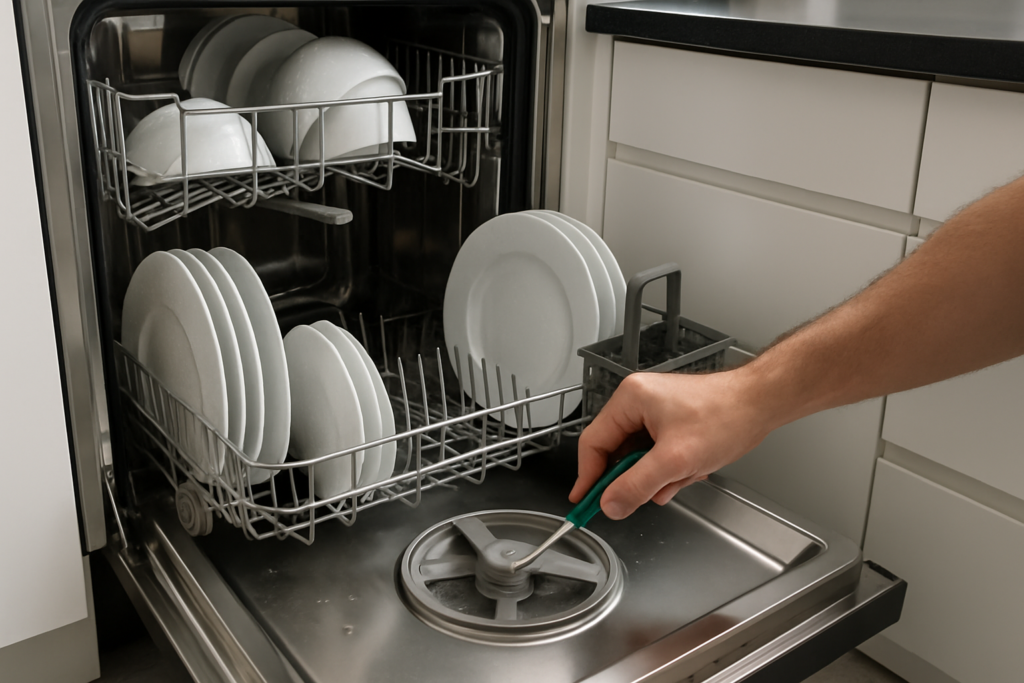
Start by locating your drain line. It’s usually a clear or white plastic tube about 1/4 to 3/8 inch in diameter that runs from the range hood to a drain connection. Disconnect it from both ends (you might need a bucket to catch any trapped water). Hold it up to a light source to see if you can spot any blockages.
To clear a clogged line, try flushing it with hot water first. If that doesn’t work, use a small bottle brush or pipe cleaner to physically remove the buildup. For stubborn clogs, a mixture of white vinegar and water can dissolve mineral deposits. Let it soak for 30 minutes before flushing again.
While you have the line disconnected, check the connection points too. The drain pan outlet and the connection to your main drain can both accumulate gunk that restricts flow. Clean these thoroughly with an old toothbrush and warm soapy water.

Drain Line Cleaning Brush
A flexible brush designed for small diameter tubing makes this job much easier.
Inspect and Test the Condensate Pump
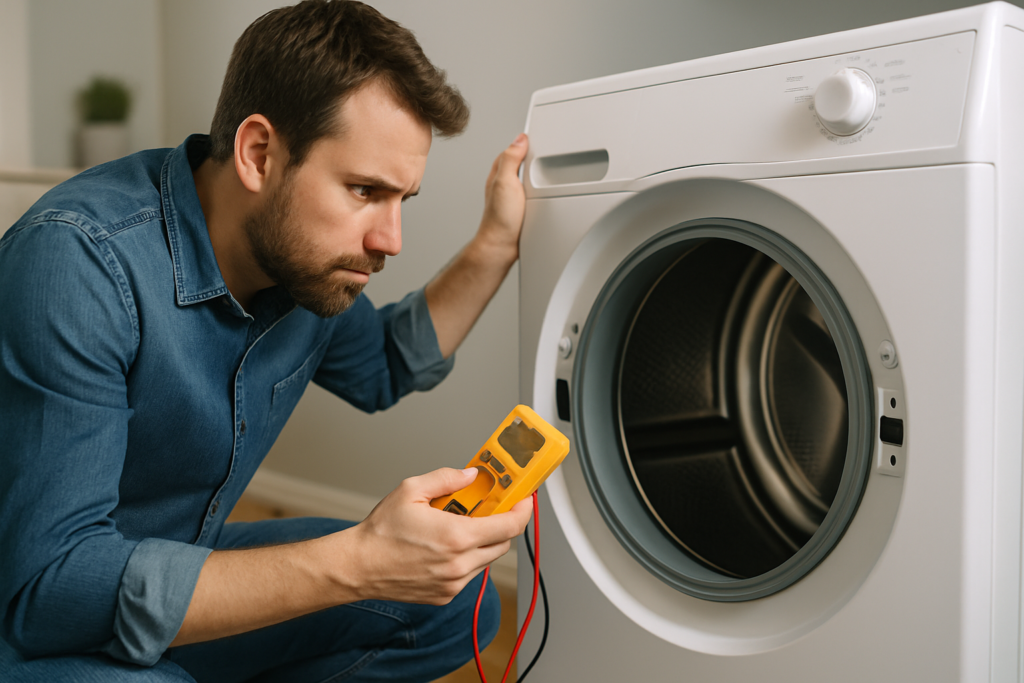
If your range hood has a condensate pump, it could be the source of your drainage problems. These small pumps are designed to move water upward or horizontally when gravity drainage isn’t possible. They can fail due to age, debris, or electrical issues.
First, locate the pump. It’s typically a small rectangular unit attached to or near the range hood with the drain line connected to it. Listen carefully when your range hood is running. You should hear a faint humming or clicking when the pump activates. If you don’t hear anything, the pump might not be getting power or could be completely dead.
Check the electrical connection to make sure the pump is receiving power. Many condensate pumps have a float switch that activates when water reaches a certain level. Sometimes this switch gets stuck in the off position due to debris or scale buildup. Gently move the float up and down to see if it’s moving freely.
Test the pump by pouring water into the collection reservoir. The pump should activate and move the water through the drain line. If water accumulates without the pump turning on, you’ve found your problem. You can try cleaning the pump mechanism, but often replacement is the better option since these pumps aren’t expensive and wear out over time.
Clean or Replace Your Grease Filters
This might seem unrelated to drainage, but dirty filters can actually cause or worsen moisture problems. When your grease filters are clogged, they restrict airflow through the hood. This reduced airflow means less efficient removal of steam and cooking moisture, leading to more condensation inside the unit.
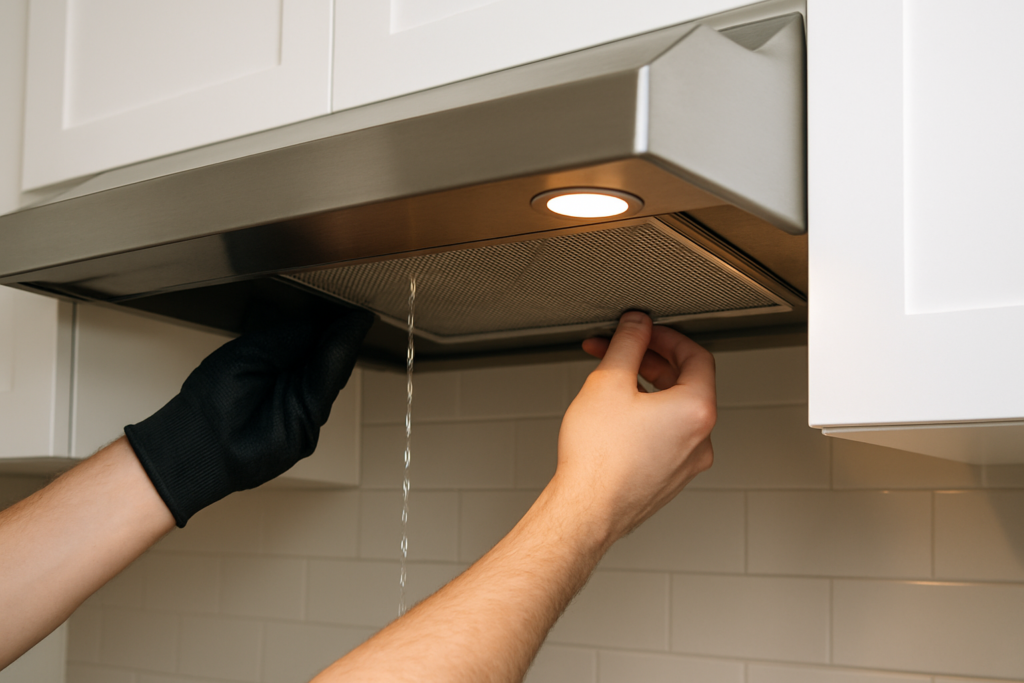
Remove your filters and hold them up to the light. If you can barely see through them, they need cleaning. Metal mesh filters can go in your dishwasher or be soaked in hot water with degreasing dish soap. For really grimy filters, make a paste with baking soda and water, scrub them down, then rinse thoroughly.
Charcoal or carbon filters in recirculating hoods can’t be cleaned and need replacement every 3-6 months depending on use. These filters trap odors and some moisture, and when they’re saturated, they can’t do their job effectively. This forces moisture to condense elsewhere in the system.

Range Hood Filters
Replacement filters designed for your specific hood model will ensure proper fit and airflow.
Make filter maintenance part of your regular kitchen cleaning routine. Monthly cleaning for heavy cookers, or every 2-3 months for light use, will prevent buildup that leads to drainage issues down the line.
Fix Improper Slope or Installation Issues
Sometimes the problem isn’t a clog or broken pump but rather how the drain line is installed. Condensate drain lines need to slope downward continuously from the hood to the drain connection. Even a small section that runs uphill can trap water and cause backups.
Trace your entire drain line looking for any spots where the tubing sags, loops, or runs upward. The ideal slope is about 1/4 inch per foot of run. You might need to reposition mounting clips or add additional support to maintain proper drainage angle.
Check that the drain line isn’t kinked or pinched anywhere. This commonly happens where the line passes through cabinets or tight spaces. Even a partial kink can significantly reduce flow and cause water to back up into your hood.
Another installation issue to watch for is an air gap problem. Most plumbing codes require an air gap when connecting appliance drains to prevent wastewater from backing up into the appliance. If your range hood drain connects directly to a sink tailpiece or disposal without an air gap, sewer gases or water could potentially enter your hood system. Install a proper air gap fitting or high loop in the drain line to prevent this.
Address Water Quality and Mineral Buildup
Hard water can wreak havoc on condensate drainage systems over time. The minerals in hard water leave behind scale deposits that narrow drain passages and can eventually cause complete blockages. This is particularly problematic in areas with very hard water.
You’ll recognize mineral buildup by white, chalky deposits inside the drain pan, on the pump components, or in the tubing. Regular cleaning with white vinegar can dissolve these deposits before they become serious problems. Pour vinegar into the drain pan monthly and let it sit for an hour before rinsing with water.
For severe mineral buildup, you might need a stronger descaling solution. Commercial descaling products designed for coffee makers and appliances work well for range hood drainage systems too. Always follow the manufacturer’s instructions and rinse thoroughly afterward.
Consider installing an inline water filter if your area has particularly hard water and you find yourself constantly dealing with scale. While range hoods don’t use water directly, the condensation that forms comes from moisture in your cooking, and reducing mineral content in your overall environment can help.
When to Replace Components vs. The Entire Unit
After troubleshooting, you need to decide whether to repair or replace. Condensate pumps typically last 3-5 years with regular use. Replacement pumps are relatively inexpensive and easy to install, making this a worthwhile repair for an otherwise functional hood.
Drain tubing should be replaced if it’s cracked, brittle, or has permanent kinks. Use high-quality vinyl or PVC tubing rated for condensate drainage. Cheap tubing can collapse or crack over time, leading to recurring problems.
If your range hood is older than 10-15 years and experiencing drainage issues along with other problems like poor suction, loud operation, or electrical issues, replacement might make more sense than repairs. Modern range hoods are much more energy-efficient and often have better designed drainage systems.

Condensate Pump Replacement
Universal condensate pumps work with most range hoods and are simple to install.
Calculate the cost of parts and your time against the price of a new unit. Sometimes spending a bit more for a new hood with a warranty beats throwing money at repairs for an aging appliance.
Preventive Maintenance to Avoid Future Problems
Once you’ve fixed your drainage issue, keep it from happening again with regular maintenance. Clean your grease filters monthly and replace charcoal filters according to the manufacturer’s schedule. This simple step prevents many downstream problems.
Every few months, pour a cup of water mixed with a tablespoon of vinegar into your drain pan to flush the system and prevent mineral buildup. This takes 30 seconds and can save you from major headaches later.
Inspect the drain line quarterly. Look for kinks, sags, or signs of deterioration. Catching small problems early prevents bigger failures. Check that mounting clips are secure and the line maintains proper slope throughout its run.
Keep the area around your range hood clean and dry. Wipe down the interior surfaces after heavy cooking sessions to remove grease before it builds up. Less grease means less material that can work its way into your drainage system.
Document your maintenance in a simple notebook or phone app. Note when you clean filters, flush the drain line, or perform other tasks. This helps you stay on schedule and provides useful information if you need professional service later.
Frequently Asked Questions
Why does water drip from my range hood only when cooking certain foods?
Some foods produce more steam and moisture than others. Boiling pasta, steaming vegetables, or cooking with lids on generates significantly more condensation than dry-heat cooking like grilling or sautéing. If your drainage system is borderline clogged or your pump is weak, it might keep up with light moisture but overflow during heavy steam production. This is actually a useful diagnostic clue that your system needs cleaning or repair before it fails completely.
Can I just disconnect the drain line and let water evaporate instead?
This is a bad idea for several reasons. First, standing water in the drain pan becomes a breeding ground for mold and bacteria. Second, if the pan overflows, you’ll have water damage to deal with. Third, the moisture and humidity can damage electrical components in your range hood. Always maintain a functioning drainage system rather than trying to work around it.
How do I know if my range hood even has a drainage system?
Not all range hoods need drainage. Ducted models that vent directly outside typically don’t have condensate drainage since moisture gets exhausted outdoors. Recirculating or ductless models are more likely to have drainage systems. Check your owner’s manual or look for a small plastic tube running from the hood to a drain connection. If you see a drain pan or condensate pump, you definitely have a drainage system that needs maintenance.
What should I do if water is backing up into my range hood from the drain line?
This indicates a blockage in your main drain line or a problem with your plumbing vent system. First, check if other drains in your kitchen are slow or backing up, which points to a larger plumbing issue. Make sure your range hood drain line has a proper air gap or high loop to prevent this backflow. You might need a plumber to clear your main drain or address venting problems. Installing a backflow preventer or check valve in the drain line can also help prevent this issue.
This article contains affiliate links. We may earn a small commission at no extra cost to you.