You’ve probably grabbed whatever cloth was nearby for cleaning without giving it much thought. But the type of microfiber cloth you use can make the difference between actually cleaning surfaces and just pushing dirt around. After years of testing different cleaning cloths, I’ve learned that not all microfibers are created equal.
The right microfiber cloth will pick up more dirt, last longer, and save you both time and money. Let’s break down what you need to know to choose the best cleaning cloths for your home.
Understanding GSM Ratings
GSM stands for “grams per square meter” and tells you how thick and absorbent your microfiber cloth will be. This number matters more than you might expect.
For general cleaning, look for cloths with a GSM between 300-400. These work well for dusting furniture, wiping counters, and everyday tasks. You’ll find 300 GSM microfiber cloths handle most household cleaning jobs effectively.
Heavy-duty cleaning requires cloths with 400-600 GSM. These thicker cloths absorb more liquid and tackle tougher messes. I use high GSM cloths for bathroom cleaning and kitchen spills where absorption matters most.
E-Cloth General Purpose Cloth
Premium microfiber that works with just water and lasts for years
Ultra-lightweight cloths under 200 GSM work best for delicate surfaces like phone screens or eyeglasses. They won’t scratch but also won’t clean heavily soiled areas effectively.
The Color Coding System That Prevents Cross-Contamination
Using the same cloth in your bathroom and kitchen spreads germs throughout your home. Professional cleaners solve this with color coding, and you should too.
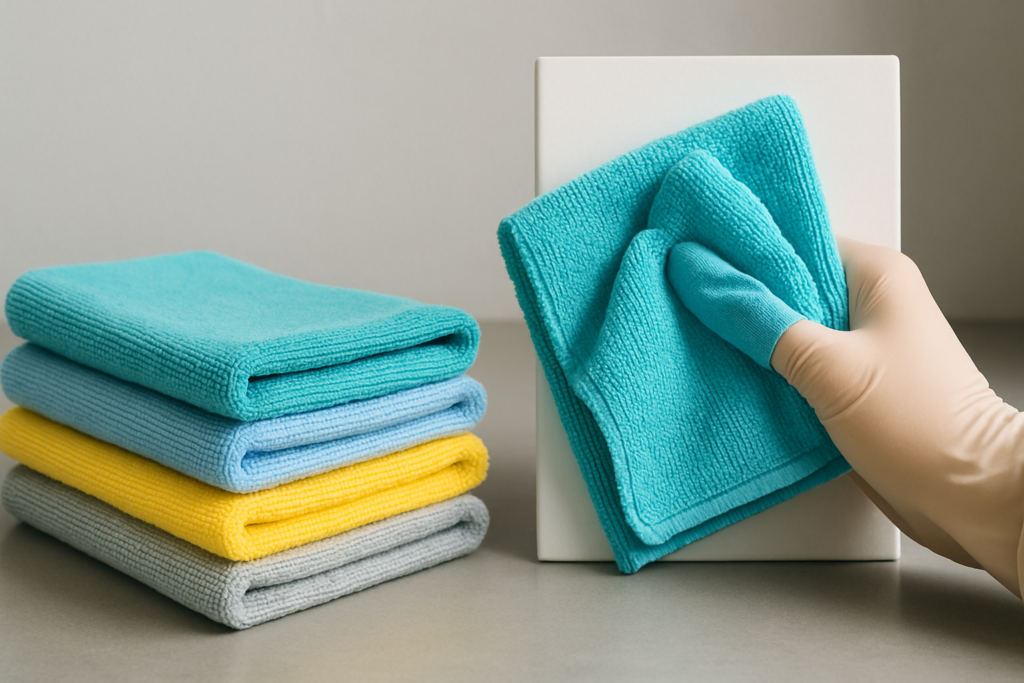
Assign specific colors to different areas: blue for bathrooms, yellow for kitchens, green for general cleaning, and red for high-contamination areas. This simple system prevents you from accidentally using a toilet-cleaning cloth on your dining table.
Many color-coded microfiber cloth sets come pre-organized with enough variety for proper separation. Buy enough cloths so you’re not tempted to reuse dirty ones between areas.
Washing and Care Instructions
Most people ruin their microfiber cloths in the washing machine. Here’s how to keep them effective for years instead of months.
Wash microfiber cloths separately from other laundry. Cotton towels and clothing leave lint that clogs the microfiber’s cleaning ability. Use warm water (not hot) and regular detergent without fabric softener.
Fabric softener coats microfiber strands and destroys their dirt-grabbing properties. Skip the dryer sheets too. Air drying works best, but low heat in the dryer won’t hurt quality cloths.
Norwex Microfiber Cleaner
Specialized detergent that keeps microfiber cloths performing like new
For heavily soiled cloths, rinse them thoroughly before throwing them in the washer. Dried-on grime becomes harder to remove and can permanently stain the cloth.
When to Replace Your Cleaning Cloths
Quality microfiber cloths should last 200-500 wash cycles with proper care. Replace them when they start leaving lint, stop picking up dust effectively, or develop a permanent odor you can’t wash out.
Cloths that begin shedding fibers have reached the end of their useful life. Using worn-out microfiber is worse than using paper towels because the damaged fibers can scratch surfaces.
Microfiber vs Paper Towels: The Real Comparison
Paper towels seem convenient, but they’re expensive and less effective than good microfiber cloths. A single quality microfiber cloth replaces hundreds of paper towels over its lifetime.
Microfiber picks up bacteria and small particles that paper towels leave behind. Studies show microfiber removes up to 99% of bacteria with just water, while paper towels only remove about 68% even with cleaning chemicals.
The environmental impact speaks for itself. One reusable microfiber cloth prevents thousands of paper towels from ending up in landfills.
Frequently Asked Questions
Can you clean everything with just water and microfiber?
Microfiber works surprisingly well with just water for most cleaning tasks. The cloth’s structure traps dirt and bacteria without chemicals. However, you’ll still need appropriate cleaners for sanitizing, removing sticky residues, or tackling heavy grease buildup.
Why do my microfiber cloths smell bad after washing?
Smelly cloths usually mean bacterial growth from insufficient cleaning or drying. Wash them in hot water with a cup of white vinegar, then run a normal wash cycle. Make sure cloths dry completely before storing them, and never leave wet cloths sitting around.
This article contains affiliate links. We may earn a small commission at no extra cost to you.