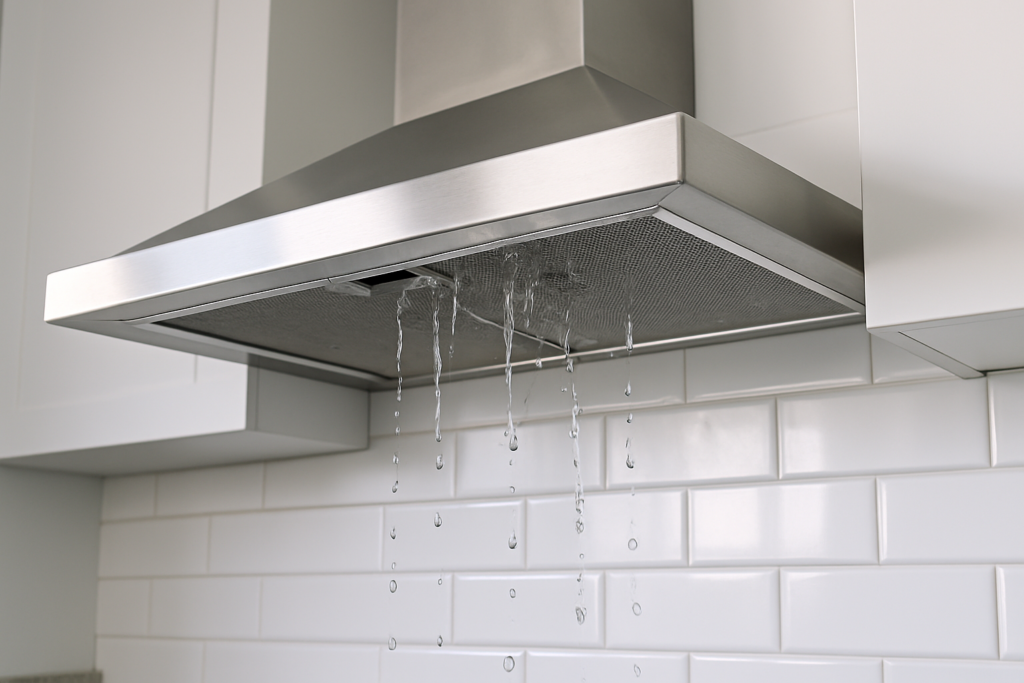
There’s nothing quite like discovering a puddle of water under your range hood. You might think it’s condensation at first, but if it keeps happening, you’ve got a real problem on your hands. The good news is that most range hood leaks are fixable without calling in a pro, once you know what’s causing them.
Range hood leaks typically come from one of four sources: condensation buildup, damaged ductwork, faulty seals and gaskets, or blocked drain systems. Let’s walk through each cause and show you exactly how to track down and fix your leak.
Understanding Condensation vs. Actual Leaks
Before you start tearing things apart, make sure you’re dealing with an actual leak and not just condensation. When hot, moisture-laden air from cooking hits the cold metal surfaces inside your range hood, it condenses into water droplets. This is normal to some degree, but excessive condensation points to a ventilation problem.
Run your range hood for 10 minutes while cooking something steamy, like boiling pasta. Watch where the water appears. If it’s dripping from the inside surfaces of the hood itself, you’re probably dealing with condensation. If water is coming from seams, joints, or collecting in specific spots away from the cooking surface, you’ve got a leak.
Condensation issues often happen in winter when the temperature difference between your kitchen and the outside air is extreme. The solution here isn’t a repair but better insulation on your ductwork. Wrapping your ducts with duct insulation wrap can dramatically reduce condensation buildup.
Checking Your Ductwork and Connections
Ductwork problems are one of the most common causes of range hood leaks. Over time, the connections between duct sections can loosen, seals can degrade, and the ducts themselves can develop holes or cracks.
Start by turning on your range hood and carefully feeling around all the duct connections while it’s running. You’ll feel air escaping from any gaps. Pay special attention to where the hood connects to the first section of duct, and anywhere the duct changes direction or connects to another section.
Check the exterior vent cap too. If it’s damaged or not sealing properly, rain and snow can enter your ductwork and travel back to your range hood. This is particularly common after severe weather or if birds have been nesting near the vent.

Aluminum Foil Duct Tape
Professional-grade tape specifically designed for sealing duct joints and preventing moisture leaks
Regular duct tape won’t cut it for this job. You need actual foil duct tape or mastic sealant rated for HVAC applications. These materials withstand temperature changes and moisture far better than standard tape.
Inspecting Seals and Gaskets
Your range hood has multiple seals and gaskets that prevent water intrusion. The most critical is the seal where the hood attaches to the ductwork. This gasket can harden and crack over time, especially if you have a gas range that produces more heat.
Remove the filters from your range hood and look up into the unit with a flashlight. You should be able to see the connection point between the hood and the duct. Look for any visible gaps, cracks, or areas where the seal has pulled away.
Many range hoods also have a grease trap or baffle system that includes gaskets. These can deteriorate from constant exposure to heat, grease, and cleaning chemicals. While you’ve got the filters out, inspect all visible gaskets and seals for signs of wear.
Replacement gaskets are usually model-specific, so you’ll need your range hood’s make and model number. Check the manufacturer’s website first, but you can often find compatible range hood gaskets that fit multiple models.
Dealing with Drain System Issues
Some range hoods, particularly commercial-style or high-powered units, have built-in drain systems to handle condensation. These systems include a small collection cup or pan with a drain line that should empty outside or into your plumbing.
These drain lines can become clogged with grease, dust, and debris. When that happens, water backs up and overflows, creating your leak. Locate the drain pan (usually at the lowest point inside the hood) and check if it’s full of water or gunk.
Clean out the drain pan and flush the drain line with hot water mixed with a degreasing dish soap. A turkey baster or small funnel works well for this. For stubborn clogs, a pipe cleaner or small bottle brush can help break up the blockage.

Range Hood Grease Filters
Keeping filters clean prevents grease buildup that can clog drain systems and cause leaks
Prevention is key here. Clean your range hood filters monthly (more often if you cook frequently), and give the entire unit a deep clean every few months. This prevents the grease buildup that leads to most drain system clogs.
When to Replace Instead of Repair
Sometimes a range hood is beyond simple fixes. If your unit is more than 15 years old and showing multiple problems, replacement might make more sense than continuing to patch issues.
Look for signs of serious corrosion, especially around the motor housing or electrical components. Water and electricity don’t mix, and a range hood with water damage near electrical parts is a safety hazard.
Modern range hoods are also significantly more efficient than older models. A new unit will move more air, run quieter, and use less energy. Plus, you’ll get updated features like LED lighting and better grease filtration that actually prevent many of the problems that cause leaks in the first place.
Frequently Asked Questions
Why does my range hood only leak when it rains?
This almost certainly means your exterior vent cap is damaged or improperly installed. The cap should have a damper that closes when the hood isn’t running, preventing rain from entering. Check that the damper moves freely and closes completely. Also inspect the caulking around the vent where it penetrates your exterior wall. Missing or cracked caulk allows water to seep in around the ductwork.
Can I use silicone caulk to seal duct joints?
While silicone caulk is waterproof, it’s not the best choice for duct joints. Silicone doesn’t adhere well to dusty or greasy surfaces (which are common in range hood ducts), and it can’t withstand the vibration from the hood’s fan. Use aluminum foil tape or mastic sealant instead. These products are specifically formulated for HVAC applications and create a more reliable seal.
How often should I replace my range hood filters to prevent leaks?
You shouldn’t need to replace mesh or baffle filters unless they’re damaged. Instead, clean them monthly by soaking in hot water with degreasing dish soap or running them through the dishwasher. Charcoal filters in recirculating hoods should be replaced every 3-6 months depending on use. Clogged filters force moisture-laden air to find other paths, which can lead to condensation in areas that weren’t designed to handle it, eventually causing leaks.
This article contains affiliate links. We may earn a small commission at no extra cost to you.