There’s nothing quite like the jolt of a loud bang or grinding noise coming from your freezer at 2 AM. You’re probably wondering if it’s about to die on you, taking your frozen food stash with it. While some noises are perfectly normal, others signal that a component is failing and needs attention.
The good news is that most freezer noises have identifiable causes, and many of them you can diagnose and fix yourself. Let’s break down what’s making all that racket and what you can do about it.
The Evaporator Fan: That Loud Whirring or Squealing Sound
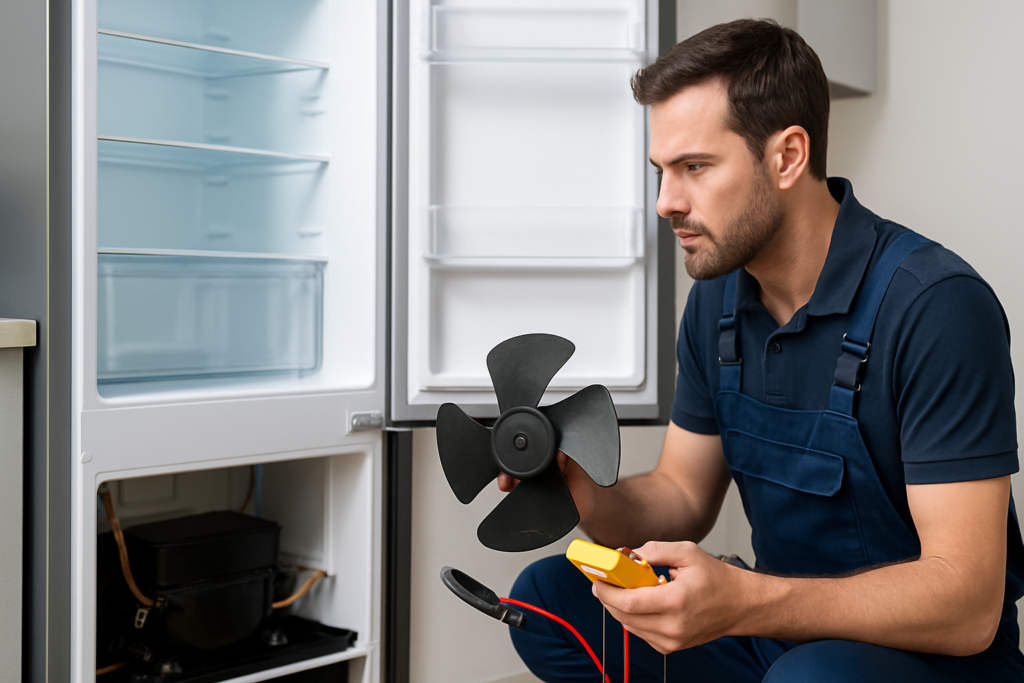
The evaporator fan circulates cold air throughout your freezer. When it starts making noise, you’ll typically hear a loud whirring, squealing, or grinding sound that gets louder over time. This fan is located behind the back panel inside your freezer compartment.
The most common culprit is ice buildup on the fan blades. When frost accumulates, the blades hit the ice with each rotation, creating that distinctive scraping sound. Sometimes the fan motor bearings wear out, especially in units over 5-7 years old, causing a high-pitched squeal.
To check if this is your problem, open the freezer door and listen. If the noise stops when you open the door, it’s almost certainly the evaporator fan. Most freezers have a door switch that stops the fan when you open it.
You can try defrosting your freezer completely to see if that resolves the issue. Unplug it, remove all food, and let it sit for 24 hours with the door open. If the noise returns after you plug it back in, you’ll need to replace the fan motor. You can find evaporator fan motors for most major brands, though you’ll need your model number to get the right match.

Freezer Evaporator Fan Motor
Essential replacement part when your fan motor bearings wear out or the motor fails completely
The Condenser Fan: Buzzing or Humming From Below
Unlike the evaporator fan, the condenser fan is located at the back or bottom of your freezer, near the compressor. This fan cools the compressor and condenser coils, and when it fails, you’ll hear buzzing, humming, or rattling sounds coming from underneath or behind the unit.
Dust and debris are the main enemies here. Over years of operation, lint, pet hair, and dust bunnies accumulate on the fan blades and motor. This makes the motor work harder and creates vibration noise. The fan blades can also become loose or bent, hitting the housing with each rotation.
Pull your freezer away from the wall (unplug it first) and remove the back panel or bottom grille to access the condenser fan. Clean everything thoroughly with a vacuum and a brush. Check if the fan blade is loose on its shaft or if it wobbles when you spin it by hand.
If cleaning doesn’t solve the problem, the motor itself may be failing. Condenser fan motors typically last 8-12 years, so older units are prime candidates for replacement. A new condenser fan motor isn’t difficult to install if you’re comfortable with basic repairs.
The Compressor: Loud Clicking, Knocking, or Constant Running
The compressor is the heart of your freezer’s cooling system. It’s that black cylinder-shaped component at the back or bottom of the unit. When it’s working properly, you’ll hear a gentle hum that cycles on and off. When it’s failing, things get loud.
A clicking sound followed by silence usually means the compressor is trying to start but can’t. This often indicates a failed start relay or overload protector. These small components attach to the side of the compressor and cost much less to replace than the compressor itself. You can test them with a multimeter or simply replace them as a set since they’re inexpensive.

Refrigerator Compressor Start Relay Kit
Often solves clicking or startup problems without needing to replace the entire compressor
Loud knocking or banging from the compressor is more serious. This can indicate internal mechanical failure, loose mounting bolts, or worn compressor mounts. Check if the compressor is sitting firmly on its rubber mounting grommets. If those are cracked or missing, replacing them might quiet things down.
If the compressor itself has internal damage, you’re looking at a major repair that often costs as much as a new freezer. Get a professional opinion before committing to compressor replacement on units over 10 years old.
Water Inlet Valve and Ice Buildup Issues
If your freezer has an ice maker or water dispenser, the water inlet valve can create buzzing or humming sounds. This valve opens to allow water into the ice maker, and when it’s clogged with mineral deposits or failing, it vibrates loudly.
The valve is usually located at the back of the unit where the water line connects. You can try cleaning it, but these valves are inexpensive enough that replacement is often the better option. A faulty water inlet valve can also cause water hammer, creating banging sounds in your plumbing.
Ice buildup isn’t limited to the evaporator fan. When your door seal (gasket) fails, warm humid air enters the freezer and creates frost in places it shouldn’t be. This can cause various rattling and crackling sounds as ice forms and shifts. Test your door seal by closing the door on a dollar bill. If you can pull it out easily, the seal needs replacement.
Normal Sounds You Shouldn’t Worry About
Not every noise means trouble. Modern freezers make several sounds during normal operation that might seem alarming if you’re not expecting them.
A gurgling or bubbling sound is just refrigerant flowing through the cooling system. You’ll often hear this right after the compressor shuts off. Popping or cracking sounds happen when metal and plastic components expand and contract with temperature changes. These are completely normal.
The defrost cycle can also create noise. Most frost-free freezers run a defrost heater every 8-12 hours to melt accumulated ice. You might hear hissing, sizzling, or dripping sounds during this cycle. This is water dripping onto the defrost heater and evaporating.
A periodic humming that starts and stops is just the compressor cycling on and off to maintain temperature. This should happen several times per hour and is exactly what you want to hear.
When to Call a Professional
Some repairs are better left to technicians. If you suspect a refrigerant leak (you’ll notice warm temperatures and a chemical smell), call a professional immediately. Handling refrigerant requires EPA certification and specialized equipment.
Electrical issues beyond simple component replacement also warrant professional help. If you’re not comfortable using a multimeter or working around high-voltage components, don’t risk it. Compressor replacement decisions should involve a technician who can properly diagnose the problem and give you a cost comparison versus buying new.
For freezers still under warranty, attempting repairs yourself can void coverage. Check your warranty status before opening anything up.
Frequently Asked Questions
Why does my freezer make noise only at night?
Your freezer doesn’t actually get louder at night. You just notice the sounds more because ambient noise levels drop when your household is quiet. The compressor and fans run on the same cycle 24/7. However, if your freezer is in a room that gets warmer during the day and cooler at night, temperature fluctuations can cause more expansion/contraction sounds after the sun goes down.
How long should a freezer compressor last?
A quality compressor should last 12-20 years with proper maintenance. Budget freezer models might see compressor failure around the 8-10 year mark. Factors that shorten compressor life include dirty condenser coils (which make it work harder), frequent temperature fluctuations, and running in very hot environments like unventilated garages. Keeping your condenser coils clean can add years to your compressor’s life.
Can I still use my freezer if it’s making noise?
This depends entirely on what’s making the noise. If your food is staying frozen and temperatures are stable, you can usually continue using it while you order parts or schedule a repair. However, if you hear loud clicking without the compressor starting, or if temperatures are rising, you should move your food to another freezer immediately. A failing evaporator or condenser fan can lead to compressor overheating and complete system failure if ignored too long.
This article contains affiliate links. We may earn a small commission at no extra cost to you.