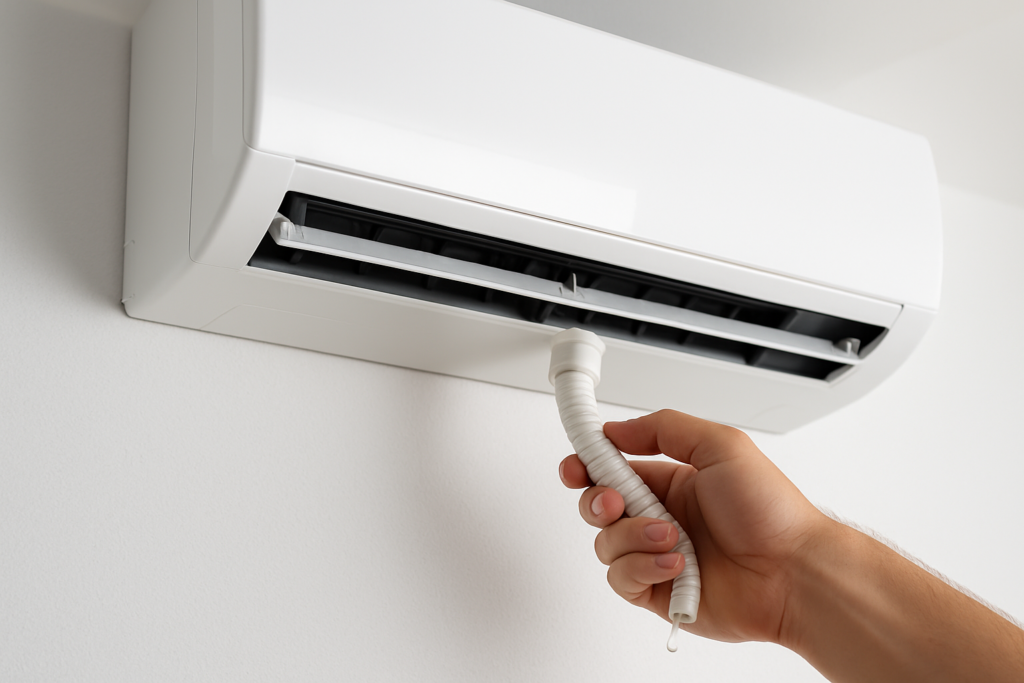
There’s nothing worse than walking into your home on a sweltering summer day and discovering a puddle of water around your air conditioner. When your AC isn’t draining properly, you’re not just dealing with a mess. You’re looking at potential water damage, reduced cooling efficiency, and possibly a complete system shutdown if you don’t address it quickly.
The good news is that most AC drainage problems are fixable without calling an expensive HVAC technician. Understanding why your condensate drain line gets clogged and knowing how to clear it can save you hundreds of dollars and keep your home comfortable all summer long.
Understanding Your AC’s Drainage System
Your air conditioner doesn’t just cool air. It pulls moisture out of the air as part of the cooling process. This condensation has to go somewhere, and that’s where your drainage system comes in.
The evaporator coil inside your AC unit gets cold when refrigerant passes through it. When warm, humid air from your home blows across this cold coil, moisture condenses on it just like water droplets form on a cold glass of water. This condensate drips into a drain pan, then flows through a drain line (usually PVC pipe) that carries it outside or to a floor drain.
On average, a typical residential AC system can produce 5 to 20 gallons of condensate per day during peak cooling season. That’s a lot of water that needs to drain properly, and when something interrupts that flow, you’ll know about it quickly.
The Most Common Culprit: A Clogged Drain Line
About 80% of AC drainage problems come down to one issue: a clogged condensate drain line. This small PVC pipe (usually 3/4 inch in diameter) runs from your indoor unit to the outside of your home, and it’s basically a perfect environment for algae, mold, and bacteria to grow.
Over time, this biological sludge builds up inside the pipe and creates a blockage. Dust, dirt, and debris from your home’s air can also accumulate in the drain pan and get washed into the line, making the clog worse.
You’ll know you have a clogged drain line if you see water pooling around your indoor unit, water stains on the ceiling near your air handler, or if your AC shuts off unexpectedly. Most modern systems have a float switch in the drain pan that cuts power to the unit when water levels get too high, preventing overflow damage.
How to Clear a Clogged Drain Line
First, turn off your AC at the thermostat and the circuit breaker. Locate the drain line access point, which is usually a T-shaped vent with a PVC cap near your indoor unit. Remove the cap and check for standing water, which confirms a blockage.
The simplest clearing method uses distilled white vinegar. Pour about a cup of vinegar into the access opening and let it sit for 30 minutes. The vinegar kills algae and dissolves minor clogs. After 30 minutes, flush the line with water to see if it drains freely.
For stubborn clogs, you’ll need a wet/dry shop vacuum. Go outside and find where your drain line exits (usually near your outdoor condenser unit). Remove any cap or screen, hold the vacuum hose tightly against the pipe opening, and run the vacuum for 2-3 minutes. This suction usually pulls out the clog.

Shop Vacuum for AC Drain Cleaning
A versatile tool that can pull out stubborn drain line clogs and has dozens of other home maintenance uses.
The Drain Pan Problem
Your AC has two drain pans. The primary pan sits directly under the evaporator coil and is permanently attached to the unit. The secondary (overflow) pan sits beneath the primary pan as a backup to catch water if the primary drain clogs.
These pans can crack or rust over time, especially the secondary pan which is often made of metal in older units. A cracked pan means water leaks out before it even reaches the drain line, creating puddles around your unit.
Inspect both pans by removing the access panel on your air handler. Look for visible cracks, rust holes, or corrosion. Metal pans can sometimes be patched temporarily with epoxy putty, but replacement is the better long-term solution. Plastic pans that crack need immediate replacement since they can’t be reliably repaired.
While you have the panel off, check that the drain pan is level. An improperly installed or shifted pan won’t drain correctly even if the drain line is clear. Water should flow naturally toward the drain opening by gravity.
When Your Condensate Pump Fails
Not all AC systems drain by gravity. If your air handler is in a basement or the drain line would have to run uphill to reach an exit point, your system probably uses a condensate pump to push water out.
These small pumps sit next to your air handler and automatically activate when water reaches a certain level in their reservoir. When a condensate pump fails, water backs up quickly because it has nowhere to go.
Listen for the pump motor when your AC is running. A working pump makes a soft humming sound every few minutes as it cycles. If you hear nothing, or if you hear humming but no water movement, the pump likely needs replacement.

AC Condensate Pump
Essential for installations where gravity drainage isn’t possible, and much easier to replace than you’d think.
Check the pump’s inlet screen for debris blockage. Algae buildup on this screen prevents water from entering the pump. Many pumps also have a check valve that prevents backflow, and this valve can stick closed. You can often clean these components and get the pump working again, but pumps are relatively affordable to replace if cleaning doesn’t work.
Air Filter Neglect Creates Drainage Issues
Here’s something most homeowners don’t realize: a dirty air filter can cause drainage problems. When your filter gets clogged with dust and debris, it restricts airflow across the evaporator coil.
Reduced airflow causes the coil to get colder than it should, which can lead to ice formation. When this ice melts (usually when the AC cycles off), it produces more water than the drain system can handle, causing overflow.
Check your filter monthly during cooling season and replace it when it looks dirty. Don’t wait for the standard 90-day replacement interval if you have pets, live in a dusty area, or run your AC constantly. A quality HVAC air filter improves both your air quality and system performance.
While you’re checking the filter, look at the evaporator coil itself. If you see ice buildup on the coil, you have an airflow or refrigerant problem that needs professional attention. Don’t just chip off the ice and hope for the best.
Low Refrigerant Causes the Same Ice Problem
Another cause of frozen coils and subsequent drainage overflow is low refrigerant. When your system doesn’t have enough refrigerant, the evaporator coil gets too cold and ices up just like it does with poor airflow.
You might notice your AC running constantly without cooling your home effectively, or you might hear hissing sounds near the refrigerant lines. Ice on the larger copper line running to your outdoor unit is another telltale sign.
This isn’t a DIY repair. Refrigerant systems are sealed and pressurized, and federal law requires certified technicians to handle refrigerant. But understanding the connection between low refrigerant and drainage problems helps you communicate effectively with your HVAC tech.
Preventive Maintenance Beats Emergency Repairs
Once you’ve fixed your current drainage problem, take steps to prevent it from happening again. Monthly maintenance takes about 15 minutes and can save you from major headaches.
Pour a cup of distilled vinegar or a specialized AC drain line cleaner tablet down your drain line access point every month during cooling season. This kills algae before it forms clogs. Some homeowners add a few drops of bleach to the drain pan monthly, but vinegar is gentler on metal components and works just as well.

AC Drain Line Cleaning Tablets
Drop one tablet in your drain line monthly to prevent algae buildup and avoid clogs before they start.
Inspect your outdoor drain line exit point and clear away any debris, leaves, or insect nests that might block the opening. In humid climates, algae can even grow at the exit point and create a blockage from the outside.
Consider installing a drain line safety switch if your system doesn’t have one. This inexpensive device mounts on your drain line and cuts power to your AC when it detects a clog, preventing water damage to your home. It’s much cheaper than replacing water-damaged drywall or flooring.
When to Call a Professional
While many drainage issues are DIY-friendly, some situations require professional help. If you’ve cleared the drain line and checked all the basics but water still isn’t draining, you might have a crushed or disconnected drain line inside walls or ceilings.
Refrigerant leaks, frozen coils that won’t thaw, or drain pans that are part of the air handler assembly often need professional diagnosis and repair. A qualified HVAC technician can also perform a full system inspection to identify problems you might miss.
Annual professional maintenance is worth the investment. A good tech will clean your coils, check refrigerant levels, test electrical components, and clear your drain system. This preventive approach catches small problems before they become expensive failures.
Frequently Asked Questions
Why does my AC drain line keep clogging even after I clean it?
Recurring clogs usually mean you have significant algae or mold growth throughout the entire drain line, not just at one point. Try running a drain cleaning brush through the accessible portions of the line, then flush with a stronger cleaning solution. You might also have a low spot in the drain line where water pools and promotes algae growth. Some persistent cases require professional drain line replacement.
Can I use Drano or chemical drain cleaners in my AC drain line?
Don’t use commercial drain cleaners designed for household plumbing. These harsh chemicals can damage PVC pipes, metal drain pans, and rubber seals in your AC system. Stick with distilled white vinegar, purpose-made AC drain cleaners, or a very diluted bleach solution (one part bleach to 16 parts water).
How do I know if my condensate pump is broken or just dirty?
Disconnect power to your AC, then manually fill the pump reservoir with water. If the pump activates and pushes the water out, it’s working but might have a dirty inlet screen or float switch. If nothing happens when you add water, check that the pump is getting power. If it has power but won’t run, the motor is likely burned out and needs replacement.
Is it normal for water to drip from my outdoor AC unit?
Yes, but only in certain situations. Your outdoor condenser unit can produce some condensation on very humid days, so occasional dripping is normal. However, excessive water or constant dripping usually means your indoor drain line is clogged and water is being pushed backward to the outdoor unit. Check your indoor drain system if you notice more than occasional outdoor dripping.
This article contains affiliate links. We may earn a small commission at no extra cost to you.